Disclosure: BestFishingReviews.com is a participant in the Amazon Services LLC Associates Program. If you purchase through our links, we may earn a small commission at no extra cost to you.
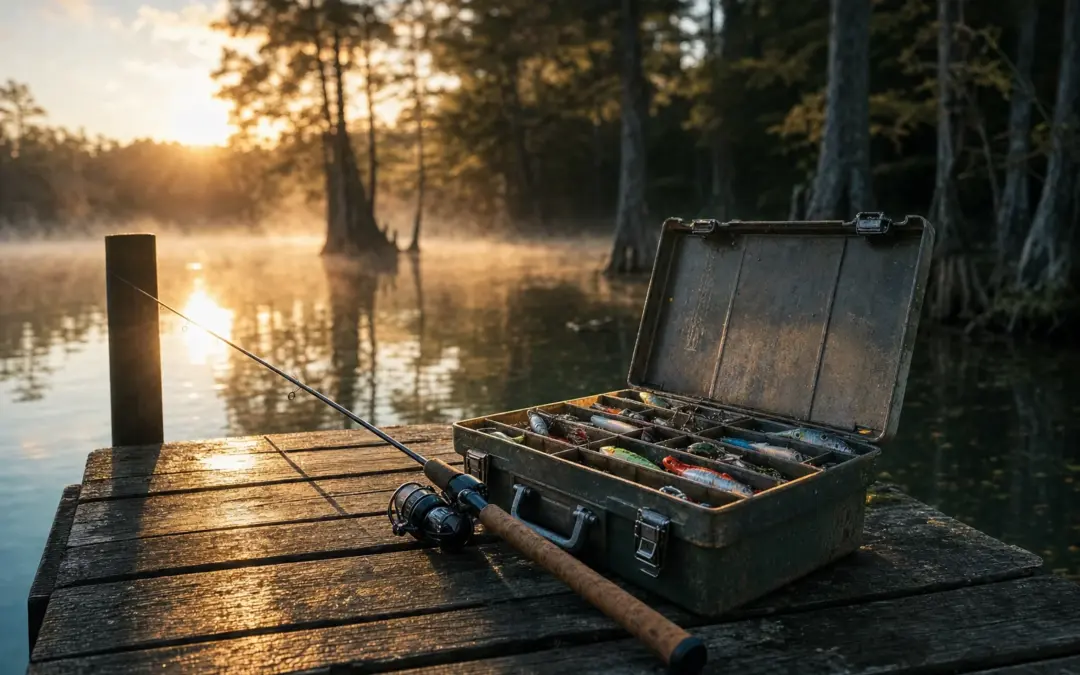
Ask any angler who’s been on the water long enough and they’ll tell you the same thing: it’s never the rod that lets you down mid-trip. It’s the stuff you forgot to throw in the box. A snapped line with no clippers nearby. A dull hook you didn’t notice until the third missed strike. A fish that threw the hook because you grabbed it bare-handed and crushed the barb. The tackle box isn’t glamorous, but it’s the difference between a productive day and a frustrating one. This list covers ten items that belong in every serious angler’s box — whether you’re chasing bass in a farm pond or working a river for walleye. No filler, no brand fluff — just the stuff that earns its space every single trip.
See current price & availability on AmazonCheck on Amazon →How We Picked
These picks are based on years of on-the-water use, reader feedback, and the simple test of “would I be annoyed if I forgot this?” Every item here is practical, packable, and available without breaking the bank. We prioritized versatility — things that work across multiple species, techniques, and conditions — over single-use gadgets.
1. Line Clippers
This is the one item that proves its worth within the first five minutes of rigging up. Trying to bite through 20-lb braid with your teeth gets old fast — and it wrecks your enamel. A good pair of line clippers gives you a clean, close cut every time, which matters for knot strength and for keeping tag ends from spooking fish in clear water. Nail clippers technically work in a pinch, but purpose-built fishing clippers have a built-in hook eye cleaner and a lanyard hole so you can clip them to your vest or bag. Keep a pair on your person, not just in the box. You’ll reach for them constantly. Grab a reliable pair of fishing line clippers and never go back to teeth-and-hope.
Best for: Every single angler, every single outing.
- Pros: Fast, clean cuts; built-in hook eye cleaner; clips to gear easily
- Pros: Inexpensive enough to buy multiples and stash everywhere
- Cons: Easy to lose — always use the lanyard
2. Multitool or Needle-Nose Pliers
A good set of fishing pliers does three things you can’t easily do by hand: removes deeply set hooks, crimps split shot, and cuts wire or heavy mono. A full multitool adds screwdrivers and a blade, which is genuinely useful when something on your reel needs a field adjustment. Look for corrosion-resistant materials — aluminum or titanium bodies hold up far better than chrome-plated steel when they get dunked in saltwater or left wet in a box. Spring-loaded jaws are a nice quality-of-life feature. This isn’t an item to cheap out on; a pair that rusts shut after two trips is worse than useless. A solid fishing multitool will last you years if you rinse it and keep the joint oiled.
Best for: Hook removal, crimping, wire cutting, general field repairs.
- Pros: Multi-function tool saves serious space; essential for deep-hooked fish
- Pros: Good ones last a decade with basic care
- Cons: Quality varies widely — avoid bare steel in saltwater environments
3. Hook Sharpener
Most hooks come sharp enough out of the pack. The problem is what happens after — snagging rocks, bouncing off a dock piling, missing a strike. A dull hook is the silent killer of hookup ratios, and most anglers never check. The fingernail test is quick: drag the hook point across your thumbnail. If it skates without catching, it’s dull. A small ceramic or diamond-grit hook sharpener fits in a shirt pocket and takes about ten seconds to touch up a point. Pocket-sized flat sharpeners and tapered round rods are both fine. Either way, get in the habit of checking your hook every few casts when you’re working structure or dragging bottom. This is one of those habits that quietly doubles your catch rate over a season.
Best for: Anyone fishing rocky, snaggy, or high-pressure water.
- Pros: Tiny, lightweight, cheap; extends the life of every hook you own
- Pros: Immediately improves hookup percentages on missed strikes
- Cons: Requires building the habit of actually using it
4. Leader Line Spool
A small spool of fluorocarbon leader material is one of those things you don’t miss until you desperately need it. Fluorocarbon’s near-invisibility underwater and abrasion resistance make it the right choice for leaders in clear water or around structure. Keep a spool of 8–12 lb for finesse applications and a heavier 17–20 lb spool if you’re working around rocks or timber. Pre-tied leaders are fine, but being able to cut and tie your own on the water means you’re never locked into one length. Mono works too if that’s your preference, but fluoro’s stiffness and sink rate give it an edge for most leader applications. A quality fluorocarbon leader spool fits easily in any compartment and weighs almost nothing.
Best for: Clear water, finesse presentations, fishing near abrasive structure.
- Pros: Near-invisible underwater; excellent abrasion resistance; compact storage
- Pros: Lets you customize leader length on the fly
- Cons: Requires knowing a few solid leader knots (Alberto, FG, double uni)
5. Split-Shot Weights
Split shot is the most versatile weight system in freshwater fishing, and it costs next to nothing. You can add depth to a live-bait rig, slow down a drifting jig, or adjust a drop-shot presentation without retying. A small assortment pack with sizes from BB through 3/0 covers almost every situation. Removable split shot — the kind with ears you can squeeze to release — is worth the slight extra cost because you’re not destroying your line every time conditions change. Pinch a couple on above a swivel, above a hook, or anywhere you need just a touch more weight. Keep a refill pack in the box because they’re also remarkably easy to drop overboard.
Best for: Live bait rigs, drop-shot rigs, slip floats, and any presentation that needs fine-tuned depth control.
- Pros: Incredibly versatile; cheap enough to keep multiples; removable styles protect your line
- Pros: Works with virtually every freshwater technique
- Cons: Small pieces get lost easily — use a tray with a lid
6. Swivels Assortment
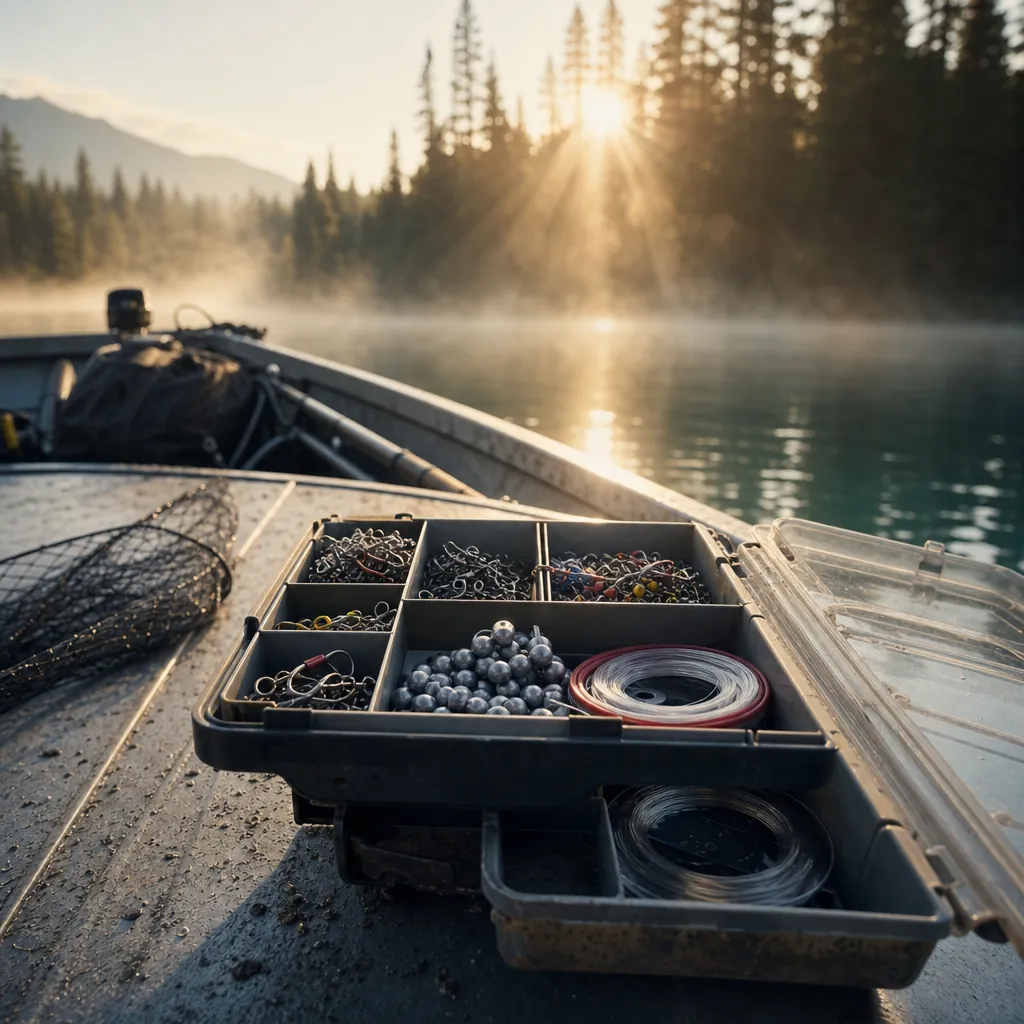
Line twist is the enemy, and swivels are the cheap, simple fix. A barrel swivel between your main line and leader prevents the worst of it when you’re using spinners, spoons, or live bait that rotates. Snap swivels add the convenience of lure changes without retying — useful when you’re cycling through presentations to figure out what fish want. Keep a range of sizes: smaller (#10–#14) for light freshwater setups, larger (#4–#8) for pike, muskie, and inshore work. Avoid super cheap brass swivels that fail under pressure. Stainless or black-nickel finishes hold up better and don’t flash in clear water. An assortment pack with 50–100 pieces doesn’t take up much room and lasts a long time.
Best for: Preventing line twist, quick lure changes, any spinning or rotating bait presentation.
- Pros: Eliminates line twist; snap versions allow fast lure swaps; very affordable
- Pros: Multi-size packs cover nearly every application
- Cons: Cheap versions can fail at the worst moment — buy mid-grade or better
7. Bobbers / Strike Indicators
Call them bobbers, floats, or strike indicators — they all do the same thing: suspend your bait at a set depth and signal a bite. Clip-on round bobbers are the classic choice and the easiest to use. Slip floats are better for longer casts and deeper water because they don’t throw your balance off like a fixed bobber on a long leader. Keep a few different sizes: smaller floats for panfish with light bait, larger cigar or oval floats for bigger live bait like shiners or nightcrawlers. Don’t overlook foam slip floats for walleye night fishing — they’re extremely sensitive and show even the softest takes. A handful of mixed sizes takes up almost no space and opens up a whole range of presentations.
Best for: Panfish, crappie, suspended walleye, any live-bait situation where depth control matters.
- Pros: Effective bite indicator at any skill level; helps control exact bait depth
- Pros: Slip floats cast well and work at depth
- Cons: Round clip-on floats can damage line at the clip over time — check regularly
8. Hooks Assortment Pack
Running out of hooks is the kind of problem that ends trips early and makes you feel like a rookie. A multi-size assortment pack covers more situations than you’d think: Aberdeen hooks for live bait and panfish, offset EWG hooks for soft plastics, circle hooks for catch-and-release fishing with bait. Carrying sizes from #6 all the way up to 3/0 means you’re ready for everything from bluegill to largemouth. Keep them in a small plastic box sorted by size — loose hooks in a compartment turn into a nightmare of tangled points. A well-rounded hooks assortment is the most straightforward insurance you can carry.
Best for: All-around freshwater fishing, live bait, soft plastics, catch-and-release.
- Pros: Covers multiple techniques and species with one purchase; inexpensive insurance
- Pros: Circle hooks in the mix are excellent for catch-and-release survival rates
- Cons: Hooks dull over time — rotate old stock and replace seasonally
9. Soft Plastics Selection
If you could only bring one category of artificial lure, soft plastics would be the argument. They’re cheap, compact, effective on nearly every predatory freshwater species, and endlessly versatile. A small selection covering three categories handles most situations: 4-inch straight-tail worms for Texas rigs and drop-shots, paddle-tail swimbaits for moving-water presentations and open water, and creature baits or craw imitations for flipping and pitching into cover. Natural colors — green pumpkin, watermelon red, and black-blue — work almost everywhere. Bright colors like chartreuse and white earn their place in stained water. A compact selection of soft plastic lures easily fits in one tray and gives you serious options all season long.
Best for: Bass, walleye, pike, and most other predators in fresh water; works year-round.
- Pros: Incredibly versatile; compact and affordable; effective on a wide range of species
- Pros: Natural colors translate across seasons and conditions
- Cons: Fish can tear through them quickly — keep extras of your go-to colors
10. Polarized Sunglasses
Here’s the premium item that most anglers treat as optional — until they use a quality pair and realize what they’ve been missing. Polarized lenses cut surface glare and let you see into the water column: you’ll spot structure, baitfish movement, and actual fish that are completely invisible to the naked eye. That’s not a small advantage. Beyond fish-finding, they protect your eyes from hooks on blown casts, UV radiation on long days, and the kind of strain that leaves you with a splitting headache by 2 PM. Look for lenses rated for high UV protection. Copper or amber lenses perform best in low-light and partly cloudy conditions; gray lenses are better for bright sun over open water. A pair of quality polarized fishing sunglasses is the one piece of gear that makes you a better angler the moment you put them on.
Best for: All-day fishing, sight-fishing in clear water, protection from UV and errant hooks.
- Pros: Dramatically improves ability to see into the water; eye protection from hooks and UV
- Pros: Reduces eye fatigue on long days; amber lenses work well in variable light
- Cons: Quality pairs cost more upfront — but cheap polarized lenses often distort color and fail fast
Quick Comparison
- Line Clippers — Essential daily tool; keep one on your person at all times
- Multitool/Pliers — Hook removal, crimping, field repairs; buy corrosion-resistant
- Hook Sharpener — Cheap habit that directly raises hookup rates
- Leader Line Spool — Fluorocarbon preferred; carry at least two weights
- Split-Shot Weights — Most versatile weighting system in freshwater; get removable style
- Swivels Assortment — Stops line twist; snap versions speed up lure changes
- Bobbers/Floats — Mix of clip-on and slip floats covers nearly every float-fishing scenario
- Hooks Assortment Pack — Multi-style, multi-size pack handles everything from panfish to pike
- Soft Plastics Selection — Three styles in natural colors covers most freshwater situations
- Polarized Sunglasses — The premium pick that actively helps you find and catch more fish
None of these items are glamorous. You won’t see them on the cover of a fishing magazine. But pack all ten into your box and you’re genuinely prepared for almost anything the water throws at you — missed strikes, broken line, changing conditions, or a fish that decides to park himself under a log pile. The tackle box isn’t about having the most gear. It’s about never being caught without the right piece at the wrong moment. Start here, build the habit of checking and restocking after every trip, and you’ll spend a lot more time fishing and a lot less time wishing you’d planned better.