Disclosure: BestFishingReviews.com participates in the Amazon Associates program and other affiliate networks; we may earn a small commission if you buy through our links, at no extra cost to you.
You know the feeling. The fish are popping on the surface, you’re scrambling through a pile of tangled crankbaits, and by the time you find the right lure the bite is over. A disorganized tackle box doesn’t just cost you time — it costs you fish. Most anglers accumulate gear faster than they organize it, and before long a perfectly good tackle collection turns into a jumbled mess of rusty hooks, mystery lures, and line that’s been sitting since the Obama administration. The fix isn’t buying more storage. It’s building a system that makes sense for how you actually fish, so you spend your time with your line in the water instead of your hands in a box.
See current price & availability on AmazonCheck on Amazon →Start With a Full Purge Before You Organize Anything
Before you touch a single compartment, dump everything out. Every lure, every hook, every split shot — put it all on a table. This step feels wasteful of an afternoon, but it’s the most important thing you’ll do. You’re going to find hooks with rust that’ll snap on a fish, monofilament that’s brittle and coiled, and soft plastics that have melted into each other like a bag of Halloween candy left in a hot car.
Sort your gear into three piles: keep, trash, and repair/replace. A hook with surface rust on the shank might still be fine. A hook where the point has gone orange or the eye is pitting — toss it. Same goes for line. If you’re pulling mono off a spool and it springs back into tight coils immediately, it’s set from memory and it’s done. Toss it. Be ruthless here. Dead gear takes up space and slows you down.
Once your “keep” pile is sorted, group items loosely by type: hard baits together, soft plastics together, terminal tackle (hooks, weights, swivels, snaps) together, tools and accessories separate. You now have the raw material to build a real system.
Compartmentalize by Species, Technique, and Season
The core principle of tackle organization is simple: your box should reflect how you fish, not just what you own. There are three frameworks you can use — and most experienced anglers use a combination of all three.
By Species
If you chase multiple species — say, bass, walleye, and panfish — dedicate a separate box or bag to each. Your bass box gets your jigs, swimbaits, topwaters, and Texas-rig plastics. Your panfish box gets small hooks, tiny jigs, and a spool of 4-pound light fluorocarbon line. When you’re heading out for a specific target, you grab that box and go. No digging through bass gear to find a 1/32-oz crappie jig.
By Technique
If you fish one species but rotate techniques, organize by presentation instead. A finesse box holds your drop shot weights, tiny hooks, and small soft plastics. A power fishing box holds your spinnerbaits, lipless cranks, and chatterbaits. When conditions call for slowing down, you reach for the finesse box. When fish are aggressive and you want to cover water, you grab the power box. This approach works especially well for bass anglers who shift tactics based on conditions and season.
By Season
A third option is seasonal rotation. You keep one active box for the current season — stocked with what’s working right now — and store the rest. Spring box gets your pre-spawn jigs, suspending jerkbaits, and shallow crankbaits. Summer box gets your topwaters, deep-diving cranks, and Carolina rig hardware. Fall and winter get their own setups. Seasonal organization keeps your active box lean and relevant instead of loaded with gear that’s three months out of date.
Most veteran anglers find a hybrid works best: species-level separation for the bags, technique or seasonal organization within each species bag. Do whatever mirrors the way your brain works when you’re on the water.
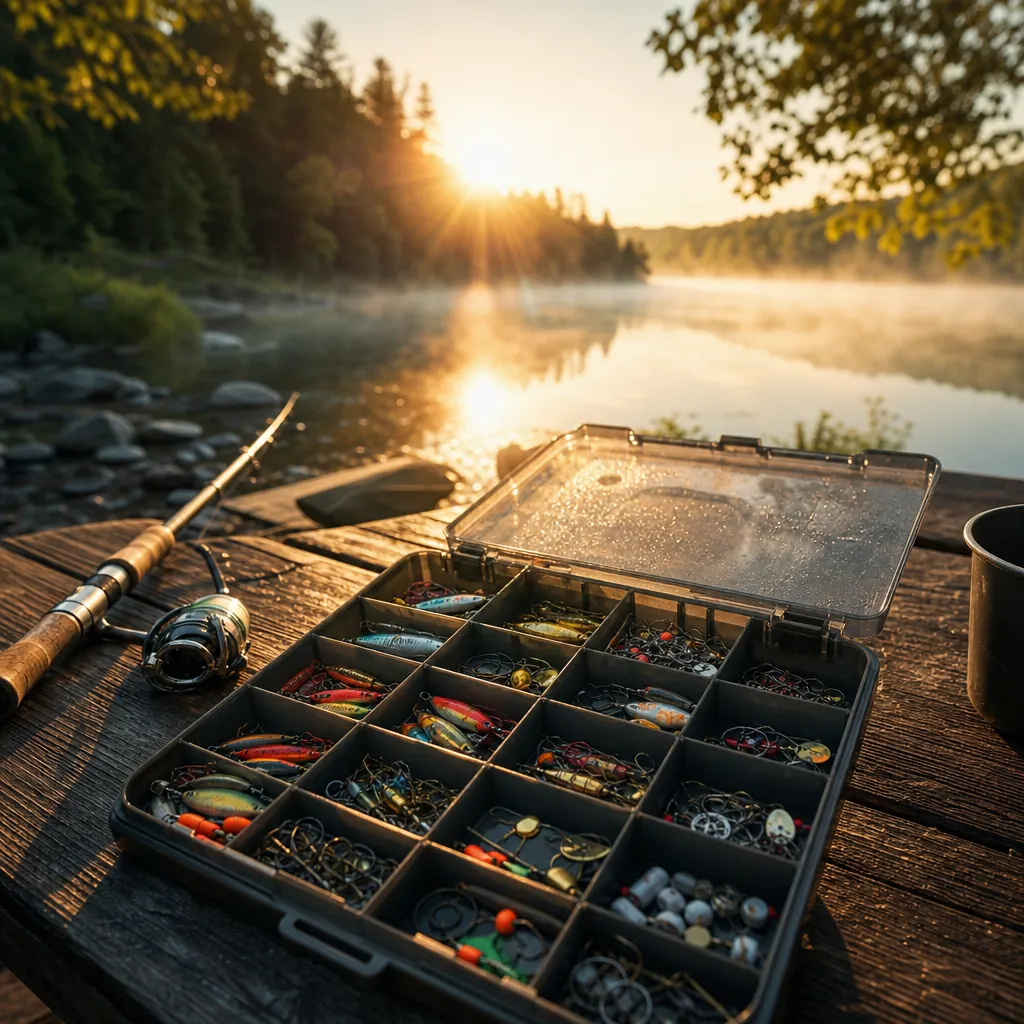
Choosing the Right Box: Plano Hard Cases vs. Soft Tackle Bags
The container matters as much as the system inside it. Two categories dominate the market, and each has a real use case.
Hard Plastic Tackle Boxes (Plano-Style)
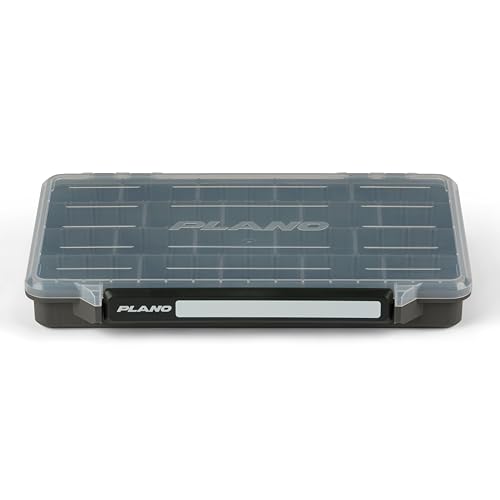
Plano-style hard tackle boxes are the gold standard for terminal tackle, small hooks, weights, swivels, and anything you need to stay sorted in a small compartment. The adjustable dividers let you customize layouts, and hard plastic keeps soft plastics from bleeding into each other (a real issue — certain soft plastic colors will permanently stain others if stored together). Hard boxes stack cleanly in a rod locker or truck bed, and they protect hooks from getting crushed.
The downside is rigidity — literally. A hard box doesn’t conform to tight spaces. And carrying multiple hard boxes when you’re hiking a trail to a remote pond is a pain.
Soft Tackle Bags
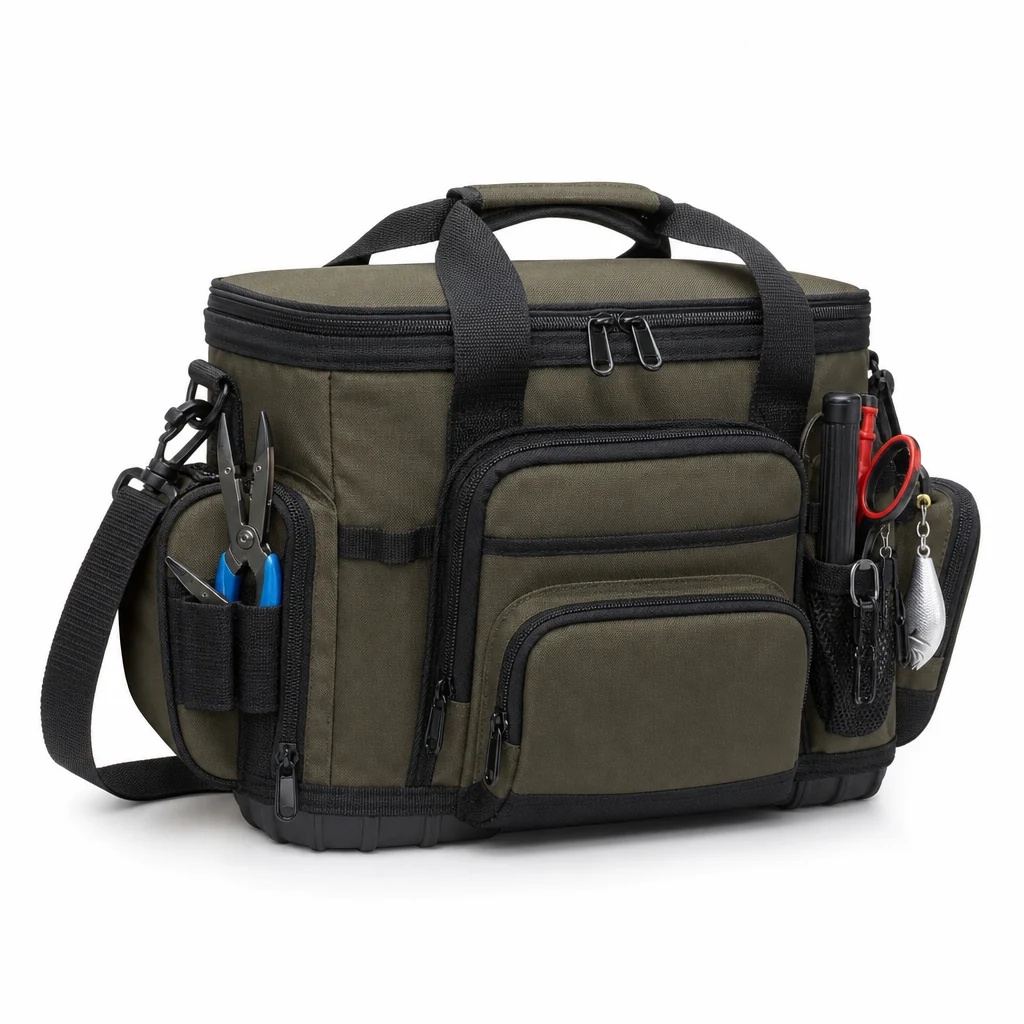
A soft tackle bag is the better choice for anglers who move around a lot — wade fishing, kayak fishing, bank fishing, or any situation where you’re carrying your gear on your body. The bags hold multiple utility trays inside, they’ve got exterior pockets for tools and accessories, and they’re comfortable to carry over a shoulder or clip to a kayak. Look for water-resistant materials and reinforced zippers. The trays that slide into soft bags are typically the same format as standalone hard boxes, so your organization system stays consistent.
For most anglers, the answer is both: hard boxes stored at home and in the vehicle as your master inventory, soft bags as your go-bag for active days on the water.
What Belongs in Your Main Box vs. Your Go-Bag
Think of your tackle storage in two tiers. Your main inventory — the full collection — lives at home or in your vehicle. Your go-bag is what actually goes fishing with you. The go-bag should be curated for that specific trip, not crammed with everything you own.
Main Box: The Full Inventory
- Bulk terminal tackle — full packs of hooks in multiple sizes, weight assortments, swivel packs
- Backup lures and duplicate colors you rotate seasonally
- Specialty gear you use rarely (ice fishing jigs in summer, offshore rigs when you fish inland)
- Spare spools of line in different strengths
- Tools you don’t need streamside: hook sharpeners, split-ring pliers, bulk spare parts
Go-Bag: What You Actually Carry
- The lures and rigs you plan to throw that day — a curated selection, not the whole arsenal
- Enough terminal tackle for the session plus a small backup (a few extra hooks, a few extra weights)
- Essential tools: needle-nose pliers, line clippers, a hook remover
- One small first aid item (hook removal kit or a few bandages — hooks happen)
- License, a pen, and any required stamps or tags
The discipline here is restocking the go-bag from the main box after every trip, not the night before. Replenish what you used while it’s fresh in your mind. Future you will be grateful.
Labeling Your Tackle: Low-Tech Solutions That Actually Work
Labeling sounds fussy until you have six identical-looking Plano boxes stacked in your truck and you can’t remember which one has your finesse jigs. A label maker is overkill — a roll of blue painter’s tape and a Sharpie is all you need. Write what’s inside on the tape, stick it to the top of each box. If the contents change, peel and relabel. Takes ten seconds.
For individual compartments inside a box, use the inside of the lid. Tape a small index card or cut a piece of paper to fit, write what’s in each row, and tape it inside the lid. When you open the box you see the map before you see the compartments. This is especially useful for terminal tackle boxes where everything looks the same at a glance — size 2 hooks versus size 4 hooks are not easy to eyeball when you’re in a hurry.
For soft plastics stored in their original bags, keep them in those bags. The bag usually has the color name and size printed on it. Stuff them into a zippered mesh bag or a separate soft bait organizer organized by style: stick baits together, creature baits together, paddle tails together. When you need a specific bait, you’re pulling from the right bag and the label on the package tells you exactly what you’ve got.
Digital Tackle Inventory Apps Worth Using
If your collection has grown to the point where you genuinely don’t know what you own — or you’ve ever bought a duplicate lure you already had — a digital inventory is worth a few hours of setup time. Several apps and tools exist specifically for this.
TackleWarehouse / Fishing-Specific Apps
Tackle HD (iOS and Android) lets you photograph and catalog your lures, assign them to boxes and trays, and log which baits caught fish. It’s the most purpose-built option for serious collectors. You can see at a glance which lures you haven’t used in two years — a useful prompt to either put them to work or clear them out.
Spreadsheet Method (Old Faithful)
A simple Google Sheet works better than you’d think. Columns for: Category, Name/Model, Color, Size, Quantity, Location (which box), Notes. Takes about two hours to set up if your collection is large, and it’s searchable, shareable, and free. If you’re the type who fishes with a partner who also needs to know what’s in the boat, share the sheet. Done.
Photo Inventory
The absolute lowest-friction option: open each box, photograph the contents, label the photo with the box name, and keep them in a phone album or Google Photos folder. Not as searchable as a spreadsheet, but it takes five minutes per box and you’ll actually do it. Perfect for anglers who want a quick reference without building a database.
Common Mistakes That Undermine a Good Tackle System
- Overpacking the go-bag. If you bring everything, you might as well bring nothing — you’ll still dig through a pile to find what you want. Curate ruthlessly for each trip.
- Storing wet gear. Putting wet lures, hooks, or tools back in a closed box is how rust spreads and mold grows. Air everything out before repacking. A quick wipe down with a dry rag takes seconds.
- Mixing soft plastics with hard baits. Certain soft plastic compounds contain chemicals that will literally dissolve the paint or finish on hard baits. Keep them separated — always.
- Never restocking after a trip. The best system fails if the box is empty when you need it. Make restocking part of your post-trip routine, not a panicked morning scramble.
- Ignoring the terminal tackle box. Most anglers obsess over lures and ignore the terminal tackle. But running out of the right hook size or not having the right weight on the water is just as crippling. Keep that box well-stocked and organized.
- Buying more storage before fixing the system. More boxes don’t solve a disorganization problem. They just spread the mess out. Fix the system first, then buy storage to fit it.
Wrapping Up
A well-organized tackle system isn’t about being neat for its own sake — it’s about spending your time fishing instead of fumbling. Start with a purge, build a framework that matches how you actually fish, separate your home inventory from your go-bag, label everything, and check out a tackle storage system that fits your style. Invest one solid afternoon in setting it up right, and every trip after that gets a little smoother. That’s a trade worth making.