Disclosure: BestFishingReviews.com is reader-supported. If you buy through links on this page, we may earn a small affiliate commission at no extra cost to you.
Most fishing gear is overpriced for what it actually is — a bent wire, a molded chunk of plastic, a bit of foam. Once you start looking at tackle with a builder’s eye, you realize half the stuff cluttering your cart at the big-box store is something you could knock together on a Saturday morning with materials you already own or can grab for a few bucks. These seven DIY fishing projects are legitimate, fishable, practical upgrades. None of them require power tools you don’t have, special skills, or a weekend you can’t spare. We’ve used all of them on real fishing trips, and every single one has earned its place in the truck. Let’s get into it.
See current price & availability on AmazonCheck on Amazon →How We Picked
We kept it simple: each project had to cost less than a comparable store-bought version, come together in under two hours, and actually perform on the water. No garage-queen builds that fall apart the first time they get wet. Every tool here has been tested by real anglers, and the material lists point to raw supplies that won’t break the bank.
1. PVC Bank Rod Holder
Commercial bank rod holders run anywhere from $8 to $25 a pop, and they’re just a stick with a tube on top. A length of 1.5-inch schedule 40 PVC pipe costs next to nothing and lets you crank out four or five holders from a single ten-foot stick. Cut a 12-inch section for the rod cradle and a 24-inch section for the stake. Bevel-cut one end of the stake at about 30 degrees so it drives into soft ground cleanly. Heat the cradle section gently with a heat gun until pliable, then press it over a soda can to flare the opening slightly — this keeps rod handles from rattling free. PVC cement the two pieces at a slight backward angle (about 15 degrees) so your rod leans away from the water instead of diving in. Total cost: under $3 per holder. Drill a small drainage hole at the base of the cradle and you’re done.
Best for: Catfish, carp, and surf anglers who set multiple lines and need hands-free rod management on a budget.
- Pro: Makes 4–5 holders from one $6 pipe section
- Pro: Fully waterproof and UV-stable for years of use
- Pro: Customizable angle and cradle diameter for any rod handle
- Con: Requires a heat gun for the flared cradle shaping step
- Con: Heavier than steel spike-style holders for backpack trips
2. Paracord Pliers Lanyard
Drop a good pair of pliers off the side of a kayak once and you’ll never go without a lanyard again. A two-foot length of 550 paracord and a small swivel clip is all you need. Tie a simple overhand loop on one end to slip over your wrist or clip to a D-ring, then tie the other end directly to the lanyard ring on your pliers. If your pliers don’t have a ring, wrap several tight half-hitches around the handle above the pivot and finish with a square knot and a dab of super glue. The best functional upgrade here is to use a cobra-braid pattern along the length — it looks sharp, adds grip diameter, and you end up with about 10 feet of emergency cord if you ever need to rig something fast on the water. The whole thing takes 20 minutes and costs less than a dollar in materials.
Best for: Kayak anglers, wading fishermen, and anyone who’s already donated a pair of pliers to the river gods.
- Pro: Virtually free if you have any paracord scraps on hand
- Pro: Cobra braid doubles as 10 feet of emergency cordage
- Pro: Saves expensive pliers from a watery grave
- Con: Braided version takes patience — budget 45 minutes your first time
- Con: Can tangle with rod guides if you’re not mindful of cord length
3. Homemade Scent Dispenser
Commercial scent dispensers are basically mesh bags with a clip. Make your own with a small mesh drawstring bag, a snap swivel, and whatever scent attractant you already use — garlic, anise oil, shad oil, you name it. Cut the mesh to about 3×3 inches, tie the swivel through the gathered neck, and load it with a piece of sponge or compressed cotton ball soaked in your attractant. Clip it to your jig head, Carolina rig swivel, or trolling hardware. The mesh releases scent slowly as water passes through, and you can reload it bankside in thirty seconds. For a more durable version, use the finger cut from an old latex or rubber glove — poke a dozen small holes in it with a pushpin and tie it off with mono. Reloading is as simple as dropping in a fresh scent tablet or a pinch of cut bait.
Best for: Bass, catfish, and walleye anglers who want to add scent to hard baits without gunking up the whole tackle box.
- Pro: Works with any liquid or solid scent you already own
- Pro: Reusable and reloadable in seconds
- Pro: Adds scent to hard baits that normally hold none
- Con: Mesh can catch weeds in heavy cover
- Con: Needs reloading every few hours in moving water
4. Tackle Organizer from a Craft Bead Tray
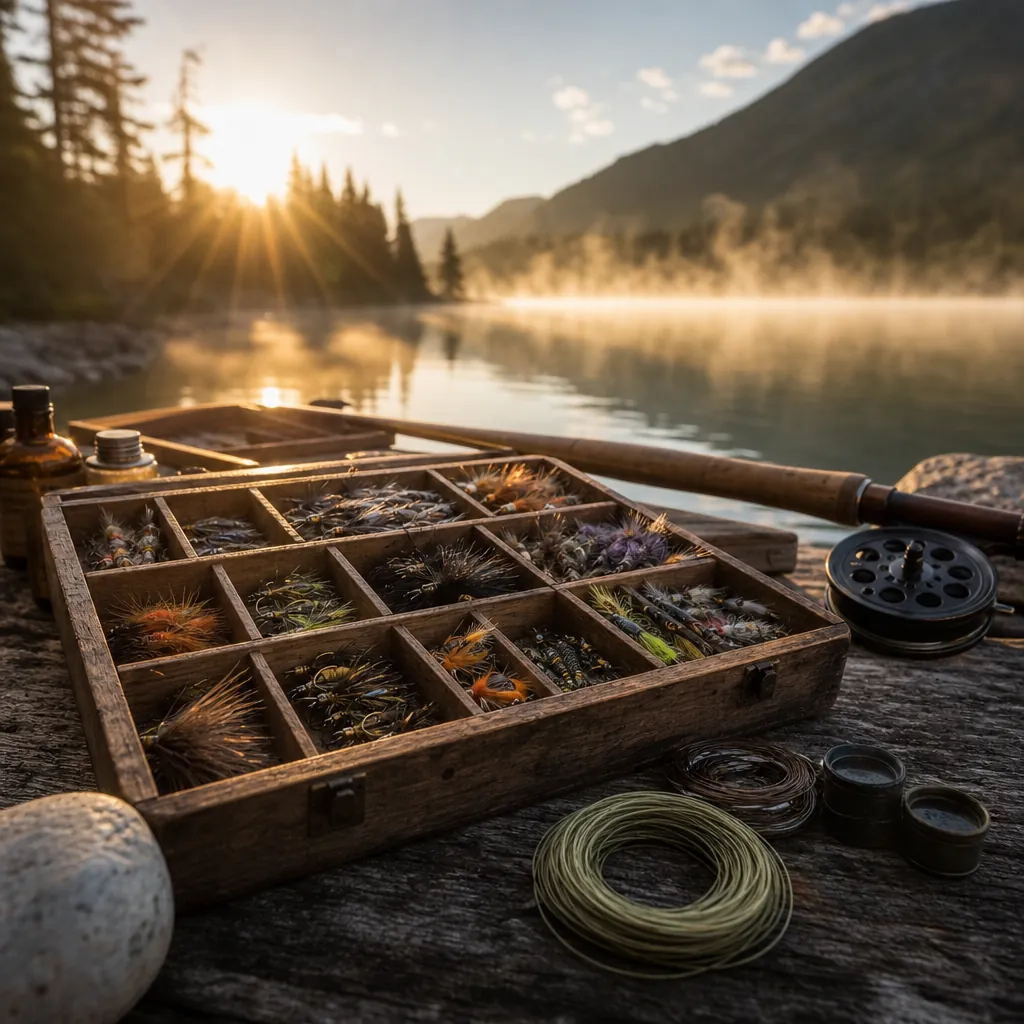
Walk into any craft store and you’ll find multi-compartment bead sorting trays for $3–$6. They are, functionally, perfect small-tackle organizers. The compartments are the right size for hooks, split shot, swivels, and small soft plastics, and the snap-shut lids keep everything in place. Grab a few stackable bead organizer trays and use a label maker or a paint pen to mark each compartment by hook size, weight, or rig type. For a fishing-specific upgrade, line the bottom of each compartment with a thin strip of foam from a flip-flop sole — hooks stay point-down, don’t rattle, and won’t dull against the hard plastic. Stack two trays and band them together with a thick rubber band for transport. This beats a $25 “fishing-specific” organizer from the tackle shop in every measurable way.
Best for: Trout, panfish, and finesse bass anglers with lots of small terminal tackle to sort and access quickly.
- Pro: $3–$6 versus $20+ for branded fishing versions
- Pro: Foam lining keeps hooks secure and sharp
- Pro: Stackable and easy to label by rig or location
- Con: Not waterproof — keep it in a dry bag on the water
- Con: Smaller compartments won’t fit larger soft plastics or big jigs
5. Weighted Casting Practice Plug
If you want to get better at casting — especially with baitcasters — you need to practice. Store-bought practice plugs are fine, but you can pour your own in an afternoon using a simple egg sinker mold or just wrap lead-free tungsten weighting wire tightly around a wooden dowel until you hit your target weight. Seal it with a coat of epoxy, add a line tie eye screw at one end, and you’ve got a hookless plug that casts exactly like the real thing. Match the weight to your most-used lure — if you throw a lot of 3/8 oz crankbaits, make your practice plug 3/8 oz. Paint it a visible color, practice in the backyard over a hula hoop, and your casting accuracy will improve faster than any YouTube tutorial can take you. Total cost: about $2 per plug once you have the wire and epoxy on hand.
Best for: New baitcaster users, competitive bass anglers drilling accuracy, and anyone coming back from an off-season who needs to shake the rust off.
- Pro: Matches the exact weight of your real lures for true-to-life practice
- Pro: Hookless and safe for backyard or dock practice
- Pro: Costs pennies compared to commercial casting plugs
- Con: Epoxy cure time means you can’t use it the same day you build it
- Con: Tungsten wire wrapping is fiddly — takes a couple tries to get right
6. Leader Wallet from a Binder and Sheet Protectors
Leader tangles are one of those small miseries that cost you fish. A simple leader wallet fixes this permanently. Take a small 3-ring binder (5×7 works great) and load it with a dozen standard clear sheet protectors, then cut each protector down to about a third of its height. Pre-tie your leaders — fluorocarbon dropshot leaders, wire leaders, mono leaders for live bait, whatever you run — coil each one loosely, label a strip of masking tape with the pound test and length, and slip it into its own pocket. Leaders stay organized, untangled, and dry. Total cost: around $5 for the binder and a pack of sheet protectors. You could spend $40 on a branded leader wallet, or you could do this. Use quality fluorocarbon leader material to pre-tie a whole season’s worth of rigs on a rainy weekend and you’ll never scramble to retie at the boat ramp again.
Best for: Offshore anglers, trout guides, and anyone who pre-rigs multiple leader setups and hates hunting through a tangled rat’s nest mid-trip.
- Pro: Holds 12+ individual leaders organized and tangle-free
- Pro: Easy to label and sort by pound test, length, or rig type
- Pro: Fraction of the cost of any branded leader wallet
- Con: Binder adds bulk — not ideal for ultralight pack fishing
- Con: Sheet protectors aren’t perfectly waterproof; use a zip-lock bag as a sleeve
7. Beer-Bottle Cap Bobbers
This one sounds like a campfire joke but it absolutely works. Collect a handful of metal bottle caps — beer, soda, whatever — and use a small drill bit to put two tiny holes through the center, one near each edge, about a quarter inch apart. Thread your line down through one hole and back up through the other, and the cap sits flat on the surface as a strike indicator. It’s not a replacement for a big waggler in heavy current, but for still-water panfishing, crappie under a dock, or teaching a kid to watch for a bite, a bottle cap bobber is perfect. It’s nearly weightless, doesn’t spook fish the way a big plastic float can, and lies flat so there’s almost zero resistance when a fish takes the bait. Add a small dab of cork sealant or a tiny bead of hot glue on the underside to improve floatation if your cap sinks under a heavier bait. Combine with a pack of light wire crappie hooks and some waxworms and you’ve got a kids’ fishing kit that costs almost nothing.
Best for: Panfishers, crappie anglers, and anyone introducing kids to fishing who wants zero-cost, low-resistance strike indicators.
- Pro: Genuinely free if you drink anything with a bottle cap
- Pro: Extremely low surface resistance — sensitive bite detection
- Pro: Great kids’ fishing project that teaches line threading and rigging
- Con: Low buoyancy — not suited for heavier baits or moving water
- Con: Sharp edges on the underside can fray lighter lines over time
Quick Comparison
- PVC Rod Holder — Best for bank fishing multiple rods; ~$3 each, lasts for years
- Paracord Pliers Lanyard — Best for kayak/wade fishing; under $1, saves expensive tools
- Homemade Scent Dispenser — Best for adding scent to hard baits; reusable, pennies per build
- Craft Tray Tackle Organizer — Best for small terminal tackle; $3–$6, beats branded versions
- Weighted Casting Plug — Best for casting practice; ~$2, matches your real lure weight
- Leader Wallet Binder — Best for pre-rigged leaders; ~$5, holds 12+ leaders tangle-free
- Beer-Bottle Cap Bobbers — Best for panfish and kids; free, ultra-sensitive strike indicator
None of these projects will win a craftsmanship award, and that’s not the point. The point is that you spend Saturday morning at the workbench, spend almost nothing, and show up at the water Sunday with gear that works — gear you actually understand because you built it. That’s a mindset shift that makes you a better angler in ways that extend well beyond any single tool. Pick one project this weekend, build it, fish it. Then come back and build the next one.