Disclosure: BestFishingReviews.com is reader-supported. If you buy through links on this page, we may earn a small affiliate commission at no extra cost to you.
Most anglers spend 90% of their time fishing water that holds maybe 10% of the fish. It sounds harsh, but it’s true — and it’s not a skill problem or a gear problem. It’s a reading problem. Fish don’t scatter evenly across a lake or river the way grass seeds across a lawn. They stack up in specific spots for specific reasons: food, cover, comfortable temperatures, and easy ambush positions. Once you learn to recognize those reasons in the water in front of you, you stop guessing and start finding. This guide walks you through exactly how to do that, whether you’re standing on a riverbank, launching a kayak on a reservoir, or wading a trout stream for the first time.
See current price & availability on AmazonCheck on Amazon →Start with Structure: The Skeleton of Any Fishery
Structure is the single most important concept in locating fish. The word just means any physical feature that breaks up the underwater landscape — a drop-off, a submerged rock pile, a sunken log, a weed bed edge, a gravel bar. Fish use structure the same way a mugger uses a doorway: it gives them somewhere to hide while they wait for something to eat.
On a lake, the most reliable piece of structure you can find is a point — a finger of land that juts into the water. Points funnel baitfish, concentrate predators, and typically offer multiple depth zones within a short cast. Work the tip of a point, then follow the depth change along each side. Bass, walleye, and pike love the transition where hard bottom meets soft, or where rock gives way to mud. If the point also has sparse weeds or scattered rocks on it, even better.
Drop-offs are equally productive. Find where the bottom goes from 6 feet to 12 feet in the space of a few rod lengths and you’ve found a highway fish use to move between shallow feeding areas and deeper sanctuary. In the morning and evening, predators slide up the slope to chase baitfish in the shallows. During midday heat or cold fronts, they drop back down to the deeper edge. Cast parallel to the drop rather than perpendicular to it — you keep your lure in the productive zone far longer that way.
Weed lines deserve their own conversation. The outside edge of a weed bed — where vegetation stops and open water begins — is a classic ambush lane. Largemouth bass, pike, and perch hang just inside the weeds and dart out to nail anything that swims past. The inside edge, where weeds meet bare bottom, is equally worth fishing. Don’t just cast into the middle of a weed flat; work the edges where the transition happens.
Reading Rivers and Streams: It’s All About Current
Moving water plays by slightly different rules. Current costs fish energy, so they’re almost never holding in fast water unless they’re actively feeding in a hatch or a baitfish blitz. Most of the time, they want to be near fast water — where food is delivered — but positioned somewhere they don’t have to fight it.
That’s the concept of a current break: any feature that deflects or slows the current and creates a pocket of calm water. A boulder mid-river creates a slack pocket directly behind it. A fallen tree along the bank carves out an eddy. A bend in the river pushes fast water to the outside bank and deposits slower, deeper water on the inside. Trout, smallmouth bass, and walleye stack in these seams — the line where fast current meets slow — because they can hold with minimal effort and still intercept food drifting by.
Pay close attention to eddies. An eddy is a circular current that forms downstream of an obstruction. It actually runs upstream, against the main flow. Food scraps, insects, and small baitfish get trapped in eddies and spin around. A trout sitting in an eddy barely has to move — it’s like eating at a revolving sushi bar. Cast into the eddy and let your presentation drift naturally with the circular current.
On bigger rivers, look for channel edges. The main river channel — the deepest trough — is where current is strongest and where big fish often suspend in cold weather. But the edges of that channel, especially where it swings close to a gravel bar or a shallow flat, are prime feeding zones. Walleye in particular are notorious for working these channel ledges after dark.
See What Others Miss: Surface Signs and Visual Clues
You don’t always need electronics to find fish. Sometimes the water tells you exactly where they are if you know what to look for.
Baitfish dimples are one of the best giveaways. Small bait — shad, shiners, smelt — pushed to the surface by feeding predators below will create tiny rings and nervous, skittery surface activity. It looks like a light rain shower hitting a specific patch of water. Wherever you see that, there are predators underneath. Get a cast in there immediately, because the action can move fast.
Birds are your free sonar. Diving birds like terns, cormorants, ospreys, and herons are almost always marking fish. Herons are especially useful in shallow water — they stand motionless in the exact spots where small fish congregate, which tells you that bigger fish are usually close. A group of terns dive-bombing a patch of open water means a school of predators has baitfish pinned against the surface. Motor over quietly and work the edges of that activity.
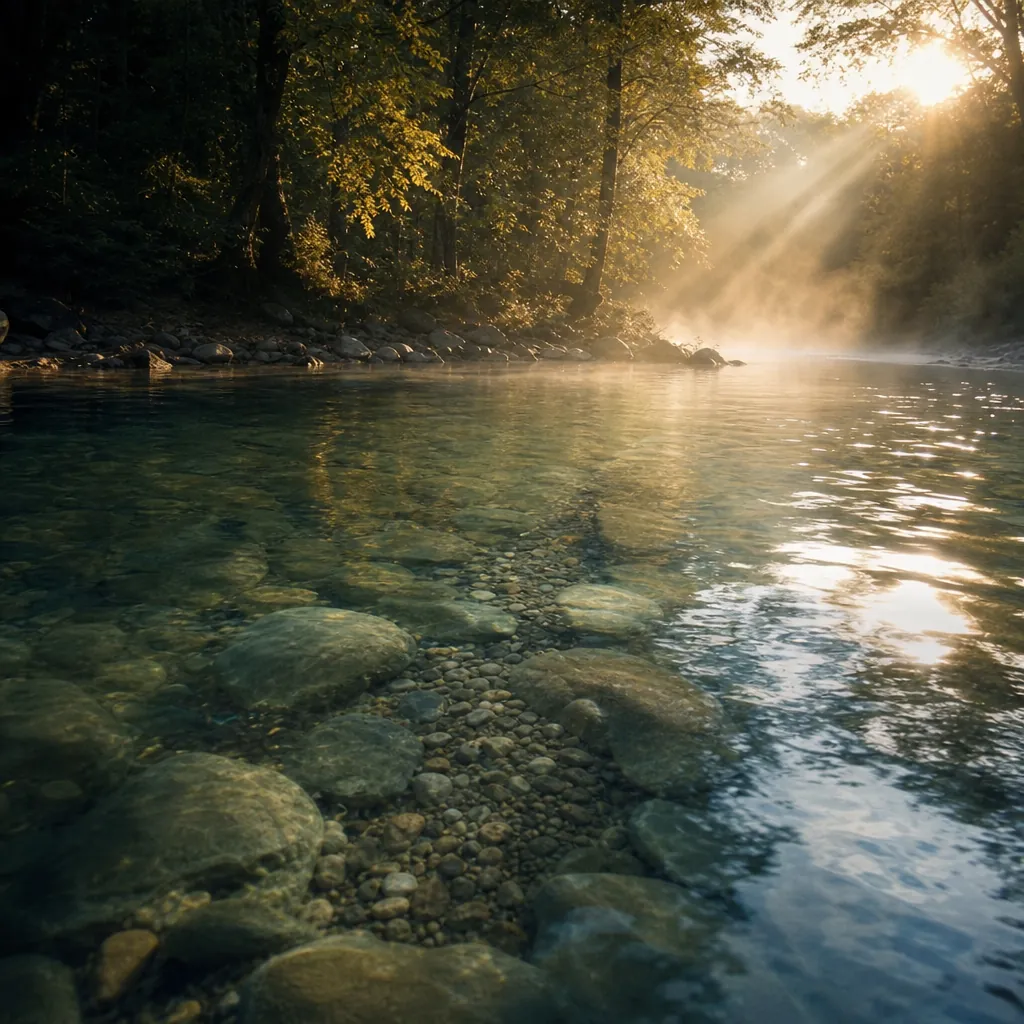
Color changes in the water can mark depth transitions, current seams, or temperature differences. A line where dark blue water meets lighter green water often signals a depth change or a temperature break — both worth investigating. Muddy water flowing into clear water from a tributary creates a defined edge that predators use to ambush disoriented baitfish.
This is exactly why a good pair of polarized fishing sunglasses is one of the most valuable tools you can carry. Polarized lenses cut the surface glare that turns water into a mirror, letting you see several feet down into clear and stained water. You’ll spot submerged weed edges, rocky bottom transitions, and even individual fish that you’d walk right past otherwise. Amber or copper lenses work well in low light and stained water; gray lenses are better in bright conditions on open water. Don’t cheap out here — a quality polarized lens changes how you see every body of water you fish.
The Thermocline: Fishing the Temperature Layer
During summer on deeper lakes and reservoirs, water stratifies into distinct temperature layers. The warm surface layer is called the epilimnion. The cold deep layer is the hypolimnion. In between is the thermocline — a relatively thin zone where temperature drops sharply with depth, often several degrees per foot.
The thermocline matters because below it, dissolved oxygen levels drop low enough that most fish can’t survive comfortably for extended periods. That means in summer, fish are stacked between the surface and the thermocline — often right along its upper edge. On most mid-summer lakes in the US, the thermocline sits somewhere between 20 and 35 feet deep, though it varies widely by region and lake size.
If you have a fish finder with sonar, the thermocline often shows up as a faint, consistent horizontal band on the screen. You’ll also frequently mark suspended fish just above it. If you’re not marking fish near bottom in summer, don’t keep jigging the floor — move up in the water column to where the fish actually are. Count down your lure, watch your line angle on a drop shot, or troll at a specific depth until you connect.
In fall, as surface temperatures drop, the thermocline breaks down and the lake “turns over” — mixing oxygen and nutrients throughout. Fish scatter temporarily during turnover, then settle back into predictable shallower patterns as temperatures stabilize. Early fall, just before turnover, is often exceptional fishing as fish feed aggressively ahead of the change.
Putting It Together: How to Approach a New Body of Water
When you pull up to water you’ve never fished before, don’t just start casting at the nearest bank. Slow down and read it first.
Start by getting a mental map of the depth. If you don’t have electronics, a topo map or a satellite view from Google Maps gives you a surprisingly good picture of where points, flats, and channel edges are. Apps like Navionics or Fishbrain have lake maps that show depth contours for thousands of US waters — free or cheap.
Then look at the water itself. Where’s the wind blowing? Wind piles baitfish against windward banks and points, and predators follow. What’s the water temperature doing? In spring, focus shallow on dark-bottomed, sun-exposed bays that warm first. In summer midday heat, look for shade, depth, or current — anywhere the fish can cool down.
On a river, wade in slowly and watch the current for a minute before you cast. Find the seams. Identify the eddies. Look for anything that breaks the flow. Then start working the closest productive-looking structure first, so you don’t wade through fish to get to the far bank.
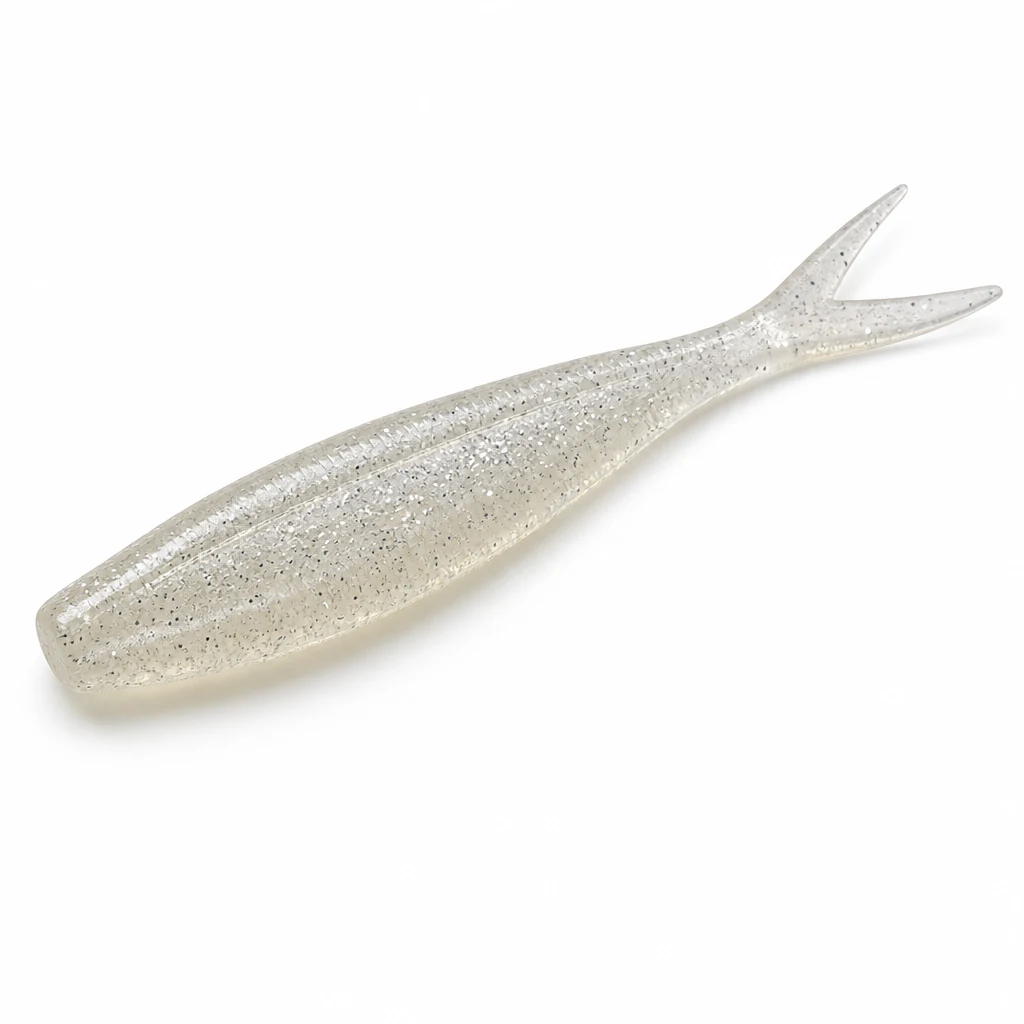
Use versatile soft plastic lures when you’re exploring new water — they’re quiet, they sink naturally, and you can fish them at any depth. Cover water efficiently until you find active fish, then slow down and work that area thoroughly. One feeding fish usually means others are nearby.
Common Mistakes When Reading Water
- Fishing the middle of flats. Featureless, flat bottom rarely concentrates fish. Always look for the edge — of a weed bed, a depth change, a hard-bottom patch. The edge is where things happen.
- Ignoring wind direction. Wind is free chum. It pushes plankton, which pushes baitfish, which pulls predators. A windy bank that looks ugly often fishes better than a calm, “pretty” bank on the same day.
- Staying in one spot too long. If you’ve made 20 quality casts through a piece of structure and haven’t moved a fish, the fish probably aren’t there right now. Cover more water. You can always come back at a different time of day.
- Casting over fish to reach the far bank. Especially in streams, the fish you want are often in the near-bank current break or eddy. Many anglers wade right through the best water to reach the far side.
- Fishing the wrong depth in summer. If you’re not marking fish, you’re probably fishing too deep — below the thermocline — or too shallow. Adjust your depth systematically rather than randomly changing lures.
- Not using polarized glasses. Fishing without polarized lenses on clear-to-moderate water is like driving with a dirty windshield. You’re missing a massive amount of information about what’s actually down there.
Final Thoughts
Reading water is a skill that compounds over time. Every trip you take, you’re building a mental database of patterns — this kind of structure in this kind of weather at this time of year held fish. Before long, you walk up to a new stretch of river or a lake you’ve never seen, and you just know where to start. It’s not magic. It’s pattern recognition built one cast at a time. Grab a pair of quality polarized glasses, slow down your approach, watch the water before you fish it, and you’ll consistently out-fish the people who just chuck-and-wind from the bank. The fish are in there. You just have to learn to see them.