Disclosure: BestFishingReviews.com earns a commission on qualifying purchases made through affiliate links in this article, at no extra cost to you.
Finding new fishing spots is half the battle — and honestly, half the fun. But if your strategy is just driving until you see a bridge and hoping for the best, you’re leaving a lot of fish in the water. The good news is that anglers today have more free and low-cost tools at their fingertips than any generation before them. State agencies publish detailed lake maps. Satellite imagery shows you exactly where submerged structure hides. Community apps track where other anglers are catching fish right now. The problem isn’t access to information — it’s knowing which tools to trust, how to combine them, and how to get off the couch and actually confirm what the map is telling you. This guide walks you through exactly that, from your phone screen to your first cast at a new spot.
See current price & availability on AmazonCheck on Amazon →Start With Your State DNR Maps and Public Access Data
Before you download a single app, check your state’s Department of Natural Resources (or Fish and Wildlife agency — the name varies by state) website. These agencies publish lake surveys, contour maps, fish population data, and public boat ramp locations — all free. Most states have searchable databases where you can pull up a specific lake and see what species are present, what the average depths look like, and when the last electrofishing survey was done. That survey data tells you not just whether walleye exist in a lake, but whether they’re thriving or declining. That’s real intelligence most anglers skip entirely.
Public access maps are equally valuable. Many states maintain interactive GIS maps showing every legally accessible fishing site — bank access points, boat ramps, wade-fishing areas — often broken down by county. Bookmark your state’s DNR fishing page and spend an hour clicking through it before your next scouting trip. You’ll probably find three new spots within 30 minutes of home that you didn’t know existed.
Use Google Earth and Satellite Imagery to Read the Water Before You Arrive
Google Earth is one of the most underused scouting tools in fishing. Drop into satellite view on any lake or river and you can see things that paper maps and apps miss: the color changes that reveal shallow flats, the dark patches that indicate submerged vegetation, the geometric lines of old creek channels cutting through reservoir floors, and the hard points and coves where baitfish get pinched up. Zoom in tight and tilt the view on larger impoundments and you’ll sometimes spot underwater ridgelines clearly visible through clear, shallow water.
Use the historical imagery slider — it’s one of Google Earth Pro’s best features and it’s free. Reservoirs and rivers look completely different during drought years when water levels drop, and those low-water images reveal structure that’s normally invisible. A rocky hump that looks like open water at normal pool becomes obvious when you can see it sticking out of a dried-up cove in a drought-year photo. Screenshot those images and cross-reference them on your fish finder when you get out on the water.
On rivers, look for outside bends (deeper scour holes), confluences where tributaries dump in, and any visible eddy lines. These aren’t secrets — the water physics are predictable. But you can identify a dozen candidate spots in an hour of satellite scouting that would take you weeks of random fishing to stumble across.
FishBrain, OnX Fish, and Community Apps Worth Your Time
If you want to know where people are actually catching fish — not just where fish theoretically live — community-based apps are the shortcut. FishBrain is the biggest one in the US. Anglers log catches with GPS coordinates, species, lure, and sometimes depth and water temp. The free tier gives you general catch location data. The paid premium tier unlocks exact spots and filters by season and species. Even the free version is genuinely useful for confirming that a lake holds the species you’re after and identifying which end of the lake gets the most activity.
OnX Fish is the fishing-specific version of the popular hunting app OnX Maps. It layers public land boundaries, water access points, contour data, and species range maps on top of satellite imagery. It’s a subscription app, but it’s one of the cleaner all-in-one tools if you fish a lot of new water and want offline map capability. For tournament anglers or anyone who travels to fish, it pays for itself quickly.
For rivers and streams specifically, Fishidy and the USGS StreamStats tool are worth bookmarking. StreamStats gives you real-time streamflow data — critical for knowing whether a river is blown out, dropping into prime shape, or running low and clear before you make a two-hour drive.
How to Read Topographic Maps for Fishing
Topo maps — contour maps — are the language of underwater structure. The closer together the contour lines, the steeper the drop-off. Lines spread wide apart mean a gradual flat. Once you can read them, you stop seeing a lake as a featureless bowl and start seeing a three-dimensional landscape: a long tapering point that concentrates bass in the fall, a saddle between two humps where walleye suspend at mid-depth, a shallow shelf that warms up fast in spring and pulls crappie out of the timber.
Most state DNR lake maps include depth contours. For reservoirs, you can often find old Army Corps of Engineers surveys that show the original river channel before impoundment — gold for catfish and striper anglers. Navionics (available as a phone app or chip for fish finders) offers crowd-sourced contour data that’s surprisingly detailed on popular lakes. The free web version at navionics.com lets you browse maps before committing to a purchase.
Key features to mark on any topo map before a trip: depth transitions (especially the 10-to-20-foot break on most lakes), irregular bottom contours (a bend or bump in an otherwise straight line is almost always worth investigating), and any area where two different bottom types meet — gravel-to-mud transitions, for example, are classic walleye haunts.
Scout In Person: Boat Ramps, Bait Shops, and Polarized Eyes
Digital tools get you close. Your eyes close the deal. Once you’ve narrowed down a handful of candidate spots from your map work, you need to get eyes on the water — and that means showing up before you wet a line.
Boat ramps are a legitimate intelligence source. Check the parking lot at dawn on a weekend. A full lot tells you people are fishing here. Watch where the locals launch and which direction they head. The ramp bulletin board sometimes has stocking notices or regulation updates that tip you off to recent fish activity. State-maintained ramp databases also tell you which ramps are open, paved, and have enough depth for your boat — critical on smaller lakes where a low-water ramp can strand you.
Bait shops are a dying resource, but the good ones are worth their weight in tackle. A local bait shop owner has no reason to lie to you — they want you to catch fish so you come back and buy more bait. Ask what’s been biting, on what, and where (generally). Most will point you in the right direction without giving away anyone’s secret honey hole. Buy something when you ask. It’s the right thing to do, and it keeps these places open.
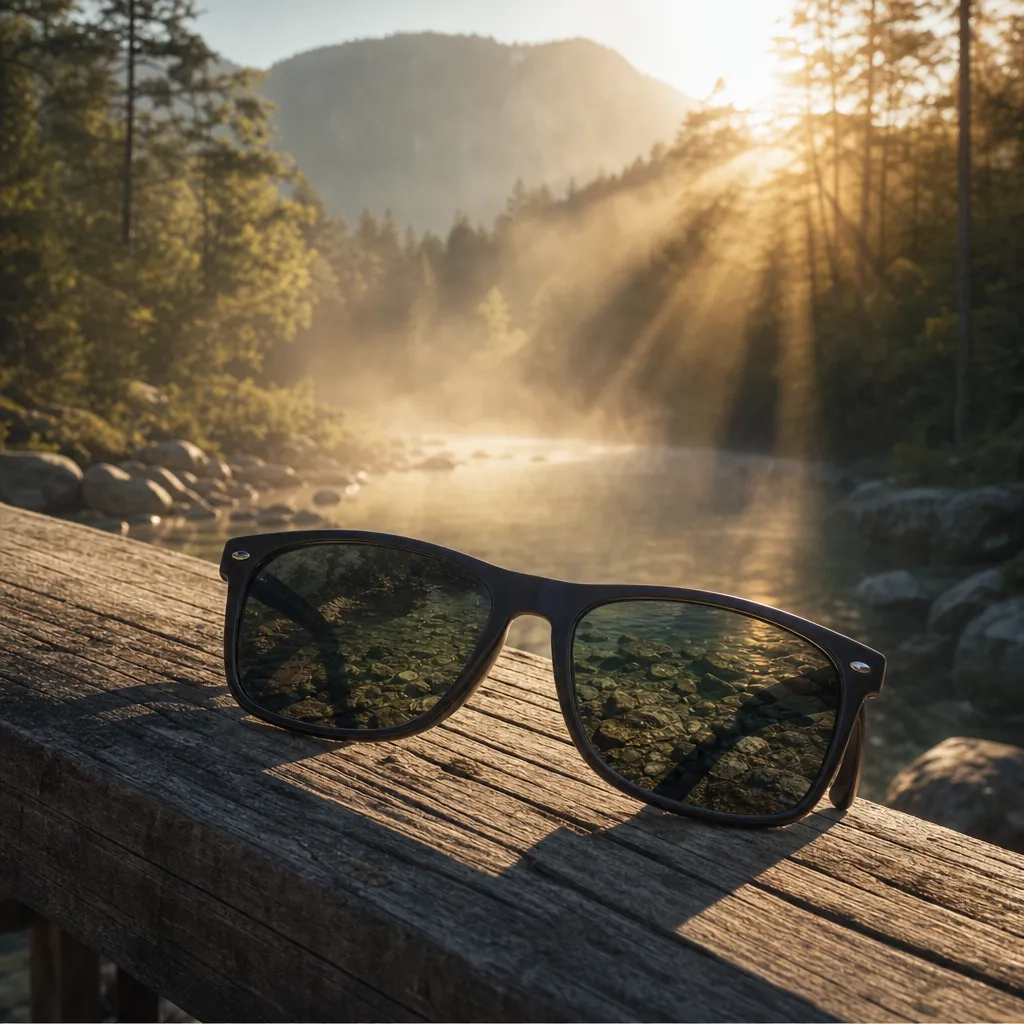
Walking the bank or wading a stretch of river, a good pair of polarized fishing sunglasses is the single best scouting tool you can wear. They cut the surface glare that makes shallow water look opaque and let you see bottom structure, submerged vegetation edges, depth changes, and — on good days — the fish themselves. Look for weed edges, rocky points transitioning to sand, and any wood or debris on the bottom. Mark what you find on your phone’s maps app before you leave the bank.
Common Mistakes Anglers Make When Scouting New Water
Even anglers who do their homework make a few consistent errors when finding new spots. Here’s what to watch for:
- Over-relying on one tool. No single app, map, or tip tells the whole story. Layer your intel — DNR data tells you what’s there, satellite imagery tells you where to look, a community app tells you if anyone’s been catching them lately, and your own eyes confirm everything.
- Ignoring access rules. Not all water that looks fishable is legally accessible. Always verify public access before crossing private land or fishing water that might be posted. Your state’s DNR site and the OnX Fish app both show public vs. private boundaries.
- Scouting only in the season you fish. The best time to scout a shallow cove for spring bass is the fall before, when the water’s still clear and you can see structure that’ll be invisible under algae bloom by May.
- Dismissing small water. Creeks, farm ponds, and urban retention lakes get ignored because they look unimpressive. Some of the best panfish, bass, and even trout fishing in the country happens on small water that nobody bothers to scout.
- Not keeping notes. If you find a good spot, log it. GPS pin, photo, water temp, time of year, what the bite was on. Memory is unreliable. A simple note in your phone’s maps app or a fishing journal prevents you from spending 45 minutes trying to relocate a snag-free channel edge you found two seasons ago.
Putting It All Together: A Simple Scouting Workflow
Here’s a practical sequence that works whether you’re targeting a familiar lake in a new county or exploring a river system you’ve never touched:
- Step 1 – Start online. Pull the state DNR page for the body of water. Check species data, stocking records, and public access points. Download or screenshot any contour maps available.
- Step 2 – Satellite recon. Open Google Earth, switch to historical imagery, and study the water from above. Mark candidate spots — points, creek channels, coves, and any color/depth transition you can see. Cross-reference with a Navionics chip or app for detailed contour data on larger lakes.
- Step 3 – Check the community intel. Open FishBrain or OnX Fish and see if there’s recent catch data on your target water. Note species, general area, and season. Don’t treat it as gospel, but use it to prioritize your candidate spots.
- Step 4 – Make a call to a local bait shop. One five-minute conversation with someone who’s been on that water last week is worth two hours of app browsing.
- Step 5 – Drive out and walk it. Show up with your polarized glasses and spend an hour walking the bank or wading before you rig up. Let your eyes confirm what the maps told you. Adjust your plan based on what you actually see.
- Step 6 – Log everything. Whether you catch fish or not, record water conditions, access notes, and which spots looked most promising. That record becomes your personal edge over time.
If you’re targeting new water consistently, a dedicated fishing journal or log book is worth keeping alongside your digital tools — there’s something about writing it down that makes the details stick better than a GPS pin alone.
Final Word
Finding good fishing spots isn’t luck — it’s a repeatable process. The anglers who consistently put themselves on fish aren’t guessing. They’re layering free public data with satellite imagery, community reports, and on-the-ground observation into a picture that gets clearer every time they go through the process. Start with your state DNR site tonight. Spend twenty minutes on Google Earth. Download FishBrain’s free tier. Then go walk a stretch of bank you’ve never fished with a good pair of polarized glasses on. You’ll know more about that water in one hour than most anglers will learn in a season of random casts. That’s the edge — and it doesn’t cost much to build it.


