
Disclosure: BestFishingReviews.com earns a small commission on purchases made through links on this page at no extra cost to you.
Trout fishing has a way of getting under your skin. One morning standing knee-deep in a cold, clear stream — watching a rainbow roll on a dry fly — and you’re hooked for life. But showing up without any background knowledge means you’ll spend more time untangling line than catching fish. Trout are spooky, selective, and habitat-specific in ways that bass and catfish just aren’t. This guide covers everything a beginner needs to hit the water with confidence: where different trout species live, what gear to bring, which lures and flies actually work, how to read the water, and how to handle a fish so it swims away healthy. Let’s get into it.
See current price & availability on AmazonCheck on Amazon →Stream Trout vs. Still-Water Trout: Know the Difference Before You Go
The single biggest mistake beginners make is treating all trout water the same. A cold mountain stream and a high-altitude lake both hold trout, but they require completely different approaches, and confusing the two will leave you frustrated.
Stream and river trout position themselves to intercept drifting food with the least amount of effort. Current does the work — the fish just has to sit in the right spot and eat what floats by. They’re territorial, they’re wary of anything that looks wrong, and they spook easily from heavy footsteps, a poorly placed shadow, or a fly line slapping the water. Stealth and a drag-free drift are everything here.
Still-water trout — fish in lakes, reservoirs, and ponds — don’t have current working for them, so they cruise. They follow temperature gradients, chase baitfish schools, and move shallower or deeper depending on the time of day and season. Early morning and evening, you’ll often find them near the surface. Midday in summer, they drop to cooler depths. Trolling, casting spinners, and working the shoreline structure are more relevant skills here than reading current seams.
Know which environment you’re fishing before you pack your bag.
Rainbow, Brown, and Brook: Matching the Species to the Water
The three trout you’ll encounter most often as a beginner in North America each have distinct personalities and habitat preferences. Understanding them saves you a lot of wasted casts.
Rainbow Trout
The most widely stocked trout in the US, rainbows are relatively forgiving for beginners. They’re aggressive, they’ll take a wide range of lures and flies, and they fight spectacularly — jumping repeatedly when hooked. They prefer cold, well-oxygenated water and are found everywhere from stocked community ponds to wild Pacific Northwest rivers. Stocked rainbows in a put-and-take pond are the easiest trout fishing you’ll find. Wild rainbows in pressured rivers are an entirely different animal.
Brown Trout
Browns are the PhD-level trout. Originally from Europe, they’ve established themselves across the country and are notoriously difficult to fool. They’re more tolerant of slightly warmer water than rainbows, often grow larger, and tend to become increasingly nocturnal as they age. Big browns are caught on big streamers fished in low light. During the day, they sit in the deepest, most sheltered lies and won’t come out for anything that doesn’t look exactly right. Don’t be discouraged when the brown trout humbles you — it humbles everyone.
Brook Trout
Technically a char, not a true trout, brookies are America’s native eastern stream fish and arguably the most beautiful freshwater fish on the continent. They’re also the most willing to eat — in remote headwater streams, a small brook trout will attack nearly anything. The tradeoff is that they require the coldest, cleanest water of the three species. Find a small, shaded mountain stream in New England, Appalachia, or the upper Midwest, and you’re in brookie country. They rarely grow large in streams (8–12 inches is a good one), but fishing for them in their native habitat is pure, uncomplicated joy.
Building the Right Ultralight Setup
Trout fishing does not require expensive gear, but it does reward matched, balanced gear. A heavy bass rod and 20-pound mono is going to cost you fish. Trout in clear water can see your line, feel resistance on the bite, and will drop a lure the instant something feels wrong.
Here’s the foundation of a solid beginner trout rig:
- Rod: A 5’6″ to 6’6″ ultralight spinning rod with a fast or moderate-fast action. Ultralight power gives you the sensitivity to feel soft bites and the flex to fight small-to-medium trout without breaking them off.
- Reel: A ultralight spinning reel in the 1000–2500 size range. Smooth drag is the most important feature — a sticky drag that grabs instead of yielding smoothly will result in a lot of broken tippets and lost fish.
- Line: 4–6 lb monofilament or fluorocarbon. Fluorocarbon is nearly invisible underwater and is the better choice for clear, pressured streams. Light fluorocarbon line costs a bit more but makes a noticeable difference when fish are being selective.
- Hooks: Size 8–14 bait hooks for live bait presentations. For artificials, your lure comes with hooks, but carry a few split shot for weighting live bait rigs.
If you’re interested in fly fishing — and trout fishing will eventually pull you that direction — start with a fly fishing starter kit in a 4-weight or 5-weight. A 9-foot, 5-weight rod is the most versatile all-around trout fly setup you can own.
Top Lure and Fly Patterns That Actually Catch Trout
You don’t need a tackle box full of every color and style. Trout are predictable in what they eat: insects, small baitfish, worms, and crustaceans. Match those categories and you’re in business.
Spinning Lures for Beginners
- In-line spinners (Mepps, Rooster Tail): The most beginner-friendly trout lure ever made. Cast upstream or across current, let it sink slightly, and retrieve steadily. The blade flash and vibration trigger reaction strikes. Size 0–2 in gold or silver covers most situations.
- Small spoons (Kastmaster, Little Cleo): Excellent in rivers and lakes. Heavier than spinners so they cast well in wind and sink to where bigger fish hold. Work with a slow, erratic retrieve.
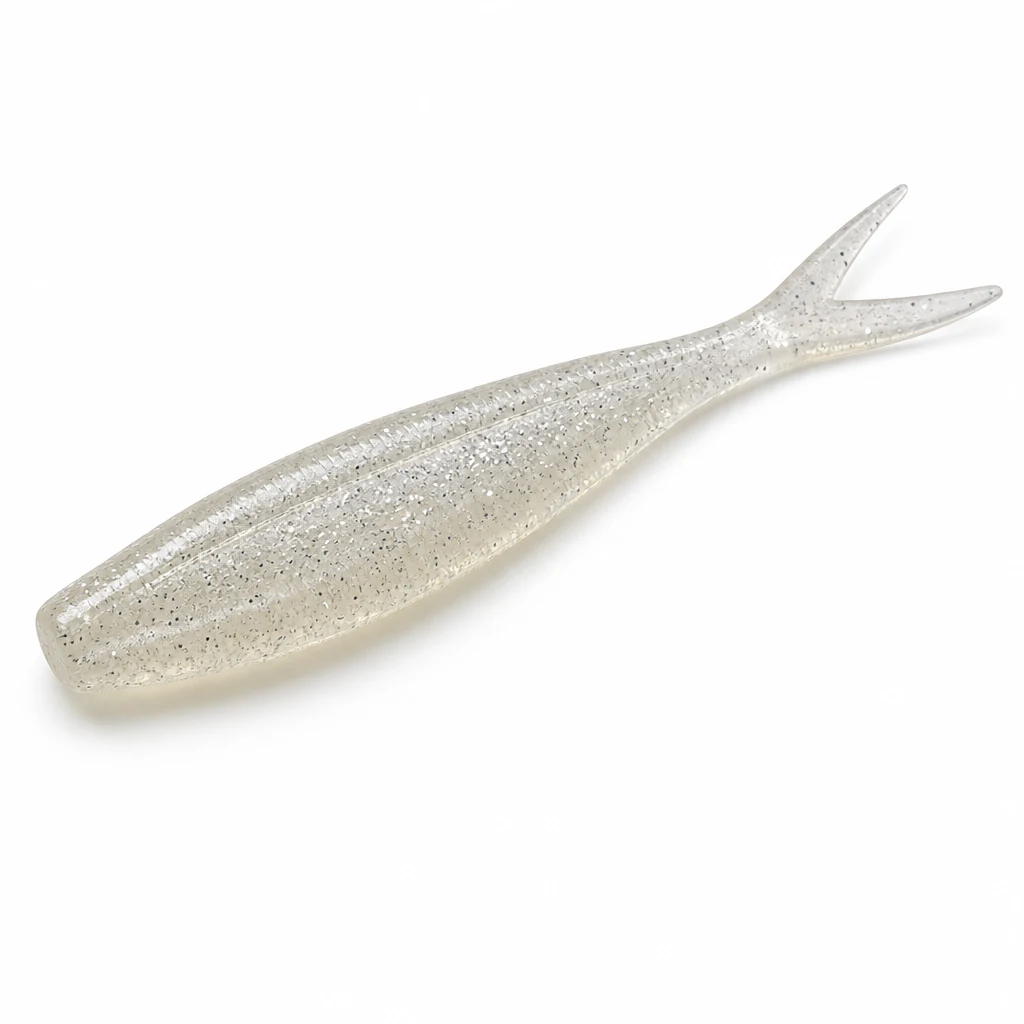
- Soft plastic micro jigs: Small paddle-tail swimbaits and tube jigs on 1/16 oz jig heads are devastatingly effective, especially for brown trout in rivers. Fish them on a slow swim or short hops along the bottom.
- Berkley PowerBait: Specifically designed for stocked rainbows. Float a dough ball off the bottom on a small hook with a split shot a foot up the line. It’s not elegant, but it works.
Essential Fly Patterns
- Elk Hair Caddis (sizes 12–16): A dry fly that imitates adult caddisflies, one of the most abundant stream insects in North America. Floats well, easy to see, and trout eat it confidently.
- Pheasant Tail Nymph (sizes 14–18): Imitates mayfly nymphs — the subsurface life stage trout eat 80% of the time. Fish it under a small strike indicator on a dead drift.
- Woolly Bugger (sizes 6–10): A streamer that imitates a leech, sculpin, or baitfish. Strip it through deep pools and undercut banks for bigger fish. Black and olive are the go-to colors.
- Adams Parachute (sizes 12–16): The Swiss Army knife of dry flies. Works during almost any surface hatch when you’re not sure what’s going on.
Reading Current Seams and Finding Where Trout Actually Hold
This is the skill that separates anglers who catch trout consistently from those who get skunked. Trout are lazy by design — they want maximum food for minimum energy. That means they sit where current delivers food to them, while they rest in slower water just adjacent to it. That boundary between fast and slow water is called a seam, and it’s the most productive water in any river.
Look for these specific features:
- Seams behind boulders and rocks: The downstream side of any midstream obstacle creates a current break. Trout park there and let the food come to them. Cast just upstream of the rock and let your lure or fly drift naturally through the seam.
- Pool heads and tails: Where a riffle dumps into a pool (the head) is prime feeding water. The tail of a pool, where it shallows back into a riffle, is where trout feed actively during low-light periods. Both deserve serious attention.
- Undercut banks: Overhanging grass, exposed tree roots, and undercut earth on the outside of a bend create shade, overhead cover, and a slow eddy right against the bank. Big, old trout live here and rarely move far.
- Foam lines: Wherever foam collects on the surface, the current is converging and concentrating floating food. If you see a foam line, you’ve found a feeding lane. Put your fly there.
- Deep eddies: A large circular eddy below a major obstruction or bend holds fish at multiple depths. Bigger, slower-moving baitfish imitations work well here.
Walk quietly, move slowly, and stay low. Trout facing upstream can’t see directly behind them, so always approach from downstream. A shadow crossing the water or heavy vibration through the stream bottom will clear out a pool before you’ve made a single cast.
Catch-and-Release Etiquette: Handling Fish the Right Way
Trout, especially wild trout in catch-and-release fisheries, are a shared resource. How you handle a fish after you land it determines whether it lives or dies. Here’s how to do it right.
- Wet your hands before touching the fish. Dry hands strip the protective slime coat that shields trout from infection and disease. This is non-negotiable.
- Keep the fish in the water as much as possible. If you want a photo, have the camera ready before you lift the fish. Get it out, get the shot in under 10 seconds, get it back in. A fish out of water is suffocating.
- Don’t squeeze. Hold a trout gently horizontal, supporting its body under the belly. Squeezing damages internal organs you can’t see.
- Use barbless hooks or crimp your barbs. Barbless hooks come out in seconds with no tearing. Many quality barbless trout hooks are available, and they don’t actually cost you many fish.
- Revive the fish before releasing. Hold it gently upright in the current, facing upstream. Wait until it kicks free under its own power — don’t force it. A fish that rolls belly-up the second you let go isn’t ready.
- Respect posted regulations. Most quality trout streams have special regulations — slot limits, fly-only sections, barbless requirements. Know them before you go. Ignorance isn’t an excuse when a warden shows up.
Putting It All Together: How to Choose Your First Trout Outing
If you’re brand new to trout fishing, don’t start on a pressured tailwater that demands perfect nymph technique and exact fly matching. Start somewhere forgiving — a stocked lake or pond with rainbow trout, or a small, accessible mountain stream for brook trout. Both will teach you fundamental skills without making you feel like you’re failing constantly.
Once you’re comfortable reading water and landing fish on basic spinning tackle, step up to moving water. Practice your presentation, start paying attention to what insects are on the water, and — when you’re ready — pick up a fly rod. The transition from spinning to fly fishing for trout is one of the most rewarding learning curves in all of freshwater fishing.
Check your state’s fish and wildlife agency website for stocking reports, local regulations, and access points. Most states stock heavily in spring and fall, and those windows are excellent for beginners. Start local, go often, and pay attention to everything the water is telling you.
Trout fishing is a lifelong pursuit. The anglers who catch fish consistently aren’t necessarily smarter than you — they’ve just spent more mornings standing in cold water, watching and learning. Get out there and start putting in your time. The fish will follow.