Disclosure: BestFishingReviews.com participates in the Amazon Services LLC Associates Program; if you buy through our links we earn a small commission at no extra cost to you.
Standing at the water’s edge with the surf crashing around your boots is one of the best feelings in fishing — but getting there with the wrong rod will cost you fish and frustration in equal measure. Surf fishing puts demands on gear that freshwater and even most inshore setups never face: long casts into wind and current, heavy sinkers and rigs, saltwater corrosion, and sand in every moving part. The rod is where it all starts. Pick the right one and everything else — the reel, the line, the rig — has a fighting chance. Pick wrong and you’re either snapping tips on heavy leads or lobbing your bait twenty feet short of the productive water. This guide walks you through every decision a first-time surf angler needs to make, without burying you in specs you don’t need yet.
See current price & availability on AmazonCheck on Amazon →Why Surf Rods Are Built Differently
A surf rod isn’t just a long bass rod. It’s engineered around a specific set of jobs: launching a weighted rig beyond the breakers (often 60 to 100+ yards), absorbing the shock of that cast without cracking, and then fighting a fish through surging white water back to dry sand. That job description shapes every part of the rod — the blank’s length, the material and spacing of the guides, the reel seat, and the grip design.
The blank itself is typically fiberglass, graphite, or a composite of both. Fiberglass is tougher and more forgiving — great for beginners who occasionally smack a rod on a rock or over-load it on a cast. Graphite (carbon fiber) is lighter and more sensitive but less forgiving of abuse. Most entry-level surf rods land in composite territory, giving you a reasonable balance of weight, durability, and price. As you move up in budget, graphite content increases and weight drops noticeably. After a long beach session, a few ounces really does matter to your shoulder.
Getting Length Right: The 8–12 Foot Decision
Surf rods run from about 8 feet to 14 feet, but the practical sweet spot for most US surf anglers is 9 to 12 feet. Here’s how to think about it:
- 8–9 feet: Best for smaller, calmer surf — protected beaches, inlets, and piers. Easier to handle, good for kids and smaller anglers. Limited casting distance.
- 10–11 feet: The all-around sweet spot. Handles most East and Gulf Coast surf conditions, casts sinkers up to 4–5 oz comfortably, and still fits in most vehicles when broken down into two pieces.
- 12 feet and up: Built for serious distance casting, rough water on exposed beaches, or targeting species that hold beyond the second sandbar. These rods demand more casting skill. Great for the Outer Banks, Cape Cod, or the California coast where long casts are a necessity.
If you’re just starting out and fishing moderate surf — think Florida’s Gulf Coast, the Jersey Shore, or the Texas coast — a 10 or 10.5-foot rod will cover nearly every situation you run into in your first two seasons.
Power and Action: The Two Numbers That Actually Matter
Rod power is how much force it takes to bend the blank — think of it as the rod’s overall strength. Rod action is where along the blank that bend happens. These two specs together determine what sinker weights you can cast and how the rod handles a fish. Get them wrong and you’re either under-gunned or casting with a broomstick.
For surf fishing, aim for medium-heavy to heavy power. Most surf scenarios require sinkers from 2 to 6 ounces, and medium-heavy rods handle the 2–4 oz range while heavy rods are built for 4–8 oz. If you’re fishing for pompano or whiting in mild surf with a 1.5 oz pyramid sinker, medium-heavy is plenty. If you’re chunking cut bunker for striped bass in a rolling ocean, you want heavy.
For action, moderate-fast is the beginner’s best friend. A fast-action rod bends mostly in the top third — great for sensitivity, but it loads and unloads quickly, which punishes casting mistakes. A moderate-fast action bends through the upper half of the blank, giving you a wider casting window, more of a “slingshot” feel on the delivery, and better shock absorption when a big red drum or striiper makes a hard run. Some experienced surf casters prefer fast action for distance, but if you’re still dialing in your pendulum or overhead cast, moderate-fast gives you more margin for error.
Check the rod’s listed casting weight on the blank — it should match the sinkers and rigs you plan to throw. If you’re regularly fishing a 3 oz fish-finder rig, a rod rated 2–5 oz is your zone. A medium-heavy 10-foot surf rod covers that range well for most beginners.
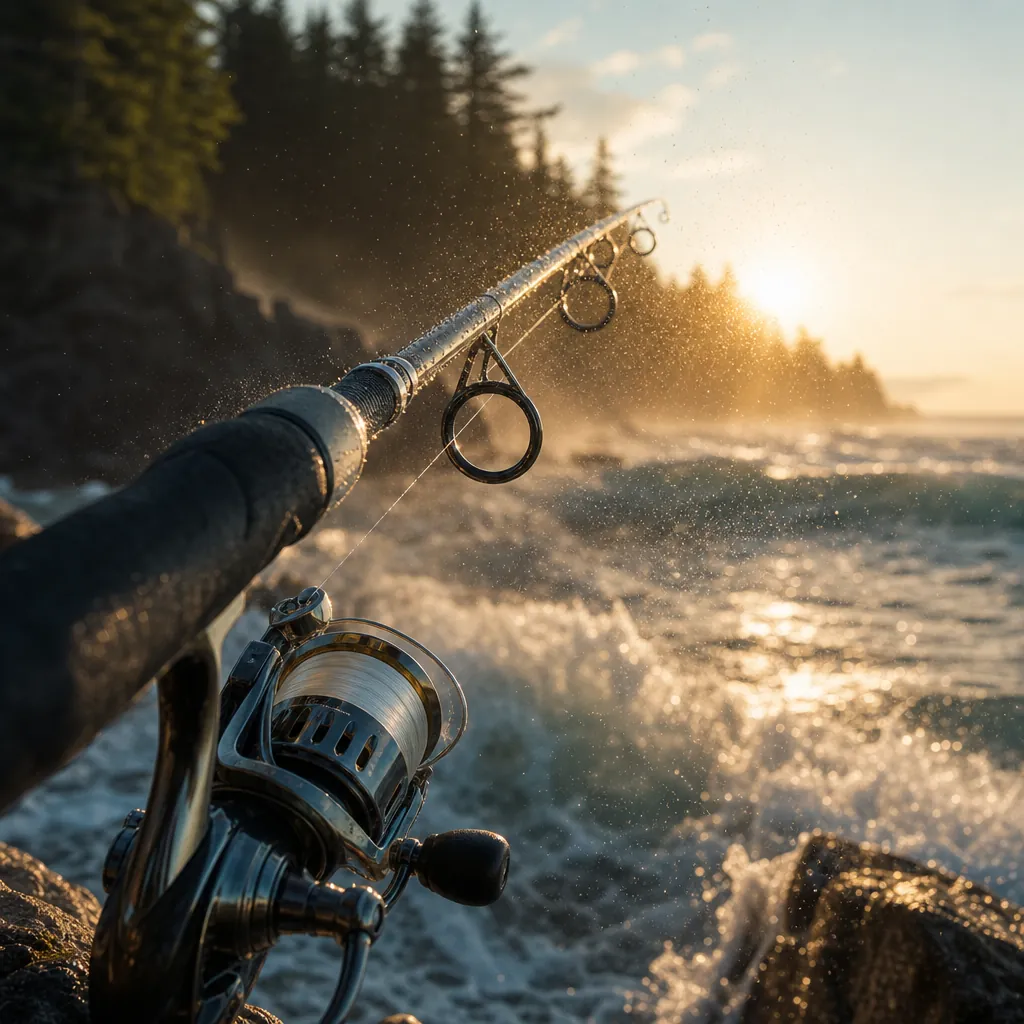
Surf-Specific Hardware: Guides, Reel Seats, and Grips
This is where budget surf rods often cut corners, and where you’ll feel the difference long before you see it on the price tag.
Guides
Surf rods need large-diameter guides — especially the butt guide (the one closest to the reel). Large guides reduce line slap during long casts, which bleeds off distance and can cause tangles. Look for rods with at least 5–6 guides on a 10-foot blank, with a butt guide in the 40–50mm range. Guide material matters too: stainless steel frames are fine, but the insert (the ring your line passes through) should be aluminum oxide at minimum. Better rods use Fuji Alconite or Fuji SiC (silicon carbide) inserts, which run cooler, reduce friction, and last longer in the salt. Avoid ceramic inserts on cheap rods — they crack.
Reel Seats
The reel seat holds your spinning reel on the rod. For surf fishing, graphite or aluminum reel seats with double-locking nuts are the standard. Double-locking means there are two threaded rings that clamp the reel foot in place — one to tighten, one to lock it down. This matters because surf casting puts enormous torque on the connection, and a single-lock reel seat can loosen mid-session. Fuji DPS-style reel seats are the industry benchmark. If the product listing doesn’t specify, look closely at the photos — any decent surf rod over $100 should show a proper double-lock setup.
Grips
Most surf rods use either EVA foam or cork for the fore and rear grips. EVA foam is more durable in saltwater and easier to clean — it’s the practical choice for a beginner rod. Cork feels better in hand and is traditional, but it degrades faster with heavy salt exposure. The rear grip on a surf rod is long by design (often 18–24 inches) to give you a two-handed casting grip and something to brace against your forearm or hip on the retrieve. Don’t buy a rod with a short rear grip — it’ll limit your casting leverage immediately.
Two-Piece vs. Telescopic: The Transport Question
A 10-foot rod doesn’t fit in most cars in one piece — so how the rod breaks down matters a lot for real-world use.
Two-piece rods are the gold standard. The blank is cut in half (or sometimes into three sections on longer rods) with a spigot or slip-over ferrule joint. When assembled correctly, a quality two-piece rod casts and fights fish almost identically to a one-piece. The joint is a potential weak point only on very cheap rods with sloppy ferrules. Two-piece rods break down to roughly 5–6 feet, fitting in an SUV cargo area, a truck bed, or a rod tube for travel. This is what most experienced surf anglers use.
Telescopic rods collapse to 2–3 feet and look incredibly convenient. For surf fishing, they come with trade-offs. The multiple ferrule joints in a telescopic blank interrupt the smooth power transfer you need for long casts, and the joints are more vulnerable to failure under heavy loads. They also have a frustrating habit of collapsing mid-fight at the worst possible moment. That said, modern telescopic surf rods have improved significantly, and if you’re backpacking to a remote beach or traveling by plane, they’re worth considering. For anyone driving to a local beach, stick with two-piece.
Common Mistakes First-Time Surf Rod Buyers Make
- Buying too short: A 7-foot spinning rod from the freshwater aisle will technically cast into the ocean, but you’ll be fighting the waves on every retrieve and falling well short of feeding fish. Minimum 9 feet for real surf use.
- Ignoring the casting weight rating: Using a 1 oz sinker on a rod rated 4–8 oz is like trying to load a crossbow with a rubber band. The rod won’t load properly and your cast will go nowhere. Match sinker weight to rod rating.
- Over-buying on length: A 12-foot rod sounds impressive, but if you can’t cast it comfortably, a 10-footer you can actually control will outfish it every time.
- Skipping a rod sleeve or tube: Sand and rod tips are enemies. A rod bag doesn’t add casting distance, but it saves you from replacing a broken tip after one trip.
- Not rinsing the rod after every salt session: Fresh water, thirty seconds. That’s all it takes to add years to your rod’s life, especially around the guides and reel seat.
Recommendations at Three Price Points
Here’s a honest look at what your money gets you at each budget level. These aren’t the only options — but they represent the type of rod you should be shopping for in each tier.
Budget Pick (~$80): Ugly Stik Bigwater
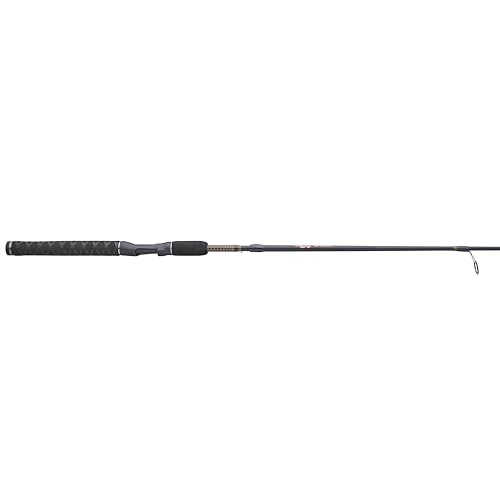
The Ugly Stik Bigwater is the rod you hand to someone who isn’t sure they’ll like surf fishing yet. It’s built on Ugly Stik’s fiberglass-graphite composite blank — nearly indestructible by beginner standards — with Clear Tip construction that resists tip breakage. Guides are stainless with aluminum oxide inserts, the reel seat is solid, and the two-piece 10-foot version handles sinkers up to 4 oz without complaint. It’s heavier than premium options and not the most sensitive blank on the market, but it will last, it will cast, and it will handle your first stripers, redfish, or whiting without breaking your wallet or itself.
Mid-Range Pick (~$150): Penn Battalion Surf
Step up to around $150 and the Penn Battalion Surf is where serious beginner-to-intermediate surf fishing begins. The graphite composite blank is noticeably lighter than the Bigwater, with Fuji guides (Alconite inserts) and a Fuji DPS reel seat with the double-lock system described above. Available in lengths from 9 to 12 feet in multiple power ratings, it gives you real options to match your beach. The moderate-fast action loads well even for anglers still refining their cast, and it’s corrosion-resistant throughout. This is the rod most regular surf anglers in the $100–$200 window should land on.
Premium Pick (~$300): St. Croix Mojo Surf
When you’re ready to invest — or you just know surf fishing is going to be a long-term thing — the St. Croix Mojo Surf is the benchmark at this price point. Built in Park Falls, Wisconsin on SCII graphite blanks with IPC (integrated poly curve) tooling, these rods are meaningfully lighter, more sensitive, and better balanced than anything in the tiers below. Fuji K-frame guides minimize line slap dramatically. The result is more distance on every cast and quicker feedback when a fish picks up your bait. At $300 it’s a real investment, but St. Croix backs it with a five-year warranty and builds rods that routinely last a decade of hard salt use. If you’re already hooked on the surf, this is where the money goes.
How to Choose the Right Rod for You
Before you click buy, answer these four questions: Where are you fishing most often (calm bay, moderate surf, or heavy exposed beach)? What species are you targeting (small panfish-sized or big drum and stripers)? What sinker weights does your local rig setup require? And how are you getting the rod to the beach? Those answers will narrow your length, power rating, and whether two-piece or telescopic makes more sense than any spec sheet will. When in doubt, a 10-foot medium-heavy two-piece rod in the $80–$150 range covers roughly 80% of surf fishing situations on US beaches, and that’s a reasonable place to start for anyone new to the game.
Final Thoughts
Surf fishing has a way of getting into your blood fast — the big open sky, the sound of the waves, and the possibility of something genuinely large on the other end of the line. The right rod makes every part of that experience better: easier casts, less fatigue, and more confidence in your setup. You don’t need to spend $300 on your first surf rod, but you do need to buy one built for the job. Get the length, power, and hardware right, match it with a quality surf spinning reel, and go put your feet in the sand. The fish aren’t waiting.