Disclosure: BestFishingReviews.com earns a commission from qualifying purchases made through affiliate links in this article, at no extra cost to you.
Catfish are the working man’s trophy fish. They don’t require a $50,000 bass boat or a tackle box full of soft plastics. What they do require is the right knowledge — and that’s where most anglers leave fish in the water. Whether you’re after a 3-pound channel cat for the dinner table or a 60-pound blue cat to hang on the wall, the difference between a slow night and a bent rod usually comes down to knowing your species, picking the right bait, and rigging heavy enough to do the job. This guide breaks all of it down so you can walk to the bank — or climb in the boat — with a real plan.
See current price & availability on AmazonCheck on Amazon →Channel Cat, Blue Cat, or Flathead: Know What You’re Chasing
The three major species you’ll encounter across the US are channel catfish, blue catfish, and flathead catfish, and they’re different enough in behavior and habitat that lumping them together will cost you fish. Getting the ID right means you can tailor your bait and presentation to the specific fish you want.
Channel catfish are the most widespread and the easiest to target. They’re identified by a deeply forked tail, scattered black spots on younger fish, and a slender, more streamlined body. You’ll find them in rivers, reservoirs, farm ponds, and just about any body of water that holds a decent food supply. Channel cats are opportunistic scavengers, which makes them highly responsive to stinkbaits, prepared baits, and chicken liver. Most channel cats run 1–10 pounds, though double-digit fish exist in good river systems.
Blue catfish are the big-water heavyweights. They have a similar forked tail to channels but lack the spots, have a straighter anal fin edge (channel cats have a curved one), and grow substantially larger — 20, 40, even 100+ pounds in trophy fisheries like the James River in Virginia or the Missouri River. Blues are more active hunters than channels and respond well to fresh-cut bait. Find them below tailwaters, in deep river bends, and near major tributary confluences.
Flathead catfish are the ambush predators of the group. The flat, wide head, underslung jaw, and squared-off or slightly notched tail set them apart immediately. Flatheads are almost exclusively live-bait feeders — they want something that’s still moving. A fresh bluegill, shad, or bullhead on the hook is your ticket. They hold tight to heavy structure: logjams, undercut banks, rock piles. They don’t roam as much as blues, which means once you find their spot, you’ve found them.
The Best Baits for Catfish (and When to Use Each)
Catfish locate food almost entirely by smell and lateral-line vibration, which means your bait selection matters more than your lure color ever will for bass. Here’s what works, and more importantly, when to reach for it.
Chicken Liver
Cheap, stinky, and deadly for channel cats. The problem everybody runs into is that liver falls off the hook. The fix: use a size 2/0–4/0 treble hook, wrap the liver in mesh bait bags, or keep it cold so it stays firmer. Fish it on the bottom in moderate current where scent drifts downstream through a feeding zone. It loses effectiveness quickly in warm water as it dissolves, so rebait every 20–30 minutes.
Cut Shad
This is the go-to for big blue catfish and a solid option for large channel cats. Fresh is always better than frozen. Cut the shad into chunks — head section, body chunks, tail section — and use the oiliest pieces first. The natural oils and blood trail through current is incredibly effective below dam tailwaters. A whole side of a fresh shad fillet on a 5/0 circle hook is hard to beat when blues are your target. If you can’t get shad, skipjack herring and carp chunks work on the same principle.
Stinkbait and Dip Bait
These prepared baits — the ones that smell like something died twice — are purpose-built for channel cats. They’re loaded with fermented proteins and attractants that disperse a powerful scent cloud in still or slow water. Use a sponge hook, tube hook, or catfish dip bait worm hook to hold the bait on. They work best in lakes, ponds, and slow river backwaters — strong current washes them off too fast. Brands like Magic Bait, Team Catfish, and Doc’s have legions of loyal users for a reason.
Live Bait for Flatheads
If you’re targeting flatheads specifically, put the stinkbait back in the bag. Hook a lively 4–6 inch bluegill through the back just behind the dorsal fin, or use a small bullhead, green sunfish, or chunk of live carp. Keep the bait moving slightly — flatheads key in on that distressed motion. Fish it tight to heavy cover, let it sit, and be patient. Flathead fishing is a waiting game, but the payoff is a fish that will absolutely test your tackle.
Heavy-Tackle Setup: Rod, Reel, Line, and Hooks
Light tackle has no business in serious catfishing. A 2-pound channel cat on a spinning rod is a fun surprise, but when a 40-pound blue runs under a log with your line, you’ll wish you’d rigged heavier. Here’s the baseline setup that handles everything from eating-size channel cats to river giants.
Rod
Go 7 feet or longer, medium-heavy to heavy power, with a moderate-fast action. You want enough backbone to move a big fish away from structure, but enough tip sensitivity to detect subtle bottom-feeding bites. Ugly Stik, Shakespeare, and B’n’M make solid catfish-specific rods without asking you to spend a mortgage payment. Look for a 7-foot medium-heavy catfish rod with a comfortable foam or cork grip for long bank sessions.
Reel
Either a heavy baitcaster or a large spinning reel in the 4000–6000 size class works well. For bank fishing and heavy current, many serious catfishers prefer a baitcasting reel with a clicker — you can set it in free-spool and let the clicker alert you to a pickup. A reel with a strong, smooth drag system is non-negotiable. You’re not finesse fishing here.
Line
30-pound braided line is the standard starting point for most catfish situations. Braid gives you zero stretch for solid hooksets, high sensitivity, and the strength to horse fish away from snags. Use a 24–36 inch fluorocarbon leader of 25–40 lb test between the braid and your terminal tackle — fluoro sinks, is nearly invisible, and handles abrasion from rocks and wood much better than braid alone. A good 30-pound braided fishing line on a quality reel will last you multiple seasons of hard use.
Hooks
Circle hooks are the right call for most catfish applications — they’re designed to slide to the corner of the mouth and self-set when the fish moves away, which dramatically reduces gut-hooking and makes catch-and-release cleaner. Start at 5/0 and go up to 8/0 or 10/0 for big-bait presentations targeting blue or flathead cats. Catfish circle hooks in 5/0–8/0 from brands like Gamakatsu, Owner, or Eagle Claw are inexpensive and sharp out of the package. Buy them in bulk — catfish country will bend and dull hooks faster than you expect.
Night Fishing Tactics: Why Dark Is Better
Catfish are crepuscular to nocturnal feeders by nature. During daylight, especially in summer, big fish push into deep, shaded holes and largely shut down. Once the sun drops, they move shallow, spread out along feeding flats, and actively hunt. This is when you want to be on the water.
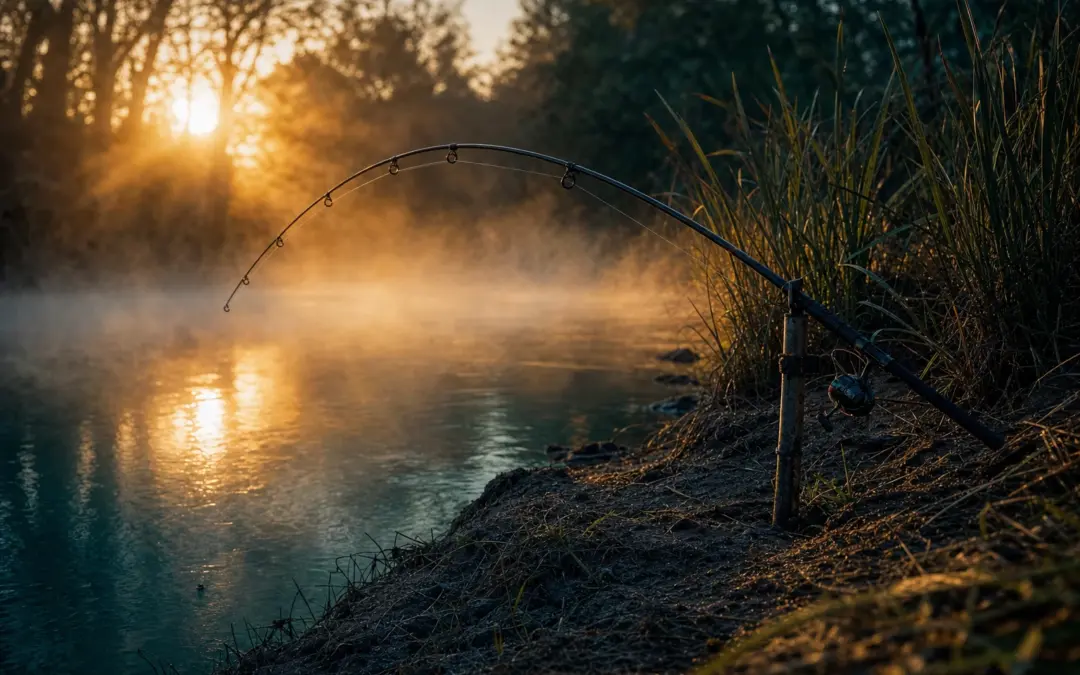
The setup for night fishing is simple but intentional. Bank fishermen should use rod holders or bank sticks to keep multiple lines in the water simultaneously — a bite alarm or bell on the rod tip tells you when something’s happening without you staring at the rod all night. Set up on a downstream point, a channel edge near a flat, or the inside bend of a river where current slows and food settles. Cover multiple depth zones with your rods: one rod in 4 feet of water on the flat, one in 10 feet on the drop-off edge. Let the fish tell you where they are.
A headlamp and a good cooler with ice for keeping fresh bait cold are just as important as any piece of tackle. Bring bug spray. Bring more bug spray. Night catfishing in the summer is effective precisely because humans aren’t comfortable doing it — the fish know this too.
River vs. Lake Patterns: Reading the Water
Catfish behavior differs enough between moving and still water that you need two different mental models for finding them.
River Fishing
In rivers, catfish use current breaks to conserve energy while staying close to food. Target the seam where fast water meets slow water — downstream of wing dams, rock piles, bridge pilings, and fallen trees. Deep holes below riffles are classic channel cat spots. Blue cats in big river systems stack below lock-and-dam tailwaters when shad and skipjack are present — this is as close to a sure thing as catfishing gets. In spring and early summer, actively feeding fish push shallower, especially in the hour after sunset. In midsummer, work deeper structure during the day and move shallow at night. Keep your sinker heavy enough to hold bottom in current — a 2- to 4-ounce no-roll or bank sinker is standard, heavier in fast tailwaters.
Lake Fishing
Lakes require a little more searching because catfish spread out more without current to organize them. In summer, find the thermocline depth — the zone where warm surface water meets cooler deep water — and fish just above it. Main-lake points that taper into the channel, humps near deep water, and dam faces are productive structure. At night, channel cats move onto hard-bottom flats adjacent to deep water to feed. In reservoirs, locate creek channel bends using a sonar or fish finder — catfish cruise these underwater highways regularly. Still-fishing with multiple rods fanned at different distances and depths is the most reliable lake approach, paired with a set of bank rod holders so you can cover water without holding every rod by hand.
Common Mistakes That Kill Your Catfish Success
- Using bait that’s too small. A big catfish won’t bother with a tiny piece of liver. Size your bait to the fish you’re targeting — a golf-ball sized chunk of fresh shad for blue cats, not a pinch.
- Fishing too light. A medium-light bass rod with 12-pound mono is not catfish gear. Undergunned tackle loses fish in cover and exhausts fish you plan to release.
- Setting the hook too early on circle hooks. Circle hooks work by letting the fish move away and having the hook roll into the corner of the mouth. Yanking back hard like you would on a J-hook pulls it right out. Reel down and apply steady pressure instead.
- Ignoring water temperature. Catfish feeding activity drops sharply in water below 50°F. In cold months, slow down, fish deeper, and downsize your bait presentation.
- Using old, frozen bait. Fresh bait out-fishes frozen bait. Always. If you’re using store-bought frozen shad while the guy next to you has fresh-netted skipjack, he’s going to catch more fish.
- Fishing the same spot all night. If you’ve gone 90 minutes without a bite, move. Catfish are mobile feeders. Don’t be married to a spot that isn’t producing.
Putting It All Together: How to Choose Your Setup
Here’s how to think about your setup based on what you’re actually chasing. If you’re fishing a local reservoir for channel cats, a 7-foot medium-heavy rod, a 4000-size spinning reel, 20–30 lb braid with a fluorocarbon leader, and a 3/0–5/0 circle hook with chicken liver or stinkbait covers you completely. If you’re targeting blue cats in a major river system, step up to a heavy rod, 40–65 lb braid, an 8/0 circle hook, and a fresh-cut shad section fished on a Carolina or three-way swivel rig below a tailwater. For flatheads, that same heavy setup works, but swap to live bait and fish it right against visible wood structure in slower-moving river sections. A quality catfish terminal tackle kit with assorted circle hooks, sinkers, and swivels is a smart starting point if you’re building your rig box from scratch — it covers most scenarios without overpaying for individual components.
The bottom line: catfishing doesn’t reward complexity. It rewards patience, fresh bait, the right location at the right time of day, and gear that’s stout enough to land what you hook. Get those four things right and you’ll be loading the cooler — or releasing a fish that’ll make your hands shake — more nights than not.