Disclosure: BestFishingReviews.com is a participant in the Amazon Services LLC Associates Program. If you buy something through our links, we may earn a small commission at no extra cost to you.
Most anglers spend serious money on rods, reels, and lures — then show up to the water squinting into the glare, fumbling with hooks, and soaking their phone in a live well. The gear that actually makes a fishing day run smoother isn’t always the glamorous stuff. It’s the small, practical tools you reach for a dozen times before lunch. We put together this list of eight accessories that genuinely earn their keep, whether you’re wade fishing a mountain stream, drifting a reservoir, or standing on a pier at midnight. None of these are gimmicks. Every single one solves a real problem you’ve probably already run into on the water.
See current price & availability on AmazonCheck on Amazon →How We Picked
We focused on accessories that address specific, recurring pain points — not nice-to-haves that end up at the bottom of your dry bag. Each pick had to be durable enough for regular use, reasonably priced, and genuinely better than going without. We considered user feedback from real anglers, long-term durability in wet and salty conditions, and whether the item actually changes how your day on the water goes.
1. Polarized Fishing Sunglasses
If you only buy one thing on this list, make it a good pair of polarized sunglasses. The difference between looking at a lake and looking into a lake is night and day — literally. Polarized lenses cut surface glare and let you spot fish holding in structure, read depth changes, and track your lure through the water column. That’s not a marketing claim; it’s physics. Amber or copper lenses work best in freshwater and low-light conditions. Gray lenses are better for open-water and bluewater fishing on bright days. Don’t cheap out here — a flimsy frame that slips off your nose every time you cast is worse than useless. Look for wraparound coverage, UV400 protection, and a frame that grips even when your face is sweaty.
Best for: Every single angler, every single trip.
Shop polarized fishing sunglasses on Amazon
- Pro: Dramatically improves your ability to spot fish and structure
- Pro: Protects your eyes from UV damage and flying hooks
- Pro: Reduces eye fatigue on long, bright days
- Con: Quality pairs cost $50–$150+; bargain options sacrifice optical clarity
- Con: Easy to lose overboard — always use a retainer strap
2. Fishing Pliers
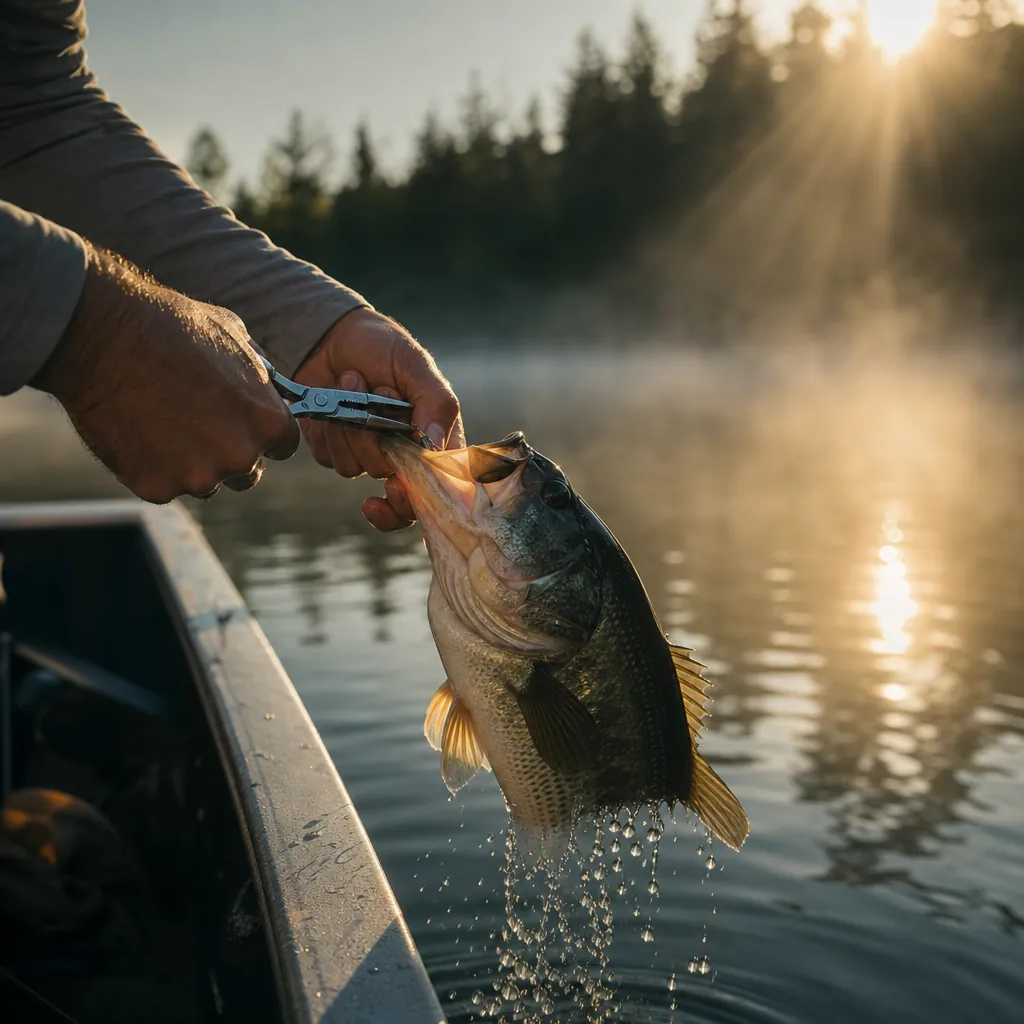
A dedicated pair of fishing pliers is one of those things you don’t appreciate until you’re trying to back a treble hook out of a bass’s jaw with your fingers — at which point you appreciate it immediately and deeply. Good fishing pliers handle hook removal, split ring work, crimping leader sleeves, and cutting braid all in one tool. The key features to look for are corrosion-resistant construction (either aluminum or stainless), a built-in line cutter that actually cuts braid cleanly, and a spring-loaded open jaw so you’re not fighting the tool while you’re fighting the fish. Longer nose pliers (7–8 inches) give you better reach into a fish’s mouth. A lanyard attachment point is a must — these things are magnetically attracted to deep water.
Best for: Anyone fishing with treble hooks, live bait, or heavy leader material.
- Pro: Safer and faster hook removal than bare hands
- Pro: Handles multiple rigging tasks — one tool, many jobs
- Pro: Protects fish from excessive handling stress during release
- Con: Budget pliers corrode fast in saltwater — invest in quality
- Con: Easy to drop overboard without a lanyard
3. Line Clippers
This is the most underrated tool in any angler’s vest or tackle bag. A good pair of line clippers gives you a fast, clean cut every time you tie on a new hook or trim a tag end. Your teeth work in a pinch, but they crush monofilament and fluorocarbon rather than slicing it, which weakens the knot right at the tag. Nail clippers from the drugstore are a classic workaround and honestly not bad — but dedicated fishing clippers are sharper, handle braid better, and often come with a needle for clearing hook eyes. Many clip right onto a zinger retractor on your vest or shirt pocket so they’re always within reach. At $5–$15, this is the cheapest performance upgrade on this list.
Best for: Fly anglers, trout fishermen, and anyone who ties a lot of knots streamside.
Shop fishing line clippers on Amazon
- Pro: Clean cuts protect knot integrity
- Pro: Tiny and lightweight — no reason not to carry one
- Pro: Needle tool clears half-hitched hook eyes in seconds
- Con: Small enough to lose easily — clip to a retractor
- Con: Cheaper models go dull faster than you’d expect
4. Fish Gripper
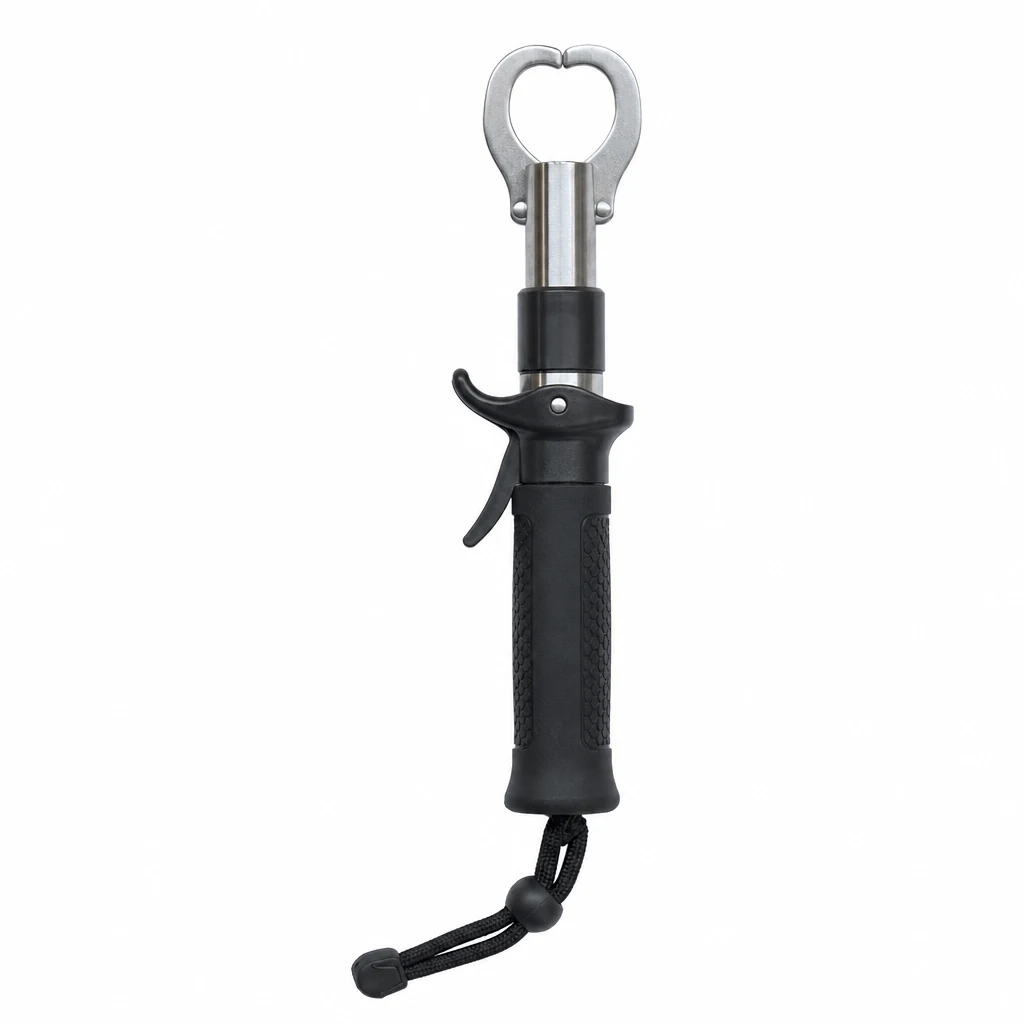
A fish gripper — sometimes called a lip gripper — is a spring-loaded clamp that locks onto a fish’s lower jaw so you can hold it securely without jamming your fingers in its mouth. It’s especially valuable with toothy fish like pike, walleye, and even crappie with sharp dorsal spines, but bass anglers swear by them too for keeping a clean grip on slippery fish during photo ops. Better models include a built-in scale, which saves you carrying a separate weigh-in tool. Look for stainless or aluminum construction and a locking trigger so the fish can’t thrash free. A gripper also minimizes how much you handle a fish’s body, which is genuinely better for the fish’s slime coat and survival rate on catch-and-release days.
Best for: Tournament anglers, catch-and-release fishermen, and anyone targeting toothy species.
- Pro: Secure grip without injuring the fish or your hand
- Pro: Built-in scale eliminates a separate tool
- Pro: Great for solo anglers trying to manage a fish and a camera at once
- Con: Incorrect use (holding fish horizontally by jaw alone on big fish) can injure the fish
- Con: Cheap plastic versions crack after moderate use
5. Headlamp
Early mornings, late evenings, overnight catfish trips, pre-dawn bass tournaments — fishing and darkness go together constantly, and trying to rig a hook by phone flashlight while balancing on a rocking boat is a great way to lose a hook in your thumb. A quality headlamp keeps both hands free for tying knots, unhooking fish, navigating a dark trail back to the truck, or reading a tide chart. Look for at least 200 lumens for functional task lighting, a red-light mode (red light doesn’t tank your night vision or spook fish near the surface), and a comfortable headband that stays put when you’re casting. Rechargeable via USB-C is the way to go — you can top it off in the truck on the way to the water.
Best for: Night fishermen, early-morning tournament anglers, and backcountry wade fishers.
Shop rechargeable fishing headlamps on Amazon
- Pro: Hands-free lighting for rigging, navigating, and fish handling
- Pro: Red-light mode preserves night vision and avoids spooking fish
- Pro: Rechargeable models eliminate dead-battery surprises
- Con: Cheap headbands get uncomfortable after an hour
- Con: Bright white mode can blind your fishing partner at close range — use considerately
6. Waterproof Phone Case
Your phone is your GPS, your fishing app, your camera, your weather radar, and your emergency communication device. One rogue wave, one stumble in the shallows, one tipped kayak, and it’s gone — unless you’ve got it protected. A waterproof phone case doesn’t have to be bulky or expensive. Submersible pouches with IPX8 ratings handle full submersion and cost under $20. Floating cases are even better for kayak and float tube anglers where a dropped phone could sink before you can grab it. Hard-shell waterproof cases offer more drop protection for boat anglers bouncing across rough water. Whatever you choose, test it with a paper towel inside before you trust your actual phone to it. Dry bag pouches that seal with a roll-top also work great and double as a wallet protector.
Best for: Kayak anglers, waders, and anyone fishing from open boats in rough conditions.
Shop waterproof phone cases on Amazon
- Pro: Protects a $1,000 device for $15–$40
- Pro: Floating versions prevent loss in open water
- Pro: Most still allow touchscreen use and photo-taking through the case
- Con: Touchscreen sensitivity through plastic pouches can be frustrating
- Con: Seals can fail with age — replace annually if you fish hard
7. Dry Bag
A dry bag is the unglamorous backbone of a well-organized fishing day. It keeps your extra layers, first aid kit, lunch, spare electronics, and anything else you’d hate to soak completely sealed off from rain, spray, and accidental dunks. Roll-top dry bags with welded seams are the gold standard — they compress down when empty, scale up when you need volume, and genuinely keep water out when properly sealed (roll the top at least three times and clip the buckle). For most day trips, a 10–20 liter bag is the right size. Kayak anglers often run a larger 30-liter bag lashed to the deck. Bright colors like orange or yellow help you spot the bag fast if it goes in the water. A dry bag that also floats buys you precious seconds to recover it.
Best for: Kayak anglers, wade fishers, and anyone fishing from a vessel without a dry cabin.
Shop dry bags for fishing on Amazon
- Pro: Genuinely waterproof when sealed correctly — not just water-resistant
- Pro: Consolidates gear and keeps it organized on small vessels
- Pro: Doubles as a flotation device for gear in a capsize situation
- Con: Accessing gear mid-trip requires breaking the seal and resealing
- Con: Cheap versions fail at the seams after a season of heavy use
8. Fishing Watch with Tide and Solunar Data
A watch built for fishing does more than tell time. The best ones display tide charts for your location, solunar tables (the sunrise, sunset, moonrise, and moon phase data that correlates with fish feeding activity), barometric pressure trends, and water temperature. That’s a lot of useful information on your wrist, without pulling out your phone. You don’t need to be a hardcore angler to appreciate knowing that high tide hits in 45 minutes, or that the major solunar period is in an hour — that kind of data shapes when you fish hard and when you take a break for lunch. Look for GPS tide tracking, not just generic tide tables. A solar charging option is excellent for multi-day trips. These watches range from $150 budget options up to $500+ for feature-packed models, but even an entry-level fishing watch adds real value to a serious angler’s kit.
Best for: Saltwater anglers, serious freshwater fishermen, and anyone planning trips around tides and fish activity windows.
Shop fishing watches with tide data on Amazon
- Pro: Puts tide, solunar, and weather data on your wrist without phone dependency
- Pro: Helps you time your fishing effort around proven peak activity windows
- Pro: Rugged, water-resistant builds designed for outdoor abuse
- Con: Higher upfront cost compared to other accessories on this list
- Con: Solunar data improves your odds — it doesn’t guarantee fish
Quick Comparison
- Polarized Sunglasses — Best overall value; essential for every angler in every condition
- Fishing Pliers — Best multi-tool; handles hooks, rigging, and cutting in one
- Line Clippers — Best budget pick; cheap, lightweight, and protects your knots
- Fish Gripper — Best for catch-and-release; safer for fish and angler alike
- Headlamp — Best for low-light fishing; red-light mode is a genuine game-changer
- Waterproof Phone Case — Best protection-to-cost ratio; no reason not to own one
- Dry Bag — Best for kayak and wade anglers; keeps critical gear bone dry
- Fishing Watch — Best for planning; tide and solunar data when you need it most
None of these accessories are going to catch fish for you — that part’s still on you. But every one of them removes a friction point that can turn a good day on the water into a frustrating one. Start with the sunglasses and the pliers if you’re building from scratch. Add the rest as you identify which problems you’re actually running into out there. Good gear should feel invisible when it’s working — and you’ll notice every single one of these the moment you fish without it.