Disclosure: BestFishingReviews.com earns a commission on qualifying purchases made through affiliate links in this article, at no extra cost to you.
Catch and release sounds simple enough — unhook the fish, drop it back in, done. But if you’ve ever watched a bass float belly-up twenty feet behind the boat, or seen a trout thrash itself to exhaustion on a dry dock, you know there’s a right way and a wrong way to do it. The wrong way kills fish just as surely as a fillet knife. The right way keeps fisheries healthy for the next generation of anglers — including yours. This guide covers what actually matters: fighting fish smart, handling them correctly, using the right gear, and knowing when releasing a fish isn’t actually doing it any favors.
See current price & availability on AmazonCheck on Amazon →Why Catch and Release Actually Matters
Let’s not skip past the “why” — it’s worth a minute. In most waters, fish populations face real pressure: increased angling effort, habitat loss, warming water temperatures, and drought. Stocking programs help, but they can’t keep pace with mortality if anglers aren’t releasing fish carefully. A slot limit means nothing if a released fish dies two hours later from stress and mishandling.
Here’s the honest truth: studies on catch-and-release mortality rates vary a lot depending on species, water temperature, fight time, and how the fish was handled. Bass released quickly and correctly show survival rates above 95%. That same bass, held out of water for two minutes for a photo while the angler fiddles with a livewell, might survive at closer to 70% — or less when water temps are above 80°F. Those numbers add up across an entire lake over an entire season. Good C&R technique is one of the few things individual anglers can actually control, and it has a measurable impact on the fishery you fish every weekend.
Fight Fish Faster — Shorter Battles Save Lives
Most anglers fish too light and play fish too long. That feels counterintuitive — a longer, softer fight seems gentler. It isn’t. When a fish exhausts itself fighting against light drag, it builds up lactic acid in its muscles, drops blood oxygen levels, and can suffer from something close to metabolic shock. A fish that “swims away fine” after a five-minute fight in warm water may still die hours later.
The fix: fish heavier line, crank up your drag, and get that fish to hand quickly. You’re not trying to horse it in recklessly — you’re applying steady, firm pressure and keeping the fight short. Most trout and bass that anglers are targeting can and should be landed in under two minutes. Use appropriately heavy tackle for the species you’re targeting, keep your rod angle working, and don’t let a fish run itself ragged on light line because you’re worried about breaking off.
If you’re fishing warm water — say, summer bass or walleye when surface temps are pushing 80°F and above — fight time and air exposure become even more critical. Every second counts more when the fish is already thermally stressed before it ever ate your bait.
Proper Handling: The Details That Make the Difference
This is where most well-meaning anglers lose the fish. They do everything else right, then hold the fish wrong for thirty seconds and undo all of it. Here’s what actually matters:
Wet Your Hands First
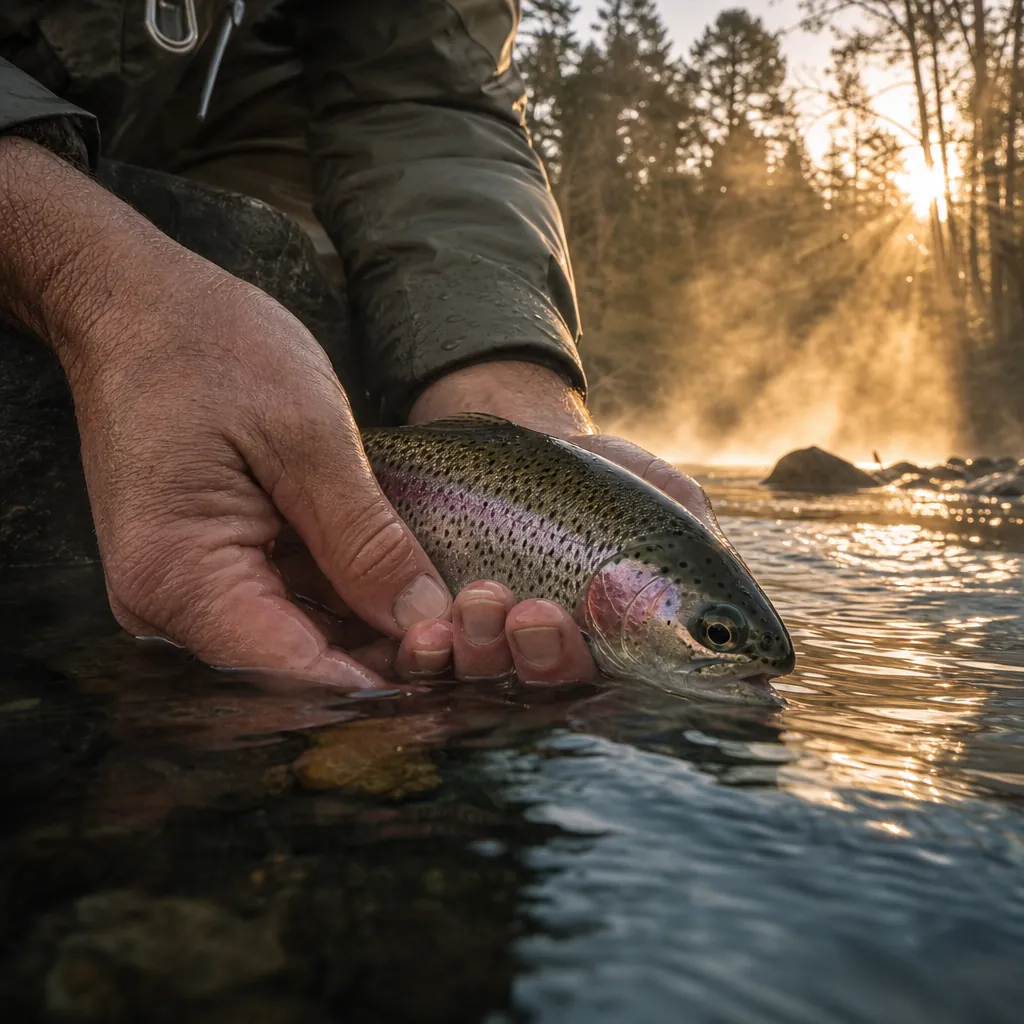
Fish are coated in a protective slime layer that guards against infection and parasites. Dry hands — and especially dry gloves — strip that slime off on contact. Before you touch any fish you plan to release, dip your hands in the water. It takes two seconds and makes a real difference, particularly for trout and other salmonids that are especially slime-dependent.
Never Grab by the Eyes or Gills
This seems obvious, but it still happens. Grabbing a fish by the eye sockets (sometimes called “palming” a large fish) crushes delicate orbital tissue. Sticking fingers into the gill cavity tears gill rakers and causes internal bleeding. A fish can absorb both of those injuries and swim away looking fine — then die. Keep your hands on the body, behind the pectoral fins, or use a proper lip grip for species like bass where a vertical lip hold is safe and well-tolerated.
Don’t Vertically Suspend Heavy Fish by the Jaw
A lip grip on a 2-pound bass? Fine. A lip grip holding a 7-pound largemouth horizontally in the air at arm’s length for a photo? That’s a recipe for jaw dislocation and spinal stress. If you’re using a fish lip gripper on a large fish, support the body horizontally with your other hand. The Booms Fishing G1 Fish Gripper is a solid choice — stainless steel, locking trigger, and a built-in scale so you can get your weight fast and get the fish back in the water without fumbling around.
Minimize Air Exposure
The rule of thumb most fisheries biologists agree on: if you wouldn’t hold your own breath for that long, the fish shouldn’t be out of water that long either. In practice, aim for 30 seconds or less for most fish. Get your photo, get your measurement, get it back. Have your camera ready before the fish is out of the water, not after.
Use Barbless Hooks — Or Crimp Them Down
Barbless hooks are one of the single most effective changes you can make for C&R fishing. The hook comes out faster, causes less tissue damage, and dramatically reduces the time the fish is handled and stressed. On many trout streams out West, barbless is already required by regulation. Even where it isn’t, it’s worth doing voluntarily.
If you don’t want to buy dedicated barbless hooks, just take a pair of pliers and crimp the barb flat on whatever hooks you’re already using. You’ll lose maybe one extra fish per outing — usually on slack-line mistakes you could’ve avoided anyway. The tradeoff is worth it. Look for barbless trout hooks if you’re fishing streams regularly; they’re widely available and not significantly more expensive than barbed versions.
For lures with treble hooks, consider replacing them with single barbless hooks. It’s a small modification that makes unhooking dramatically faster and cleaner, especially on fish that roll or thrash.
Dehookers: Get That Hook Out Fast and Clean
If you’re fishing with bait, you’re going to deal with deep-hooked fish. It’s just reality. A fish that swallows a hook has worse survival odds than one lip-hooked, but how you handle removal still matters. This is where a good dehooker earns its spot in your gear bag.
A quality dehooker tool lets you back a hook out with minimal tissue tearing and keeps your fingers out of the fish’s throat. The Dr. Slick Hook Out is a well-regarded option — simple, fast, and long enough to reach a deep-set hook without cramming your hand into the fish. For saltwater and larger species, a long-nosed stainless dehooker is the move.
One important note on deeply hooked fish: if the hook is set past the point of clean removal — buried in the stomach or wrapped around the gills — do not dig for it. Cut the line as close to the hook as possible and release the fish. Most hooks will dissolve or work free over several weeks. Digging around causes far more damage than leaving the hook in place.
Reviving a Fish Before Release
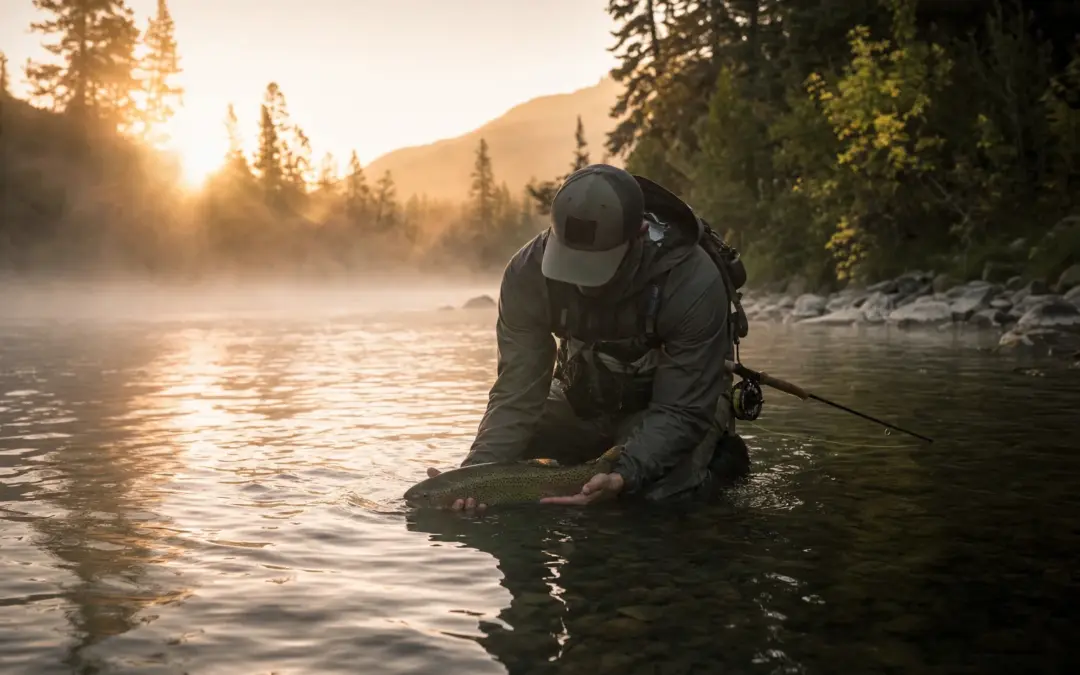
Don’t just drop a spent fish into the water and call it done. A fish that fought hard, especially in warm water, needs a moment to recover before it can swim off under its own power. Hold it upright in the water, facing into the current if you’re in a river. Let water pass over the gills. You’ll feel the fish regain its strength — its fins will firm up, it’ll start to resist your hands, and then it’ll kick away on its own. That’s the signal to let go.
In still water, hold the fish upright and move it gently forward and back to pass oxygenated water across the gills. Don’t rock it side to side — that doesn’t help. Forward motion is what matters. If a fish rolls belly-up, right it and keep working with it. Some fish need sixty seconds of revival; others need five minutes. Be patient. It’s the last step and it matters as much as everything that came before it.
When NOT to Release a Fish
Here’s something that doesn’t get said enough: sometimes the most ethical choice is to keep the fish. If a fish is deeply hooked and bleeding from the gills, its survival odds after release are poor regardless of how carefully you handle it. A fish that can’t be revived and keeps rolling belly-up after several minutes of effort isn’t going to make it. In those situations, if you’re within your legal limit, keeping the fish is the right call — it doesn’t go to waste, and you’re being honest about the outcome rather than performing a “release” that just means a delayed kill.
Similarly, think carefully about species and conditions. Releasing a deeply exhausted fish in water that’s above 80°F into heavy current, or back into a school of predators, may be a death sentence regardless of how well you handled it. Read the situation honestly.
- Gills bleeding heavily: Keep the fish if legal. Gill damage is usually fatal.
- Fish won’t right itself after 5+ minutes of revival: Keep it or humanely dispatch it. It’s not going to recover.
- Water temps above 80°F for warmwater species, above 68°F for trout: Consider whether releasing makes sense, or whether targeting fish in those conditions at all makes sense.
- Hook swallowed past the throat into the stomach: Cut the line close, but understand survival odds are reduced. If the fish is bleeding internally, keeping it is the honest choice.
Common Mistakes That Kill Released Fish
Even anglers who know the rules make these errors under the excitement of a good fish. Run through this list honestly:
- Playing fish too long on light tackle. Feels sporting; actually causes exhaustion and lactic acid buildup that’s often fatal.
- Laying the fish on a dry surface — dock, boat deck, dry rocks. Even a few seconds on a hot aluminum deck can cause serious scale and slime damage.
- Squeezing the body. Internal organ damage doesn’t show externally. Handle firmly but gently.
- Taking too long to get your photo. Have the camera up before the fish is out of the water.
- Dropping the fish back in instead of releasing it gently. A fish dropped from height into the water after a fight can sustain injury from the impact.
- Using dry gloves or a dry towel for grip. Same problem as dry hands — strips slime. If you need grip, use a wet rubberized glove or just wet bare hands.
- Not reviving before release. Don’t assume a fish is okay just because it swam down. Watch it for a moment if you can. A fish that immediately returns to the surface needs more help.
Putting It All Together
None of this is complicated, but it does require intention. The anglers who practice good catch and release aren’t doing it because it’s trendy — they’re doing it because they’ve watched fisheries degrade over the years and they want something left to fish. Wet your hands, fight fish hard, get them back in the water quickly, use a dehooker and a proper fish gripper, and be honest about when a fish needs to be kept rather than released. Do those things consistently and you’re ahead of 90% of the field — and the fish in your favorite water will be there next season because of it.