Disclosure: BestFishingReviews.com earns a small commission on purchases made through our affiliate links at no extra cost to you.
You can have the best rod, the right lure, and perfect conditions — and still lose a trophy fish because your knot slipped. It happens to beginners and seasoned anglers alike. The good news is that you don’t need to memorize thirty different knots to cover almost every situation you’ll face on the water. You need five. Learn these five knots cold, practice them until you can tie them in the dark or with cold hands, and you’ll be better prepared than most anglers who’ve been fishing for decades. Here’s the honest breakdown of which knots matter, why they work, and exactly how to tie them.
See current price & availability on AmazonCheck on Amazon →Why Knot Strength Actually Matters
Every knot you tie weakens your line to some degree. The question is by how much. A poorly tied knot on 20 lb test line might only hold 10 lbs of pressure before it fails — right when a big bass decides to make one last run. Knot strength is measured as a percentage of the line’s rated breaking strength, often called “knot efficiency.” The best knots in this guide retain 90 to 100 percent of line strength when tied correctly. The worst knots tied sloppily can cut that number in half.
Line type also plays a role. Monofilament is forgiving and grips itself well. Fluorocarbon is stiffer and more prone to slipping if you don’t seat a knot properly. Braid is incredibly strong but slick — some knots that work fine on mono will slide right off braid. The knots below are chosen partly because they work reliably across multiple line types, with notes on where each one shines.
Knot 1: The Improved Clinch Knot
This is the knot most American anglers learn first, and for good reason — it’s fast, reliable, and works beautifully with monofilament and fluorocarbon. Knot efficiency sits right around 95 percent when tied properly. It’s the go-to for attaching a hook, swivel, or lure to the end of your line.
How to tie it: Thread 6 inches of line through the hook eye. Double the tag end back parallel to the main line and wrap it around the main line five to seven times (use five wraps for heavier line, seven for light line under 10 lb). Pass the tag end through the small loop that formed just above the hook eye, then pass it back through the big loop you just created. Pull the tag end and main line simultaneously to cinch it down, then trim the tag. Critical step: wet the knot with saliva before pulling tight. Dry friction will damage the line and kill your knot strength.
Best for: Monofilament and fluorocarbon, hooks, swivels, and small lures. Not recommended for braid without a line-to-line connection first.
Knot 2: The Palomar Knot
If the Improved Clinch is the workhorse, the Palomar is the heavy lifter. Many line manufacturers and knot testers rate it as close to 100 percent efficiency — as strong as the line itself. It’s especially excellent with braided line, which makes it a must-know for anyone fishing finesse techniques, drop shots, or any braid-to-lure connection.
How to tie it: Double about 6 inches of line to form a loop and pass that doubled loop through the hook eye. Tie a simple overhand knot using the doubled line — don’t tighten it yet, just let it hang loose. Now pass the hook (or lure) completely through the loop at the bottom. Wet the knot, then pull both the tag end and main line evenly to seat it snugly against the eye. Trim the tag. The trick most beginners miss: make sure the knot seats evenly on both sides of the eye. If it’s lopsided, retie it.
Best for: Braided line, hooks, jigs, and soft plastic rigs. Works on mono and fluorocarbon too, though it uses more line.
Knot 3: The Uni Knot
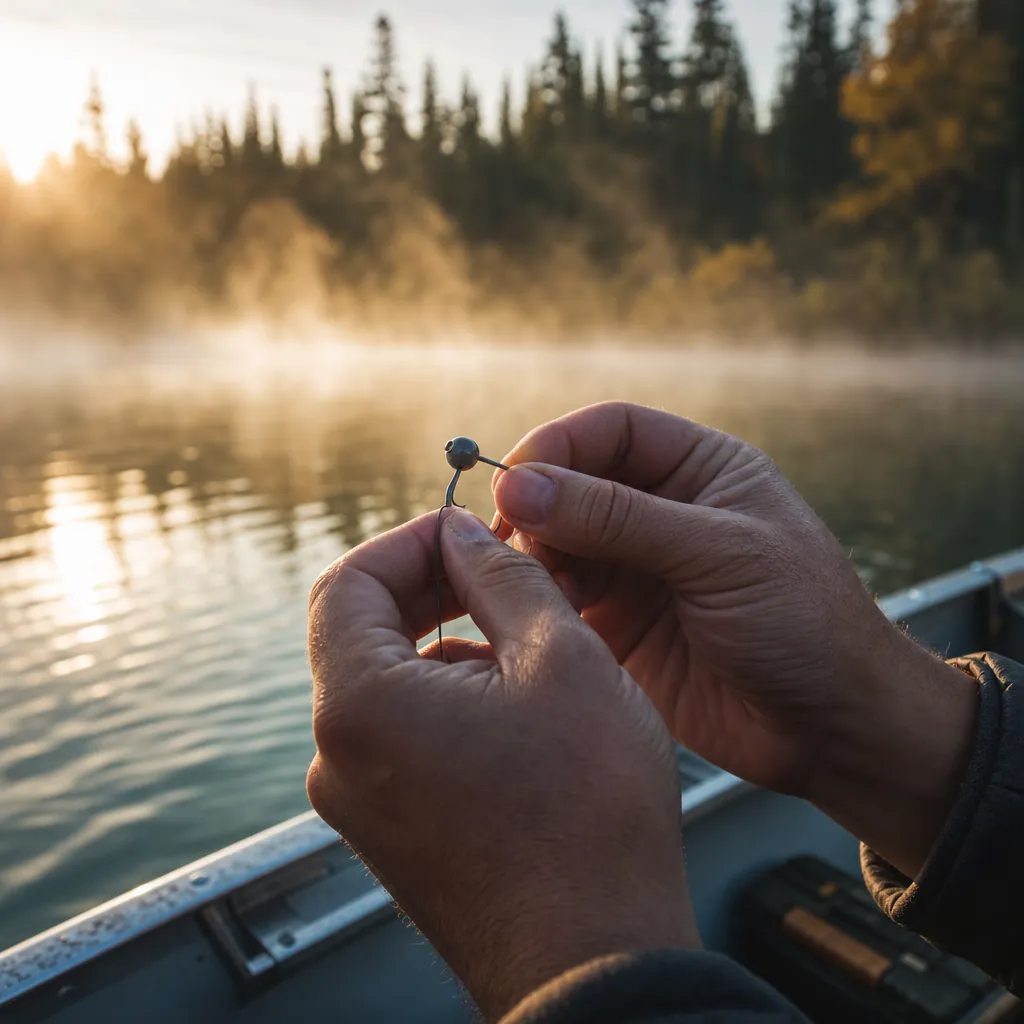
The Uni Knot is the Swiss Army knife of fishing knots. You can use it to attach line to a hook or lure, join two lines together (the Double Uni), or even attach line to a reel spool. It’s slightly more complex than the Improved Clinch but just as fast once you’ve practiced it. Knot efficiency is typically 90 to 95 percent, and it performs consistently across mono, fluoro, and braid.
How to tie it: Run 6 inches of line through the hook eye and fold it back parallel to the main line, forming a loop. Hold the loop against the main line with your fingers. Take the tag end and wrap it around both the main line and the loop six times, working toward the hook eye. Pass the tag end through the loop. Wet the knot and pull the tag end to tighten the coils into a neat barrel. Then slide that barrel down the main line toward the hook eye by pulling the main line until it seats firmly. Trim the tag.
Best for: All line types, hooks, swivels, and lures. Especially useful when you’re fishing with fluorocarbon fishing line and need a knot that won’t slip on the stiffer material.
Knot 4: The Non-Slip Mono Loop (Loop Knot)
Every other knot in this list cinches tight to the hook or lure eye, which is fine for most presentations. But if you’re fishing suspending jerkbaits, topwater plugs, or unweighted soft plastics, a fixed loop gives the lure full range of motion — it swings, wobbles, and darts the way the designer intended. The Non-Slip Mono Loop, developed by Lefty Kreh and Mark Sosin, is the strongest loop knot available, retaining close to 100 percent of line strength.
How to tie it: Make an overhand knot in the line about 10 inches from the tag end, but don’t tighten it — leave a loose loop. Run the tag end through the hook eye and back through the center of the overhand knot from the same side it exited. Wrap the tag end around the main line three times (five times for lines under 8 lb, two times for lines over 40 lb). Pass the tag end back through the overhand knot from the same direction as before. Wet everything and pull the tag end and main line to tighten, then pull the main line to slide the knot down to your desired loop size. Trim the tag.
Best for: Monofilament and fluorocarbon with topwater lures, jerkbaits, swimbaits, and any presentation where lure action is critical. If you’re fishing topwater fishing lures, this knot will immediately improve your results.
Knot 5: The Double Surgeon’s Knot
The first four knots get your lure or hook tied on. The Double Surgeon’s Knot handles a different but equally critical job: joining two lines of different diameters. You’ll use it constantly — connecting a monofilament or fluorocarbon leader to a braided main line, adding a heavier shock leader for surf fishing, or tying a tippet to a leader in fly fishing. It’s not the most elegant knot, but it’s fast to tie, requires no tools, and holds extremely well even when the two lines differ significantly in diameter.
How to tie it: Lay the two lines parallel and overlapping by about 6 inches, pointing in opposite directions. Treating both lines as a single strand, tie a simple overhand knot — pull the entire tag end of one line and the main line through the loop. Before tightening, pass both ends through the loop a second time (that’s what makes it a “double”). Wet the knot thoroughly — this one really needs moisture to seat cleanly. Pull all four strands simultaneously and steadily until the coils lock. Trim both tag ends close. For connecting braid to a fluoro leader, some anglers prefer a four-turn version for extra security with slick lines.
Best for: Joining mono-to-mono, fluoro-to-mono, or light braid-to-leader connections. If you regularly fish with leaders, pair this knot with a quality fluorocarbon leader line for the best abrasion resistance.
Common Mistakes That Blow Knot Strength
Knowing how to tie a knot and tying it well are two different things. Here are the errors that turn a 95-percent knot into a 60-percent one:
- Skipping the wet step. Every knot generates heat from friction when pulled tight. On monofilament and fluorocarbon especially, that heat weakens the line at the knot. Always wet with saliva or water before cinching.
- Pulling unevenly. If one strand tightens faster than the other, the coils stack crooked and the knot is compromised. Pull slowly and steadily on all strands at the same time.
- Trimming too short or too long. Too short and the tag end can slip back through under load. Too long and it creates drag or catches weeds. Leave about 1/8 inch on the tag end.
- Not inspecting after tying. Give every knot a firm tug before you cast. If it slips, retie it at the dock — not when a fish is on the line.
- Reusing old knots. A knot that’s been cast thousands of times and soaked in UV light and saltwater is not the same knot you tied fresh. Retie regularly, especially after landing a big fish or hanging up on structure.
When Your Fingers Just Won’t Cooperate: Knot-Tying Tools
Cold mornings, arthritic hands, heavy gloves, or just trying to tie a size 18 hook in low light — there are plenty of situations where a knot-tying tool earns its place in your tackle bag. These are simple devices that help thread line through hook eyes and pull coils tight with mechanical precision. They won’t replace knowing the knot, but they make execution faster and more consistent.
Look for a tool that handles multiple line weights and hook sizes, is easy to grip with wet hands, and includes a line cutter. A good fishing knot tying tool runs anywhere from $8 to $25 and is one of the most practical small purchases you can make. It’s especially useful for the Improved Clinch and Uni Knot, where threading the tag end through small loops is the most common fumble point. If you’re fishing regularly in cold weather or sharing the boat with young anglers just learning, it’s worth keeping one clipped to your vest or gear bag.
Which Knot Should You Learn First?
If you’re brand new, start with the Palomar. It’s the hardest to mess up and works with every line type you’re likely to use early on — including braid, which is increasingly common as a main line even for beginners. Once you’ve got the Palomar down cold, add the Improved Clinch for its speed, then the Double Surgeon’s for leader connections. The Uni and the Loop Knot come next as your techniques expand.
Practice matters more than most anglers admit. Tie each knot twenty times at your kitchen table before you need it on the water. Use scrap monofilament fishing line and an old hook with the point cut off. By the time you’re done, your hands will know the steps without your brain having to think through them — which is exactly what you need when it’s dark, cold, and a fish is waiting.
Bottom Line
Five knots. That’s really all it takes to handle hook-to-line connections, lure action, leader rigs, and everything in between. The Improved Clinch, Palomar, Uni Knot, Non-Slip Mono Loop, and Double Surgeon’s Knot cover nearly every freshwater and inshore saltwater scenario you’ll encounter. Learn them, practice them until they’re automatic, and the weakest link in your tackle setup won’t be the knot anymore. Now go tie some.