Disclosure: BestFishingReviews.com earns a small commission on purchases made through links on this page, at no extra cost to you.
Fishing gear isn’t cheap. A decent spinning reel, a quality rod, a box full of lures and terminal tackle — it adds up fast, and most anglers have more money tied up in their gear than they realize. The frustrating part is how quickly that investment can deteriorate when it’s neglected. Reels seize up. Rods develop stress cracks. Hooks rust into orange dust. Line goes brittle and snaps at the worst possible moment. The good news? Almost all of it is preventable. A little routine care — maybe 15 minutes after a trip, 30 minutes at the end of the season — can keep your gear fishing like new for years longer than you’d expect. Here’s exactly how to do it.
See current price & availability on AmazonCheck on Amazon →Rinsing Down After Every Trip (Especially Saltwater)
If you fish saltwater and you’re not rinsing your gear after every single outing, you’re slowly destroying it. Salt crystals are relentless — they work their way into every gap, every bearing, every guide insert, and every ferrule, and they corrode metal and weaken composite materials from the inside out. Fresh water is corrosive enough over time; saltwater is aggressive.
The fix is simple: when you get home, before you do anything else, rinse everything with fresh water. Not a pressure blast from a hose — that can drive salt deeper into reel internals. Use a gentle flow, almost like a shower setting. Hit every surface of the rod, paying attention to the guides and the reel seat. For the reel, rinse it with the bail closed and the drag tightened down slightly so water doesn’t force its way in. Then loosen the drag all the way before storing so the drag washers don’t compress and take a set.
After rinsing, let everything air dry completely in the shade — not in a hot car trunk or direct sunlight, which can warp rod blanks and degrade line. A good habit is to lay rods horizontally on a towel or prop them upright in a corner of the garage, reels off, while everything dries.
Freshwater anglers aren’t off the hook here either. Algae, sediment, invasive species, and plain old grime accumulate fast. A quick rinse and wipe-down after every trip is good practice regardless of where you fish.
Reel Maintenance: Oiling, Greasing, and Knowing the Difference
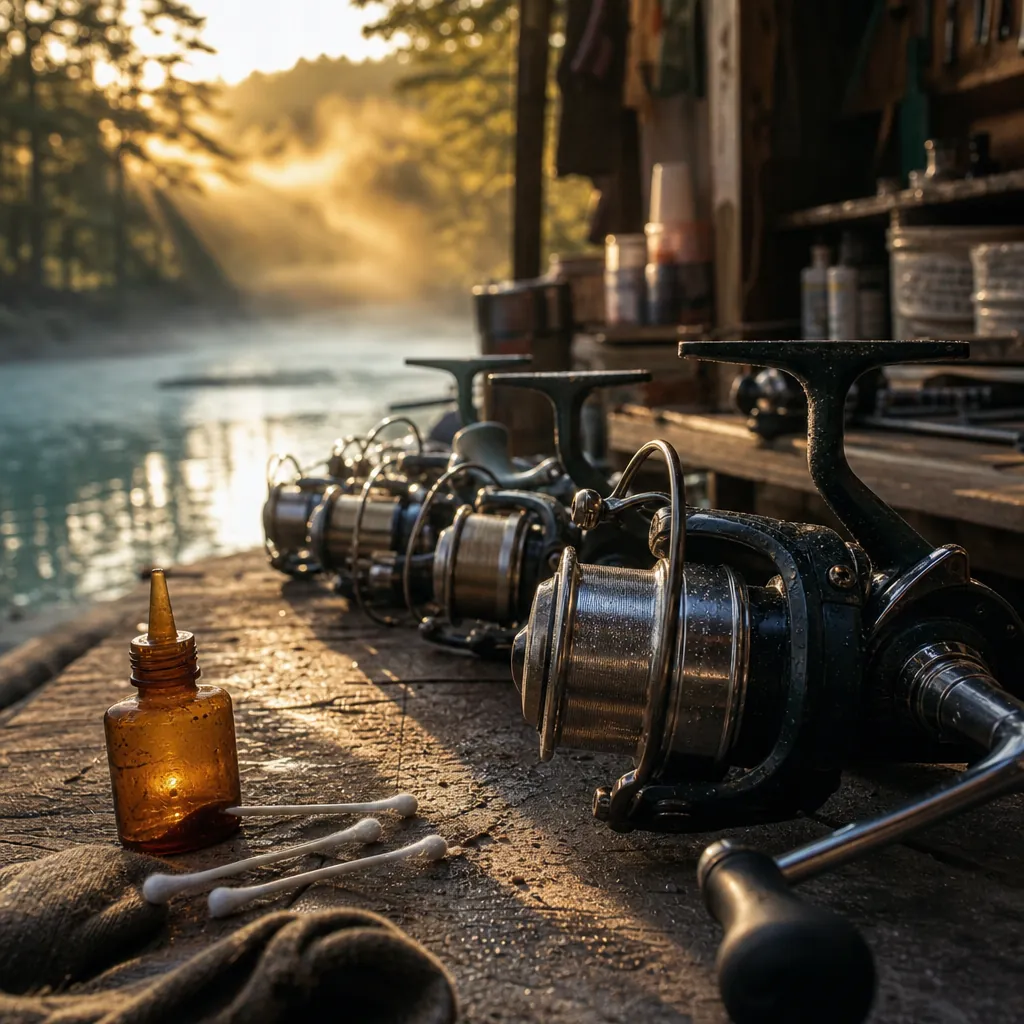
Reels are the most mechanically complex piece of gear you own, and they’re the most neglected. Most anglers never open one up until it starts grinding or squealing — by which point bearings may already be damaged. Getting ahead of that is easy if you understand what needs oil versus what needs grease.
Oil goes on bearings, the line roller, the bail wire pivot, and any small moving parts that need to spin freely. Use a light reel-specific oil — not WD-40, which is a water displacer, not a lubricant, and will actually wash out your existing lubrication. A bottle of quality reel oil costs a few dollars and lasts for years.
Grease goes on gears — the main drive gear, the pinion gear, and the worm shaft on spinning reels. Grease is thicker, stays in place longer, and provides the cushion that gears need under load. A tube of reel grease is equally cheap and equally important.
For casual freshwater use, oil the line roller and bail pivot before every few trips, and do a full gear cleaning and re-greasing once a season. If you’re fishing saltwater regularly, oil everything every 2-3 trips and do a full strip-and-grease every season, or after any heavy-use trip. Baitcasters need the same attention — oil the levelwind worm gear and the spool shaft bearings in particular, as those are the first to go.
You don’t need to be a reel technician to handle basic maintenance. Most manufacturers post teardown diagrams online, and a quick search for your reel model will find a YouTube video walking you through it step by step. Do it once and it stops being intimidating.
Line Replacement: How Often Is Often Enough?
Line is the only thing between you and the fish, and it degrades whether you’re using it or not. UV exposure, heat, abrasion, and repeated stress cycling all degrade line strength over time — sometimes dramatically. The frustrating thing is that worn-out line usually looks fine right up until it snaps at the knot on a big fish.
Here’s a reasonable replacement schedule to work from:
- Monofilament: Replace at least once a season for regular anglers, or every 3-4 months if you fish frequently. Mono absorbs water, coils with memory, and loses tensile strength faster than other line types. It’s also the cheapest to replace.
- Fluorocarbon: More UV-resistant than mono and denser, so it sinks and abrades a bit better. Still replace annually, or inspect carefully for nicks and flat spots. The last 12-18 inches take the most abuse — re-tie leaders often.
- Braided line: Braid lasts much longer than mono or fluoro — 2-3 seasons of regular use is reasonable. But check for fraying or discoloration near the tag end, and check the first few feet for abrasion if you’ve been fishing around rocks or pilings. When braid does go, it usually goes from the outside in.
A practical tip: when you spool new braid, load a mono or fluoro backing first so you’re not filling the entire spool with expensive braid. And always strip off the top 50-100 yards of mono after a heavy season — that’s the section that actually sees the fish, and fresh line there is cheap insurance. You can pick up quality fluorocarbon line without spending a fortune.
Rod Care: Storage, Cleaning, and Protecting the Blank
Rods are more durable than they look, but they have specific failure points that are entirely preventable. The most common cause of broken rods in storage — not on the water — is improper stacking. Leaning a bunch of rods together in a corner means they bump, scratch, and eventually nick each other’s blanks. A small nick in a graphite blank is a stress riser; put enough load on it and the rod snaps cleanly right at that spot. A basic rod rack, even a cheap wall-mounted one, pays for itself the first time it prevents a broken stick.
For transport, use rod sleeves or a hard rod tube for longer trips. Carrying rods loose in a truck bed or strapped to a roof rack without protection invites chips and scratches from road debris. Tube cases aren’t just for travel — they’re solid storage solutions too.
A few times a season, wipe down the blank with a damp cloth and inspect the guides. Look for cracked or chipped guide inserts — a cracked ceramic insert will shred line in a single cast. Run a cotton ball through each guide; if it snags or catches, that guide needs replacing. Also check the ferrules on multi-piece rods for wear or loosening. A touch of ferrule wax keeps them fitting snugly and makes breakdown easier in the field.
Cork handles can be cleaned with mild soap and a soft brush. If they get dried out and crumbly, a little cork sealant brings them back. EVA foam handles just need a rinse — they’re nearly indestructible.
Hook and Lure Rust Prevention
Nothing’s more demoralizing than opening your tackle box to find half your hooks rusted together or a favorite crankbait with hooks that crumble when you try to bend them. It’s also completely avoidable.
The number-one rule: never put wet lures or hooks back in a closed tackle box. Water trapped in a closed plastic tray is a rust incubator. After fishing, leave lure trays open to dry completely before closing them up. If you’ve been fishing saltwater, rinse lures before they dry — salt residue accelerates rust faster than moisture alone.
For longer-term storage, a few vapor-corrosion inhibitor (VCI) strips tossed into your tackle bag or box will absorb moisture and slow oxidation. They’re inexpensive, last months, and are genuinely effective. For high-value lures or hooks you want to keep in perfect shape, storing them in a dry climate-controlled space rather than a hot garage makes a real difference.
Check hook points before every trip and replace trebles that have rusted or dulled. A sharp hook is a foundational part of landing fish — dull hooks cause more lost fish than bad knots. A hook hone or small diamond file takes 30 seconds per hook and restores a point that’s just slightly dull. If a hook is pitting or has surface rust, pull it and replace it. Treble hooks are cheap enough that there’s no reason to fish on compromised ones.
If you’re building out your lure stock, consider buying lure kits with replaceable hooks so you can swap hardware as needed without replacing the whole bait.
Off-Season Storage: Setting Yourself Up for a Strong Start Next Year
The end of the season is the best time to do everything you’ve been putting off during the fishing year, and the work you do now directly determines what condition your gear is in when opener rolls around next spring.
Work through this checklist before you put everything away:
- Reels: Full strip-and-clean on any reel that saw heavy use. Re-grease gears, oil bearings, inspect the drag washers, and check the bail spring on spinning reels. If it feels weak, replace it now — bail spring failures mid-trip are infuriating and cost a couple of dollars to fix in the off-season.
- Rods: Inspect every guide for chips. Check ferrules. Wipe down blanks. Store horizontally on a rack or vertically in a tall tube, away from temperature extremes.
- Line: If mono or fluoro is more than a season old, strip it and re-spool fresh in the fall. You’ll start the season sharp instead of risking a break-off on the first big fish of the year.
- Tackle box: Sort and purge. Toss any hooks that are rusted or pitted. Organize lures, replace split rings and trebles on anything valuable. Close everything up with a VCI strip inside.
- Terminal tackle: Check your swivels, snap swivels, and weights for corrosion. Brass and steel components rust; stainless ones don’t. Swap out anything questionable.
- Fly gear (if applicable): Dry fly lines completely before storage, and loosen all the tension on fly reels. Store fly lines in cool conditions — heat sets memory coils that are hard to work out next spring.
Store everything in a cool, dry place with stable temperatures. A climate-controlled basement or interior closet beats an outdoor shed or hot garage attic. If you’re in a humid climate, a moisture absorber like DampRid in your gear storage area costs almost nothing and protects everything in it. A good tackle storage system makes all of this easier to stay on top of.
Common Mistakes That Shorten Gear Life
- Using WD-40 on reels. It’s everywhere in garages and seems like the obvious solution, but it’s a solvent and water displacer — not a lubricant. It strips existing grease and leaves bearings temporarily smooth but ultimately dry. Use actual reel oil.
- Storing rods in a hot car. Trunk heat can exceed 160°F on a summer day. That warps blanks, degrades epoxy on guides, and kills line fast. Don’t leave rods in a closed vehicle.
- Overtightening the drag for storage. Compressed drag washers take a permanent set over time, reducing max drag performance. Always back the drag off completely before storing a reel.
- Skipping the rinse after saltwater trips. Even one trip left un-rinsed can start corrosion in bearing surfaces. The rinse takes two minutes. Do it every time.
- Ignoring guide cracks until something snaps. A cracked guide ceramic can sever 30lb braid in a single cast. Run a cotton ball through guides after every few trips and catch it early.
- Storing braid while still damp. Braid holds moisture, and if it’s wrapped tight on a spool in a closed bag, it creates a perfect environment for rust to form on the spool arbor and drag components. Let everything dry before storage.
A Little Effort Goes a Long Way
None of this is complicated. The anglers whose gear lasts decades aren’t doing anything exotic — they’re just consistent. Rinse after saltwater. Oil the line roller. Replace line when it’s time. Store rods flat. Dry lures before closing the box. It becomes habit fast, and the payoff is real: gear that performs when it counts, money you don’t spend replacing equipment prematurely, and fewer equipment failures on the water when the fish are biting. Take care of your gear and it’ll take care of you when it matters.