Disclosure: BestFishingReviews.com earns a commission on qualifying purchases made through affiliate links in this article, at no extra cost to you.
Store-bought lures are fine, but there’s something different about watching a bass crush a bait you built yourself at the kitchen table. Making your own fishing lures isn’t some lost art reserved for old-timers — it’s genuinely accessible, surprisingly affordable once you’re set up, and it gives you control over colors, sizes, and actions that you just can’t get off a peg hook at the tackle shop. In this guide, we’ll walk through three beginner-friendly lure types: hand-poured soft plastics, painted spinnerbait skirts, and feather jigs tied on a hook. Each one has a real learning curve, but none of them require a machine shop or a chemistry degree. Grab a notepad and let’s get into it.
See current price & availability on AmazonCheck on Amazon →What You’ll Need: Materials and Equipment Overview
Before you melt anything or tie your first feather, it pays to gather your supplies in one place. Running out of plastisol mid-pour or realizing you have no wire for a spinner arm is the kind of thing that kills an afternoon fast. Here’s a consolidated materials list covering all three lure types we’ll tackle in this guide.
Soft Plastic Pouring Supplies
- Plastisol liquid plastic (clear or pre-colored)
- Plastic-compatible colorants and glitter
- Aluminum or silicone injection molds (worm, grub, or creature shapes)
- A dedicated microwave or electric melting pot
- Heat-resistant pouring cups with a handle
- Heat-resistant gloves and eye protection
- Mold release spray
Spinnerbait Skirt Supplies
- Silicone skirt strands (bulk, multiple colors)
- Skirt tabs or bands (flat silicone collar rings)
- Spinnerbait wire frames or bare jig heads
- Paint markers or airbrush with jig/lure paint
- Clear UV-cure or epoxy topcoat
- Small scissors and a needle or bodkin
Feather Jig Tying Supplies
- Round-head or bucktail jig heads in 1/32 oz to 1/4 oz sizes
- Rooster tail feathers, marabou, or craft hackle
- Fly-tying thread (6/0 or 8/0 weight)
- A basic fly-tying vise
- Head cement or clear nail polish for finishing
- Optional: flash material (Krystal Flash or Flashabou)
For the molds and melting equipment, soft plastic lure-making mold kits on Amazon are a solid starting point — many come with a few mold shapes, a pouring cup, and basic colorants bundled together, which cuts down on the “I forgot something” trips.
Safety First: Don’t Skip This Section
Heated plastisol hits around 325–350°F, and it doesn’t forgive carelessness. A few non-negotiable rules before you fire up the microwave or plug in a melting pot:
- Work in a ventilated space. Plastisol fumes aren’t pleasant, and breathing them repeatedly isn’t smart. Open a window, run a fan, or work in the garage with the door up.
- Wear heat-resistant gloves and safety glasses. Splashing 340°F plastic on bare skin is a bad day. Glasses protect against unexpected spatters when you tap a mold.
- Never leave heating plastic unattended. Overheated plastisol smokes, browns, and can reach flash point if you walk away and forget it.
- Dedicate your equipment. Whatever cup, spoon, or pot touches plastisol should never go back to the kitchen. Label it “LURE ONLY” with a marker and store it separately.
- Keep kids and pets out of the workspace. Hot plastic, sharp hooks, and small feather pieces are a bad combination around curious helpers.
None of this is meant to scare you off. Thousands of anglers do this safely every week. It just requires the same respect you’d give any other heat-and-sharp-objects hobby.
How to Hand-Pour Soft Plastic Lures
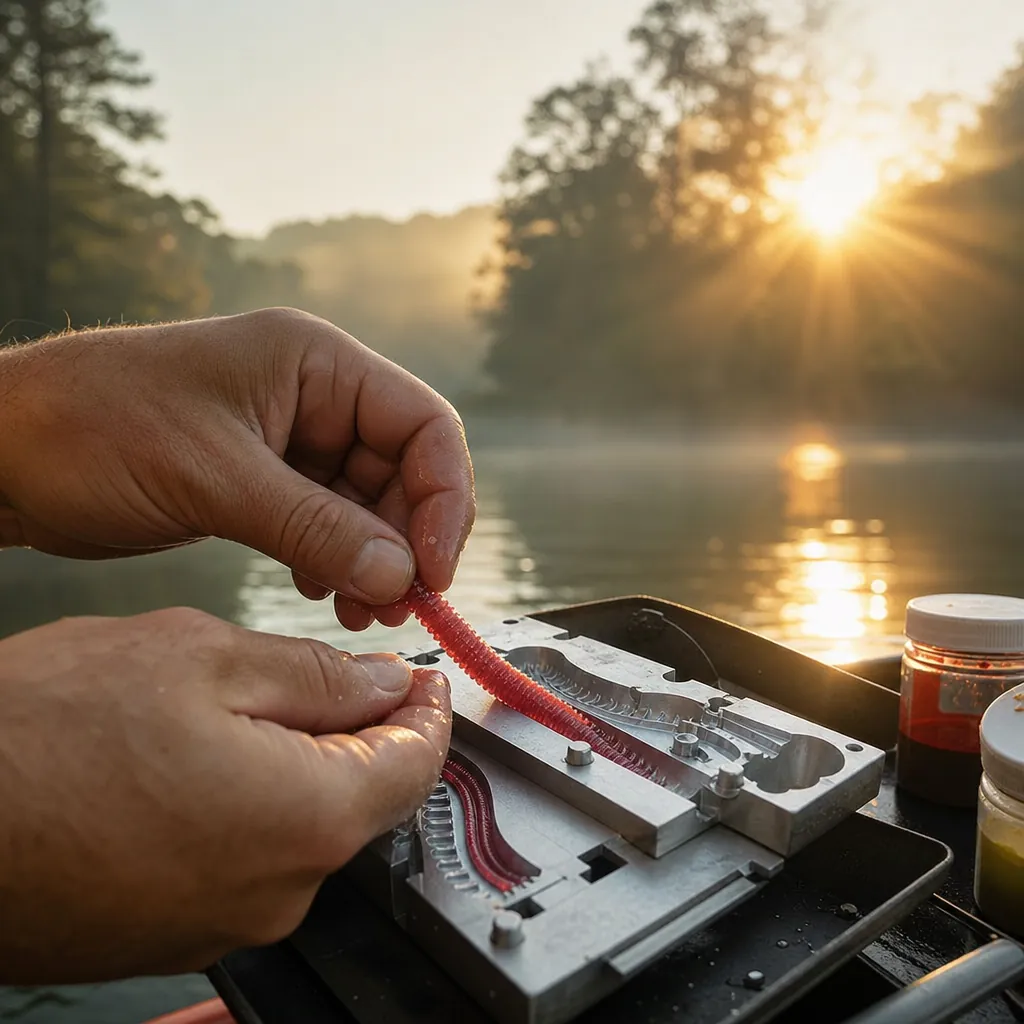
Soft plastics are where most DIY lure makers start, and for good reason — the entry cost is low, the learning curve is short, and you can be fishing your own baits within a couple of hours of starting. The basic principle: heat liquid plastisol until it’s clear and pourable, mix in color, pour into a mold, let it cool, and pop out your bait.
Step 1: Prep Your Mold
Spray a light coat of mold release on the interior cavity and let it sit for 30 seconds. Aluminum molds benefit from a quick warm-up under hot tap water so the plastic doesn’t shock-cool too fast and leave surface wrinkles. Set the mold on a flat, heat-safe surface — a silicone mat works great.
Step 2: Heat the Plastisol
Pour your desired amount of plastisol into a heat-resistant pouring cup. In a microwave, heat in 30-second bursts, stirring between each, until the plastic turns from milky-white to clear — usually 90 seconds to 2 minutes depending on quantity and microwave wattage. On a dedicated electric melting pot, set the temperature to around 325–340°F and stir occasionally until clear. Don’t overheat — if it starts smoking or browning, you’ve gone too far.
Step 3: Add Color and Pour
Work quickly once the plastic is clear. Add a few drops of colorant (start conservative — a little goes a long way), stir well, and add glitter if desired. Pour steadily into the mold cavity, filling from one end to avoid air bubbles. A slow, steady stream beats a fast dump every time. Overfill slightly — the plastic shrinks a hair as it cools.
Step 4: Cool and Demold
Let the bait cool at room temperature for 5–10 minutes. Don’t rush it with a freezer — rapid cooling causes brittleness. Once the surface is firm to the touch, flex the mold gently and peel out your bait. Trim any flashing (thin plastic film along the seam) with small scissors. Your first few may have air bubbles or uneven color — that’s normal. The fifth pour looks a lot better than the first.
Starter Recipe — Watermelon Red Flake 4″ Worm: 2 oz clear plastisol + 3 drops green colorant + 1 drop red colorant + 1/4 teaspoon red glitter. Pour into a 4-inch straight worm mold. This is a proven color for bass across most of the country and a great first bait to learn on.
How to Build Painted Spinnerbait Skirts
A spinnerbait skirt is the pulsing, breathing bundle of silicone strands that gives the lure its profile in the water. Building your own lets you match local forage colors exactly, bulk up or slim down the skirt for different conditions, and rescue a favorite spinnerbait frame that came with a skirt that fell apart. This is also the fastest of the three projects — you can knock out a half-dozen custom skirts in an evening.
Step 1: Select and Cut Your Strands
Pull your silicone strands from the bulk pack and create a small bundle — typically 20–30 strands for a standard bass spinnerbait skirt. Mix colors intentionally: a chartreuse-and-white combo mimics shad; brown-and-orange suggests crawfish. Cut the bundle to length (about 3.5–4 inches from the collar tab point is standard for bass). Keep the ends even on one side — that’s the collar end.
Step 2: Thread Through the Skirt Tab
Fold the strand bundle in half over the collar point. Work the folded center through the skirt tab using a bodkin or a bent paper clip as a threading tool. The tab’s slot is tight by design — that tension is what holds everything in place. Slide the tab up to the mid-point of the bundle so equal length hangs on both sides.
Step 3: Paint the Jig Head (Optional but Recommended)
If you’re mounting the skirt on a bare jig head, now’s the time to paint it. Dip or brush on a base coat of jig paint (white or chartreuse), let dry, then add detail with a paint marker — tiger stripes, a red gill slash, or a simple dot for the eye. Finish with a UV-cure epoxy topcoat for durability. Cure it under a UV lamp or 30 seconds of direct afternoon sunlight. Slide the skirt tab onto the jig head collar and you’re done.
How to Tie a Feather Jig
Feather jigs — sometimes called crappie jigs, marabou jigs, or hair jigs depending on the material — are one of the oldest lure forms still in regular use, and they catch everything from panfish to smallmouth bass to trout. Tying them is essentially entry-level fly tying, and once you get the thread-wrapping motion down, you can produce a dozen in about an hour. A beginner fly-tying vise kit is the one investment that makes this dramatically easier — trying to hold a jig head between your fingers while wrapping thread is an exercise in frustration.
Step 1: Secure the Hook in the Vise
Clamp the jig head hook in the vise at the bend, leaving the hook point and the lead head exposed. The hook should be horizontal and rock-solid. Attach your thread just behind the jig head collar with 5–6 tight wraps, then lock it with a half-hitch before you do anything else.
Step 2: Tie in the Tail Material
For marabou jigs, tear (don’t cut) a small clump of marabou feather about 1.5x the hook shank length. Pinch it on top of the hook shank directly behind the collar and make 3–4 tight thread wraps over the stem. Add a few strands of flash material on each side if you want — it makes a real difference in low-light water. For rooster-tail feathers, strip the lower fibers from the quill, then wrap the quill onto the shank the same way.
Step 3: Build the Head and Finish
Wind the thread forward toward the jig head collar with smooth, touching wraps to cover the material stems and build a neat thread head. When you reach the collar, finish with a whip-finish knot (3–5 turns) or several half-hitches pulled tight. Clip the thread close. Apply a small drop of head cement or clear nail polish to the thread wraps and let it cure. That’s a fishing lure. Seriously — it takes about four minutes once you’ve done it a few times.
If you want to get further into material options, marabou and hackle jig material kits give you a wide color range without buying a whole craft store’s worth of individual feather packs.
Common Mistakes to Avoid
- Overheating plastisol. Brown, smoky plastic is ruined plastic. Pull it at 325–340°F, not a degree hotter than necessary. Invest in a cheap candy thermometer if you’re using a pot.
- Skimping on mold release. Your bait will stick, tear, and look ragged. A light coat every 2–3 pours is cheap insurance.
- Packing the skirt tab too full. More strands sounds like more action, but an overstuffed skirt spins and collapses in the water instead of breathing. 25 strands is plenty for most bass applications.
- Rushing the feather jig finish. Thread wraps that aren’t locked down will unravel the first time a fish hits the lure. Take the extra 60 seconds for a proper whip-finish.
- Not testing before a trip. Toss your homemade baits into a bucket or the bathtub and watch how they move. You’ll catch problems — a lopsided skirt, a tail that won’t flutter — before they matter on the water.
- Buying too much too soon. Start with one mold shape, one color palette, one jig size. Get good at that before expanding. The trap is buying six mold kits before you’ve poured your first bait successfully.
Getting Your First DIY Lures in the Water
The gap between “lure I made” and “lure I trust” closes fast once you’ve caught a fish on your own work. Start small: one color of soft plastic worm in a shape that already catches fish where you fish. Tie three feather jigs in white or chartreuse and drop them on your local panfish spot. Build two skirts for a spinnerbait frame you already own. None of that takes more than a single afternoon and maybe $30 in starter supplies — less than a handful of premium store-bought lures. Once the first fish comes to hand on something you built yourself, you’ll understand why anglers get hooked on this side of the hobby. If you need a full starting kit to get rolling, lure-making starter kits bundle the basics together and take a lot of the guesswork out of that first purchase. Good luck, and tight lines.