
Disclosure: BestFishingReviews.com earns a commission on qualifying purchases made through affiliate links in this article, at no extra cost to you.
Most anglers pack up right when the fishing starts getting good. Once the sun drops and the parking lot empties out, a completely different bite turns on — one that a lot of fishermen never discover because they’re already home eating dinner. Night fishing isn’t just a novelty. For bass, walleye, and catfish especially, darkness is prime time. Water temps drop, predators get aggressive, and boat traffic disappears. The problem is that fishing after dark comes with a learning curve. The gear you rely on during the day doesn’t always cut it, and the safety stakes go up considerably. This guide walks you through everything you need to fish confidently and effectively at night — from your first trip to dialing in your tackle and staying safe on the water.
See current price & availability on AmazonCheck on Amazon →Why Night Fishing Actually Works
There’s real biology behind this, not just angler folklore. During summer especially, daytime water temperatures push bass and walleye into deeper, cooler water where they go sluggish and lethargic. Once the surface cools after sunset, those fish move up and feed aggressively in the shallows. They’re also keying on forage — shad, crawfish, and insects — that concentrates near light sources and structure after dark.
Largemouth bass are arguably the best night-fishing target in the country. They rely heavily on their lateral line to detect vibration and movement, which means they can hunt effectively in near-zero visibility. A big black buzzbait churning across a flat at midnight is one of the most reliable big-bass patterns in warm-weather fishing. Smallmouth bass follow a similar script, especially on clear lakes where daytime pressure is heavy.
Walleye are built for low-light conditions — those big, glassy eyes collect light the way a cat’s do. On many natural lakes in the Midwest and Great Lakes region, walleye barely move during the day but become intensely catchable from dusk through midnight, cruising shallow rock and sand flats for perch and shiners. Channel catfish and flatheads are the same story. They’re ambush predators that hunt by scent and feel, and darkness only makes them bolder. If you’ve ever struggled to catch big catfish during daylight, go back to the same spot at 10 p.m. and prepare to be surprised.
Safety First: What You Cannot Skip
Night fishing from a boat is one of those situations where the margin for error shrinks fast. A mistake that’s annoying during the day — a missed step, a snag on a line, a loose cooler — can turn serious after dark. Run through this checklist before you ever leave the dock.
Wear Your PFD — Every Trip, No Exceptions
This isn’t negotiable. Most boating fatality statistics tilt heavily toward victims who weren’t wearing a life jacket. At night, if someone goes overboard, it can take minutes just to figure out what happened and where they are. A worn PFD means you’re floating and visible. A loose one stored under the seat means you’re probably not. Inflatable suspender-style PFDs are comfortable enough that anglers actually wear them all night without thinking about it — get one and put it on before you cast off.
Navigation Lights Are Federal Law
If you’re running a motorized boat between sunset and sunrise, you are legally required to display proper navigation lights — red and green bow lights, a white stern light, and an all-around white light if anchored. This isn’t just about legality. Other boaters need to see you coming. Running dark on a busy lake at night is genuinely dangerous. Check your lights before every trip and carry spare fuses and bulbs. LED navigation light sets are cheap insurance.
Headlamp: Your Most Important Piece of Gear
A good headlamp keeps both hands free for tying knots, handling fish, and managing gear. Look for one with a red-light mode — red light preserves your night vision and won’t spook fish the way a bright white beam will. Waterproofing matters too, because boat decks get wet. The Black Diamond Spot headlamp is a longtime favorite among outdoor enthusiasts for good reason: it’s bright, waterproof, has a true red-light mode, and runs on common AAA batteries. Always carry a backup set of batteries in your tackle bag.
One more safety note: tell someone where you’re going and when you expect to be back. Night fishing solo is fine, but someone onshore should know your plan. A fully charged cell phone in a waterproof case rounds out the safety picture nicely.
Night-Specific Gear That Makes a Real Difference
Your daytime setup doesn’t go to waste at night, but a few targeted additions will make you significantly more effective and more comfortable once the sun goes down.
UV-Active and High-Visibility Line
Watching your line is how you detect subtle strikes, especially for finesse presentations. At night, a standard monofilament line disappears against the dark water. High-visibility lines in chartreuse, yellow, or UV-reactive finishes let you watch for line jumps and twitches that signal a bite. Hi-vis monofilament works great as a main line for topwater and shallow applications. For leaders where you don’t want visible line near the bait, pair it with a short fluorocarbon section.
Glow Lures and UV-Charged Plastics
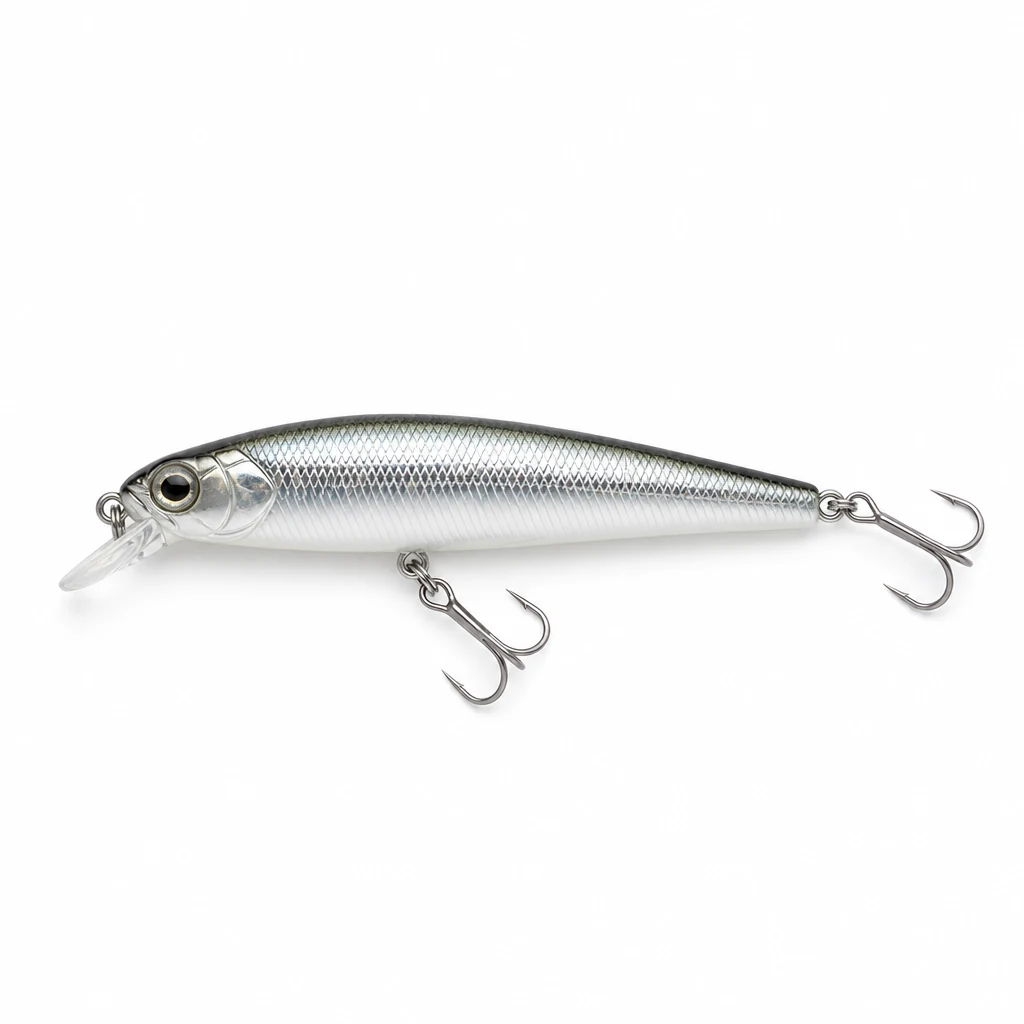
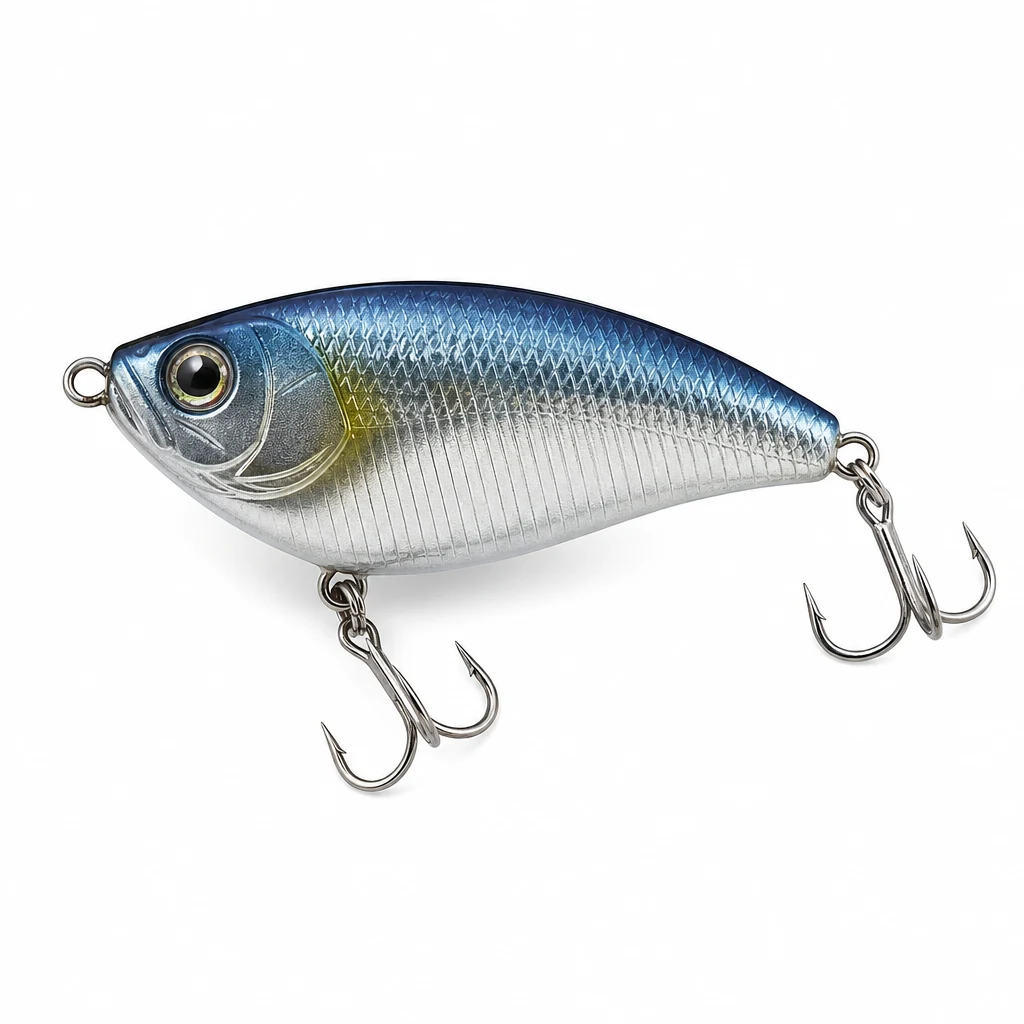
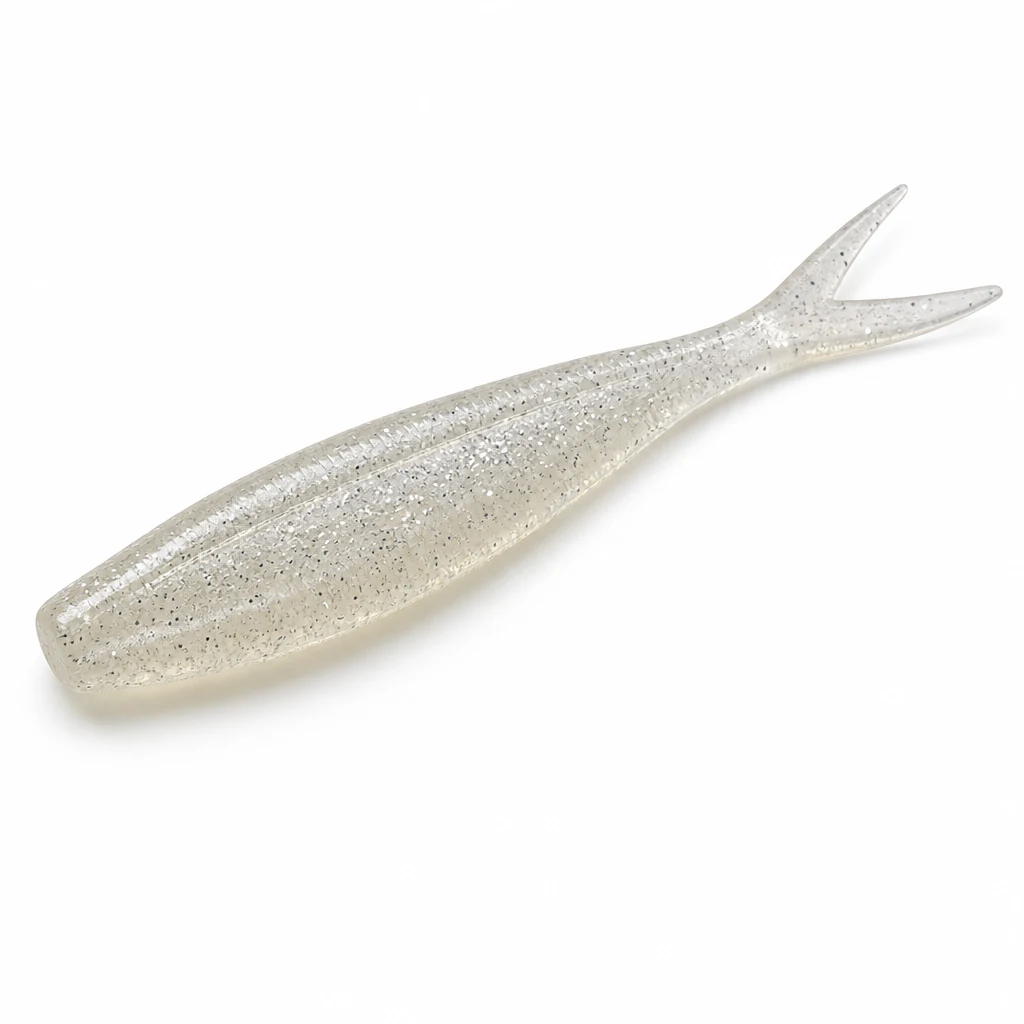
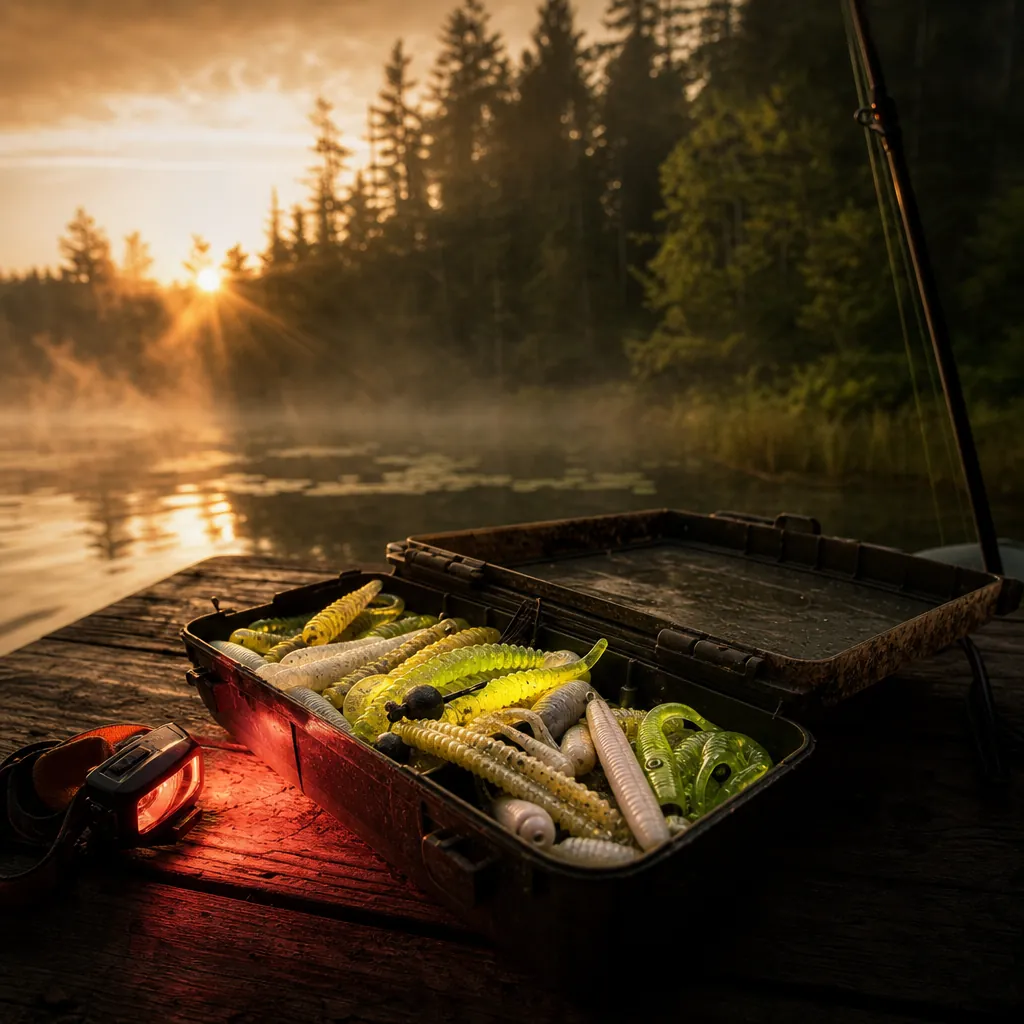
This is where night fishing tackle gets fun. Glow-in-the-dark soft plastics, jig heads, and hard baits that hold a phosphorescent charge can be deadly, especially for walleye and catfish in darker water. You charge them up with your headlamp or a UV flashlight for a few seconds, then drop them down. The subtle glow is visible to fish and gives them a target in low visibility. Glow lures for night fishing range from jig heads to crankbaits to soft swimbaits — keep a mix in your night box.
For bass specifically, dark-colored lures often outperform glow baits. A solid black or dark blue swimbait creates a strong silhouette against any ambient light from above, which is exactly what a bass keys on. Big black spinnerbaits, black-and-blue jigs, and all-black buzzbaits are classic night-bass producers that have stood the test of time.
Bait Alarms for Hands-Free Soaking
If you’re targeting catfish or carp with bait on the bottom, a electronic bite alarm changes the game entirely. You clip the alarm to your rod, set it on a rod pod or bank stick, and let it rip while you relax. The alarm sounds and usually has an LED indicator when a fish picks up the bait and runs. This is standard equipment in European-style carp fishing but works equally well for catfish anglers who want to fish multiple rods efficiently in the dark without staring at rod tips all night.
Tackle Organization Matters More at Night
Digging through a disorganized tackle bag by headlamp at midnight while a fish is running is a special kind of frustration. Night fishing rewards anglers who have their gear dialed in before they launch. Pare down to what you actually need and organize it so you can find it by feel if necessary. A compact, well-organized tackle tray that clips into a bag keeps your night box streamlined. The Plano 3600-series tackle trays have been the industry standard for decades for good reason — they’re cheap, durable, and keep your lures sorted so you’re not fumbling around when it counts.
Best Conditions for Night Fishing
Not every night is created equal. A few conditions will stack the odds heavily in your favor.
- Full moon or bright moon phase: More ambient light means easier navigation and better visibility for you and for sight-hunting fish like bass. Many experienced night anglers specifically target full-moon nights for topwater bass.
- Summer heat: The hotter and more pressured the daytime fishing is, the better the night bite typically gets. July and August nights are prime time across most of the country.
- Calm water: Wind can help during the day, but at night a calm surface makes topwater presentations far more effective and helps you hear subtle strikes.
- Dock lights and bridge lights: Any artificial light source that shines over water concentrates baitfish, which concentrates predators. These are the first places to fish on any unfamiliar night body of water.
- Post-cold-front stability: Night fishing can actually be better than daytime fishing after a cold front, when daytime bite shuts down but fish still need to feed after dark.
Tactics by Species
Bass
Slow down and go big. The number one night-bass mistake is fishing too fast with too small a lure. A big, noisy buzzbait or a slow-rolled black spinnerbait along shallow weed edges and dock edges is the bread-and-butter approach. Texas-rigged creature baits worked slowly over bottom structure in two to eight feet of water will also produce serious fish. Focus on areas you already know hold fish during the day — points, dock lines, laydown logs, and grass edges.
Walleye
Work shallow rock flats and sand bars that are adjacent to deeper water. Walleye slide up onto these areas after dark to feed. A slip-sinker live-bait rig with a nightcrawler or leech is a classic that never fails. Jig and minnow combos tipped with glow jig heads are also extremely effective. Move slowly and cover structure methodically. Walleye can be lined up along these feeding zones in numbers that would shock you after dark.
Catfish
Find current — river bends, tailwaters below dams, and channel edges — and put stout, fresh-cut bait or live bluegill on bottom. Channel cats and flatheads both feed heavily after dark in current. Use heavy enough tackle to control fish in the dark, and have your net handy and easy to reach before you hook up. A bite alarm system and a comfortable chair make this a genuinely enjoyable way to spend a summer night.
Common Mistakes Night Anglers Make
- Using too much white light: Constantly blasting a bright white beam across the water spooks fish, kills your night vision, and ruins the experience for everyone nearby. Switch to red-light mode and use it sparingly.
- Fishing unfamiliar water for the first time at night: Learn the lake or river in daylight first. At night, you need to know where the hazards, shallow spots, and structure are without being able to see them. Pulling up to a spot you’ve never fished in the dark is a recipe for a prop strike or a hung-up anchor.
- Underpreparing on tackle and terminal gear: Tying knots in the dark by headlamp is hard. Rig up multiple rods before dark, pre-tie leaders, and have everything you need within arm’s reach before the sun goes down.
- Forgetting about sound: You can hear strikes, splashes, and bait activity far better at night. Turn the music off. Night fishing is an immersive, sensory experience — use all of them.
- Running the boat too fast in the dark: Slow way down when moving at night. Logs, other boats, and channel markers appear with less warning. If you don’t have a GPS chartplotter showing your position and obstacles in real time, drive at idle speed.
- Skipping the bug spray: This sounds minor until you’re getting eaten alive at 11 p.m. on a calm summer night. Bring it, apply it before you need it, and keep it in your bag for re-application.
Go Fish — After Dark
Night fishing has a way of getting under your skin. The quiet, the stars, the sound of a blow-up on a topwater bait in the dark — it’s a different experience than anything daytime fishing offers, and the fish are often bigger and more willing to eat. Get your safety squared away, simplify your tackle, and pick a spot you already know. Your first night out might feel a little awkward and slow. Your second will feel like you’ve been doing it your whole life. The fish are out there long after the rest of the anglers go home — might as well be the one who stays.