
Disclosure: BestFishingReviews.com earns a commission on purchases made through affiliate links in this article at no extra cost to you.
You’ve done the hard part — booked the trip, packed the waders, arranged for someone to feed the dog. Then you stare at your seven-foot one-piece spinning rod and realize it’s not going anywhere near an airplane overhead bin or a car trunk already packed to the ceiling. Travel fishing is a genuine problem, and “just use a rental rod” isn’t a real solution unless you enjoy casting a noodle stick that’s been abused by a thousand strangers. The good news is that rod manufacturers have been solving this problem for decades, and your options today — telescopic, two-piece, and multi-piece travel rods — are genuinely good. The bad news is each design comes with real tradeoffs you need to understand before you buy. This guide walks you through all of it.
See current price & availability on AmazonCheck on Amazon →Understanding the Three Main Travel Rod Designs
Before you can pick the right setup, you need to know what’s actually in front of you at the shop or on the product page. These three designs solve the same problem — making a long rod short — in very different ways, and those differences ripple through every aspect of how the rod performs on the water.
Telescopic Rods
A telescopic rod collapses down like an old car antenna — each section slides inside the next, and the whole thing shrinks to a fraction of its fishing length. A 7-foot rod might pack down to 18 inches. That’s genuinely impressive portability. The tradeoff is structural. The sections overlap rather than joining with precision ferrules, which means the blank has to be thicker-walled to hold its shape, and those overlapping sections create dead spots where vibration and bend energy don’t transfer cleanly. You lose sensitivity and you lose the smooth, progressive action that makes a quality rod fun to cast. Telescopic rods also have more failure points — if one section gets a ding or warps slightly, the whole thing can stick or collapse at the worst moment. That said, for ultralight panfishing, casual bass fishing, or backpacking trips where a rod is just a tool to get food, a quality telescopic fishing rod absolutely gets the job done.
Two-Piece Rods
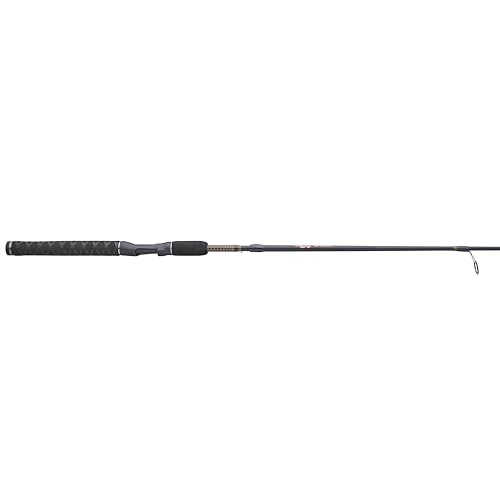
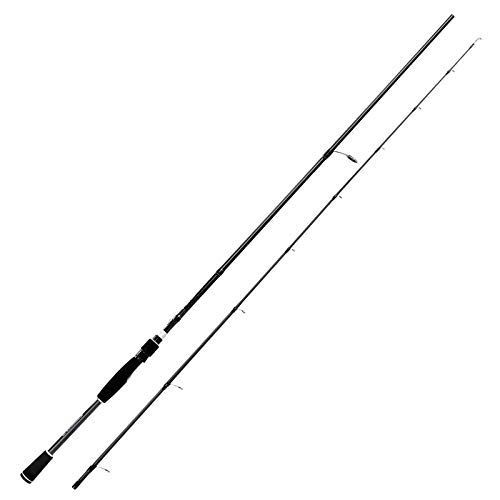
Two-piece rods are the most common travel compromise, and for most anglers fishing from a car or checking luggage on a flight, they’re the right call. The rod breaks into two equal sections joined by a single spigot or over/under ferrule. When that joint is made well — and on modern rods from brands like St. Croix, G. Loomis, or Fenwick, it usually is — the performance difference between a two-piece and a one-piece rod is genuinely negligible. You’d be hard-pressed to feel it in a blind test. The ferrule is the one weak point: it can loosen over time, and if it’s not seated properly before a cast, you risk the tip section launching itself across the water. Keep it clean, seat it firmly, and check it every hour or so on a long day of fishing. At roughly 40-45 inches packed, a two-piece rod fits in most checked luggage and definitely in a standard rod tube.
Multi-Piece (4+ Section) Travel Rods
Pack rods with four, five, or even seven sections are the serious traveler’s answer. These rods break down to 20-30 inches typically, fitting inside a carry-on bag, a hiking pack, or even a large briefcase. The technology here has gotten remarkably good. Brands like Sage, Orvis, and Redington in the fly fishing world, and companies like Ugly Stik and Fenwick in the spin/cast world, have invested heavily in ferrule engineering. High-modulus graphite and precision-machined ferrules mean a well-made four-piece rod can perform nearly identically to its one-piece equivalent. Nearly. There’s still a slight stiffening effect at each ferrule junction, which can make the action feel slightly choppier than a continuous-taper blank. For most fishing — trout, bass, inshore saltwater — it’s a non-issue. For applications demanding peak sensitivity like finesse jigging or ultralight nymphing, you might notice it.
Performance Tradeoffs: What Actually Matters on the Water
Let’s be honest about what the real-world differences look like, because the internet tends to either catastrophize ferrule weakness or completely dismiss it.
Sensitivity
Sensitivity — your ability to feel the bottom, a soft bite, or a lure tick a rock — travels through the blank as vibration. Every joint in a rod interrupts that vibration to some degree. One-piece rods are the gold standard. Two-piece rods with good ferrules are maybe 5% behind — imperceptible in normal fishing. Four-piece pack rods might be 10-15% behind. Telescopic rods, depending on construction quality, can be 20-30% behind a comparable one-piece. If you’re fishing for walleye on a jig or drop-shotting finicky bass in cold water, that gap matters. If you’re throwing topwater plugs for largemouth or casting streamers for trout in a mountain creek, it doesn’t.
Action and Casting
Rod action describes where along the blank the rod bends under load. Fast-action rods bend primarily in the top third; moderate rods bend deeper into the mid-section. Ferrules locally stiffen the blank, which can push the effective bend point around unpredictably. On cheap multi-piece rods, this produces a “hinge-y” feeling cast that telegraphs as a loss of loop control in fly fishing or inaccuracy in spinning and casting applications. On well-engineered rods, it’s been designed around and you won’t notice. The lesson here is that price genuinely correlates with ferrule quality on travel rods more than almost any other rod spec.
Ferrule Durability
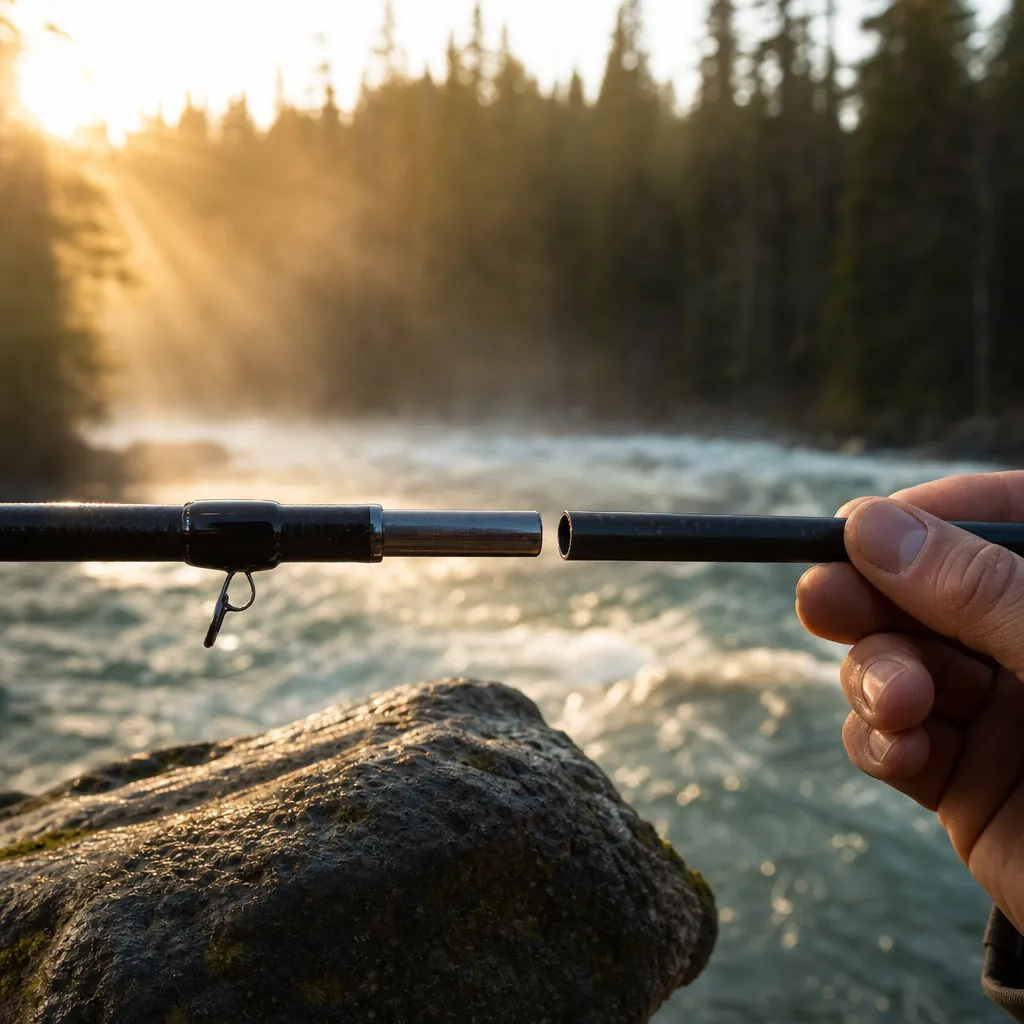
Ferrules loosen over time, especially if you fish hard and don’t maintain them. On spigot ferrules (the most common type on multi-piece spinning and casting rods), a loose joint under load can crack the blank at the joint. The fix is simple: rub the male ferrule lightly with a candle or ferrule wax, seat it firmly, and check it during the day. On telescopic rods, the sections can stick permanently if sand or grit gets inside — rinse them with fresh water after every saltwater or gritty-conditions outing, and store them slightly extended to avoid a vacuum seal.
Best Use Cases: Matching the Rod to the Trip
Different trips call for different solutions. Here’s how to think about it before you click “add to cart.”
- Backpacking and hiking trips: Telescopic or 4+ piece pack rod. Weight and pack size trump performance. A compact pack rod for backpacking that fits alongside your sleeping bag is worth a small performance hit when you’re hiking six miles to a high-altitude lake.
- International flights / carry-on only: 4-piece or 5-piece pack rod in a hard tube under 22 inches. This is the sweet spot for serious traveling anglers who can’t check bags or don’t want to trust airline baggage handlers with expensive gear.
- Road trips with trunk space: Two-piece rod in a rod sock or soft case. Best performance compromise, easiest to manage, and a 45-inch case slides along the side of most trunks or in an SUV cargo area without drama.
- Checked luggage on domestic flights: Two-piece rod in a hard-sided rod tube. Fits in most checked-bag dimensions, and a good hard case protects against the unique creativity of baggage handlers.
- Kayak or canoe camping: Four-piece pack rod or telescopic. Shorter packed length means it stows inside the kayak hatch or lashes cleanly to a canoe thwart without sticking out over the bow.
- International saltwater destination fishing (permit-required species, serious fish): Four-piece high-end travel rod. Don’t cheap out here. Sage, Orvis, and similar brands make four-piece saltwater rods with the same components as their one-piece equivalents. The fish don’t know you flew economy.
Recommended Brands and Rods Worth Looking At
You don’t need to spend $400 to get a travel rod that performs. But you do need to spend more than $30. Here’s a practical breakdown by category.
For Spinning and Casting (Freshwater)
Ugly Stik makes a solid two-piece and travel-length rod that’s genuinely durable and forgiving — good starter option. Fenwick’s HMG and Eagle series in two-piece configurations offer real graphite performance at a reasonable price point. St. Croix’s Triumph and Premier series in two-piece are the benchmark for mid-range spinning rods that happen to also travel well. For four-piece spinning, look at the KastKing Krome travel spinning rod as a budget entry, or step up to Fenwick’s Eagle Travel series for serious freshwater use.
For Fly Fishing
Four-piece is simply the standard in fly fishing travel — it’s been that way for 30 years and the technology is mature. Redington’s Crosswater and Path series offer excellent performance for the price. Orvis Clearwater is a step up and widely regarded as one of the best values in travel fly rods. For serious anglers willing to invest, the Sage Pulse four-piece fly rod delivers one-piece performance in a travel-ready package. All of these come with a hard travel tube — which brings us to the next point.
For Saltwater Travel
The stakes are higher with saltwater — larger fish, heavier loads on the ferrules, and a corrosive environment that punishes loose tolerances. Ugly Stik Elite and Penn Battalion both make two-piece inshore rods that travel reasonably well. For serious offshore or permit/bonefish situations, look at purpose-built travel rods from Orvis, Sage, or Temple Fork Outfitters (TFO), all of which make four-piece saltwater-rated rods with appropriate component grades.
Packing, TSA Tips, and Protective Cases
The best travel rod in the world gets ruined by bad packing. Here’s what actually works.
Carry-On vs. Checked Bags
The TSA does not explicitly prohibit fishing rods in carry-on bags, but individual officers have discretion, and a rod tube in the overhead bin is a gamble. The official TSA stance as of this writing is that rods are allowed in carry-on, but hooks and lures are restricted in some configurations. To avoid the gate-check nightmare, aim for a packed rod length under 22 inches (standard overhead bin depth) and carry your terminal tackle in your checked bag or in a clearly organized, hook-guarded tackle wallet. When in doubt, check the rod.
Hard Tubes vs. Soft Cases
For checked luggage, a hard-sided rod tube is not optional — it’s insurance. PVC tubes you build yourself work fine and cost next to nothing. Commercial options like the Plano Guide Series or SKB rod cases offer locking hardware and airline-rated construction. Hard rod travel tubes are especially worth the investment if you’re flying with a rod worth more than $150. Soft cases are fine for car travel and will protect against scratches and guides snagging on gear, but they won’t save your blank from a 200-pound bag dropped on top of it in the cargo hold.
Packing the Rod Itself
A few habits that prevent heartbreak:
- Always store rod sections in a cloth sock before putting them in the tube — guide-to-blank contact during transport is how micro-cracks start.
- On telescopic rods, rinse all sections with fresh water and let them dry fully extended before collapsing for storage — this prevents salt or grit from bonding the sections together.
- Label your rod tube with your name, phone number, and destination on both ends. Baggage handlers lose tubes at a higher rate than standard bags because they roll and get kicked to corners.
- If checking a tube that’s longer than your suitcase, attach it to the outside of a duffel with compression straps rather than checking it loose — fragile stickers help, but common sense helps more.
- Pack a small tube of ferrule wax or a stub of candle in your rod bag. A 30-second ferrule-seating ritual before fishing prevents most joint failures.
Common Mistakes Anglers Make with Travel Rods
A few patterns show up repeatedly when travel rods fail — almost all of them preventable.
- Buying the cheapest telescopic rod available: Sub-$25 telescopic rods from no-name brands have poor-quality aluminum or fiberglass sections that bend, stick, or snap under normal fishing loads. Spend at least $50-80 for a telescopic rod you can trust.
- Not checking ferrule seating mid-trip: A two-piece or multi-piece rod ferrule that loosens during a long casting session will eventually slip or crack the blank. Check it. Takes two seconds.
- Forgetting to account for rod length when renting a car: A two-piece spinning rod at 45 inches won’t fit in every rental car trunk, especially compact classes. Four-piece pack rods at 24 inches fit anywhere.
- Using a soft case for checked luggage: Baggage handlers are not careful. Hard cases only for anything going in a cargo hold.
- Collapsing a telescopic rod while it’s wet: Water acts as a lubricant that lets grit migrate into the joints, then dries and locks them. Always rinse, always dry extended.
- Traveling with lures rigged to the rod: Hooks will catch guides, guides will bend, and TSA will flag your bag. Rig up at the water.
Making the Right Call for Your Trip
There’s no single “best” travel rod — there’s the best rod for how you’re getting there and what you’re fishing for when you arrive. If you’re driving to a bass lake two states over, a quality two-piece spinning rod in a soft case is all you need. If you’re flying carry-on only to a trout stream in Patagonia, invest in a four-piece mid-to-high-end pack rod and a hard tube short enough for the overhead bin. Telescopic rods earn their place in backpacks, kayak hatches, and emergency “I didn’t know there’d be fish here” situations. Whatever you choose, take care of the ferrules, protect the guides, and don’t let the gear logistics talk you out of actually going fishing.