Disclosure: BestFishingReviews.com earns a commission on qualifying purchases made through affiliate links in this article, at no extra cost to you.
Most anglers who struggle on rivers aren’t struggling because they picked the wrong lure — they’re struggling because they’re fishing the wrong water. A river isn’t one uniform thing. It’s a patchwork of fast lanes, slow pockets, hidden shelves, and oxygen-rich seams, and the fish don’t spread themselves evenly across any of it. They stack up in specific spots for specific reasons. Learn to read those spots and you’ve already won half the battle before you tie on a single hook. This guide walks you through how to decode moving water, position yourself safely, and put your presentation exactly where fish are holding.
See current price & availability on AmazonCheck on Amazon →Understanding the Basic Anatomy of a River
Before you can target fish, you need a shared vocabulary for what you’re looking at. Standing on the bank of a river, you’re seeing hydraulics — water behaving differently depending on depth, bottom structure, and obstacles. Here are the features that matter most.
Riffles
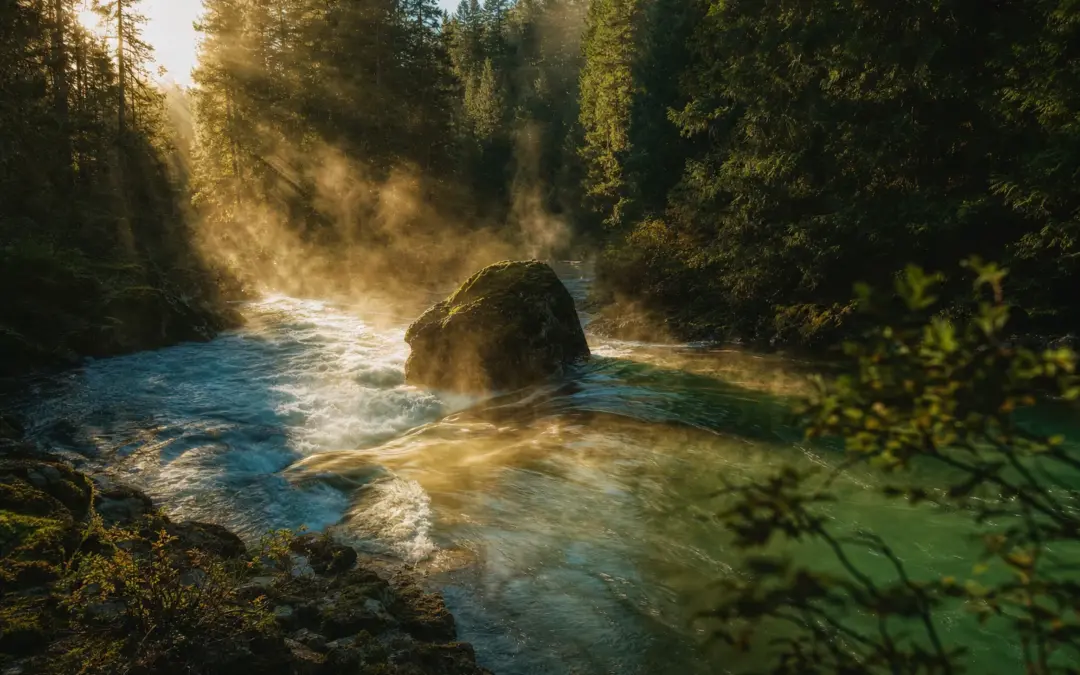
Riffles are the shallow, broken water where the river runs fast over a gravelly or rocky bottom. The surface is choppy and white. Riffles are oxygenation machines — bugs hatch here, baitfish feed here, and trout, smallmouth bass, and other current-oriented species will work the edges of riffles hard, especially in low-light hours. Don’t blow past riffles to get to the “good” water. They often are the good water.
Runs and Seams
A run is where the riffle deepens and slows slightly — the water is still moving with purpose but the surface is smoother. The seam is the line where fast water meets slow water, and it is arguably the single most productive strip of real estate in any river. Fish sit on the slow side and dart into the fast lane to grab food drifting past. Cast to the seam. Fish the seam. When in doubt, find the seam.
Holes and Pools
Where a run deepens significantly into a dark, slow-moving pool — that’s a hole. Holes are where big fish rest. The current breaks up, energy expenditure drops, and depth provides security from predators. Holes are especially important in summer heat (cool, oxygenated water sinks) and in winter when fish need to conserve energy. The productive zone in a hole is usually the head (where current dumps in) and the tail-out (where it flattens and shallows before the next riffle).
Eddies
An eddy forms on the downstream side of any obstruction — a boulder, a fallen tree, a bridge piling. The main current sweeps past the obstacle and creates a reverse circular flow behind it. That spinning water collects food like a slow drain collects debris. Fish love eddies because they offer rest and a conveyor belt of groceries delivered to them by the main current. Wade carefully around them — the soft swirling flow can disguise depth and uneven bottom.
Undercut Banks
Undercut banks are exactly what they sound like — the current has eroded the bank from underneath, creating a horizontal cave of sorts just below the waterline. Big brown trout and largemouth bass in river systems are notorious for tucking under these overhangs. They’re nearly invisible from the bank, which is why most people walk right past them. Look for banks where the grass or root system hangs over the water and the surface current pushes right into the bank. Flip or pitch a lure along the bank face and let it slide under the lip.
How to Read Current Like a Local
Reading current well is really about understanding one thing: fish are lazy. They want to burn as few calories as possible while eating as many as possible. So they find spots where the current does the work of delivering food while they sit in slower water. When you scan a stretch of river, ask yourself: where is there a break in the current, and where is food being funneled past that break? The answer is where your lure belongs.
Polarized sunglasses are non-negotiable here. Without them, you’re looking at surface glare. With them, you can see bottom structure, depth changes, and in clear water, the fish themselves. A quality pair of polarized fishing sunglasses will change how you see rivers forever — it’s one of the best investments a wade angler can make.
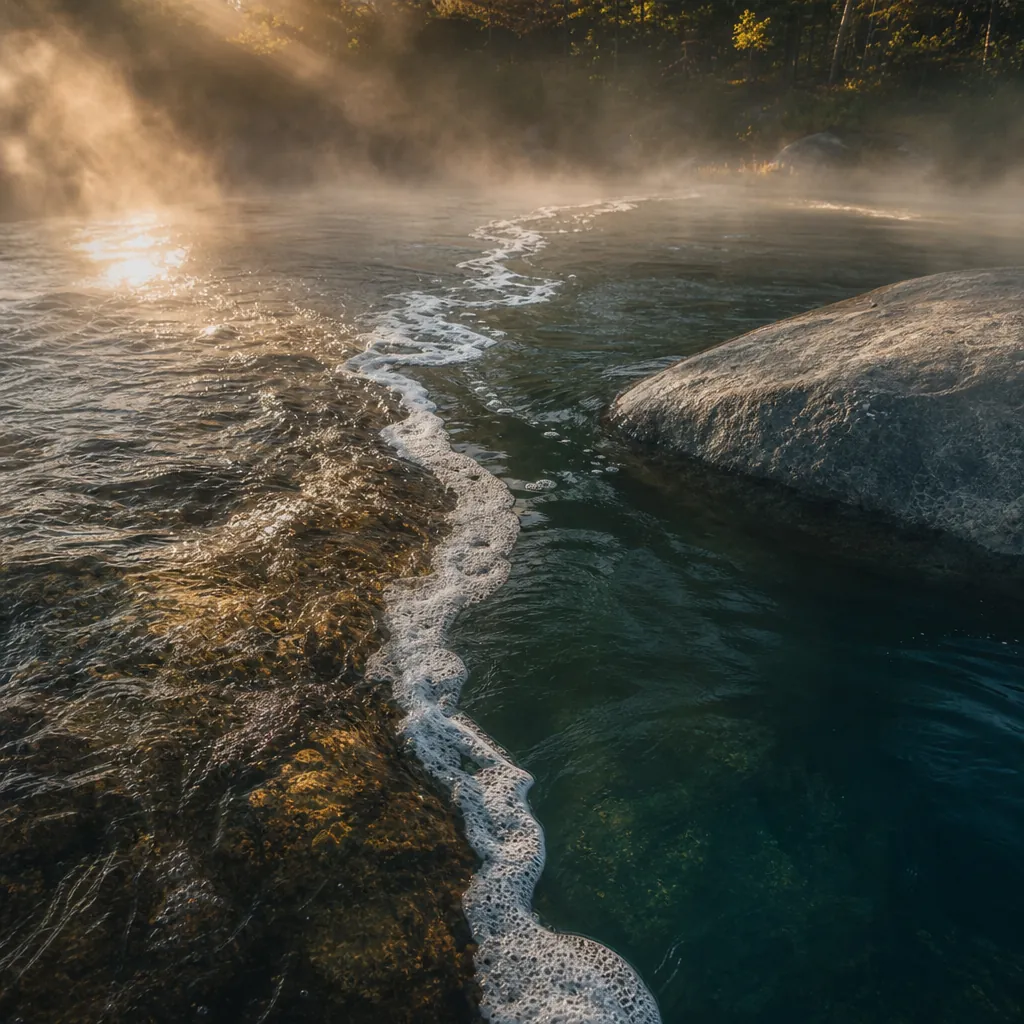
Also pay attention to surface disturbances. Upwellings (water boiling up from below) indicate current hitting a deep obstruction. Smooth slicks in otherwise choppy water indicate a submerged rock or ledge just beneath the surface. Foam lines follow the seams — wherever the foam collects and drifts in a line, that’s where the current boundary is, and that’s your target.
Lure Presentation Across Moving Water
Still-water fishing instincts will hurt you in a river. The current is always working against your presentation unless you account for it. Here’s how to adjust.
The Upstream Cast
Casting upstream and retrieving back down is the most natural-looking presentation for most lures and all live or cut bait. Your offering drifts the same direction as everything else in the river — insects, dead baitfish, crayfish tumbling along the bottom. Maintain just enough tension to feel a strike but don’t fight the current so hard that you’re dragging the lure unnaturally fast. Mending line (repositioning slack above your lure) is a fly-fishing technique worth adopting even with spinning gear.
Quartering Across Current
Casting at roughly a 45-degree angle across the current and letting the lure swing through the seam is a deadly technique for trout and smallmouth. As the current catches your line, it bows the line downstream and pulls the lure in a wide arc. The lure swings from fast water to slow water, crossing that seam — which is exactly where the fish are sitting. Spinners, soft swimbaits, and wet flies all work beautifully on a swing.
Tight to Structure
For undercut banks, laydowns, and eddy pockets, accuracy matters more than distance. Get your cast within inches of the target. A lure that lands three feet from an undercut bank isn’t going to coax a fish out of cover in bright conditions. Practice your casting before the season, and consider moving closer rather than longer. Short, precise casts in rivers will outfish long bombs most of the time.
Weight and Sink Rate
Current pushes lures up and away from the bottom. You often need more weight than you think. If you’re drifting nymphs or rigs along the bottom, add split shot until you’re occasionally ticking the rocks — that’s when you know you’re deep enough. Same principle applies with jigs: size up the jig head in fast water, size down in slow pools. Feeling the bottom occasionally is not a problem — it’s confirmation you’re fishing the right depth.
Wading Safety: Don’t Skip This Part
Wading rivers is one of the great pleasures of freshwater fishing. It’s also one of the easiest ways to have a very bad day if you get sloppy. Moving water is deceptively powerful. Knee-deep in a strong current is harder to stand in than waist-deep in a lake. Here’s how to stay upright and dry — or at minimum, safe.
Felt vs. Rubber Soles
This is a real debate in the wading world. Felt soles grip slick algae-covered rocks exceptionally well — they’ve been the gold standard for decades. The problem is they can transport aquatic invasive species (like didymo, a.k.a. “rock snot”) between waterways, which is why felt soles are banned in several states including Alaska, Maryland, and others. Check your state regulations. Rubber soles with an aggressive lug pattern — especially those with tungsten carbide studs — have gotten good enough that most wade anglers can stick with rubber across most river types. If you’re fishing particularly mossy, slick rock rivers, studs make a major difference.
A pair of quality studded rubber-sole wading boots is the safe, legal choice in most states and performs well enough that you won’t miss felt once you’re dialed in on the right brand.
Wading Staff
A wading staff is not just for old guys. Any time you’re crossing currents stronger than knee height on slick substrate, a staff gives you a third point of contact that can save your life. A collapsible staff folds away when you’re not crossing and deploys quickly when you need it. Look for one with a rubber tip (for grip on rock) and a lanyard so you don’t lose it in a stumble. Ski poles with carbide tips work in a pinch and cost almost nothing at a thrift store.
Basic Wading Rules
- Always wade perpendicular to the current when crossing, angling slightly downstream — never fight directly across a strong current.
- Shuffle your feet; don’t step and commit until you know the next foothold is stable.
- Unbuckle your wader belt and loosen your pack straps before crossing deep runs — if you go in, you want to shed gear.
- Never wade water you can’t see the bottom of unless you’ve crossed it before and know the depth.
- Fish with a buddy when wading fast or deep water, and always tell someone where you’re going.
Gear That Makes a Real Difference on Rivers
You don’t need a tackle shop’s worth of gear to fish rivers well, but a few specific items will do more for your success and safety than any fancy lure.
Beyond wading boots, invest in a good pair of amber-lens polarized sunglasses. Amber tint enhances contrast in overcast conditions and low-angle light — exactly what you deal with early mornings and late evenings in river canyons. They’ll help you spot fish, read structure, and avoid tripping over submerged rocks when you’re wading.
On the rod-and-reel side, rivers favor medium-light to medium spinning setups with sensitive tips. You need to feel current load, tick the bottom, and detect subtle takes in moving water. A light medium-light spinning rod in the 6’6″ to 7′ range paired with 6–10 lb fluorocarbon or a fluorocarbon leader gives you sensitivity, low visibility in clear water, and enough backbone to handle current.
Speaking of line: fluorocarbon line or leader material is worth using on clear rivers. It sinks (which helps your presentation stay deep), it’s nearly invisible underwater, and it’s abrasion-resistant against the rocks you’ll inevitably be bouncing off of.
Common Mistakes River Anglers Make
- Fishing too fast. A run or hole deserves more than two or three casts. Work it thoroughly from different angles before moving on.
- Wading through the fish. Many anglers wade right into the best water before ever fishing it. Approach a run or pool quietly from downstream and fish the close water before moving in.
- Ignoring the tail-out. The shallow, flat water at the bottom of a pool looks boring but often holds the biggest, most actively feeding fish — especially in low light.
- Too little weight in fast water. If your lure is washing up and swinging at mid-depth, you’re fishing over fish, not to them. Get to the bottom.
- Using mono in cold water. Monofilament gets stiff and less sensitive when it’s cold. Fluorocarbon stays supple, which matters when you’re feeling for bottom ticks and subtle winter strikes.
- Underestimating current speed. What looks like a modest wade can become dangerous if you’re off balance. When in doubt, go around or find a shallower crossing.
Putting It All Together
River fishing rewards the angler who slows down and pays attention. Before you make your first cast on any new stretch of water, stand on the bank for five minutes and just watch. Find the seams. Spot the eddies. Note where fast water dumps into a dark pool. That five minutes of observation is worth more than an hour of blind casting. Move quietly, wade carefully, get your presentation to the bottom, and work the seams — the fish will tell you the rest.


