
Disclosure: BestFishingReviews.com earns a small commission on purchases made through links in this article, at no extra cost to you.
An all-day fishing trip sounds like paradise right up until hour six, when your back is screaming, your water bottle has been empty since noon, and you’re sunburned through your T-shirt. The fish don’t care how uncomfortable you are — but you will. Staying comfortable out there isn’t about going soft; it’s about staying sharp and in the game long enough to actually catch something. Here’s how to set yourself up so you can fish from first light to last cast without paying for it the next morning.
See current price & availability on AmazonCheck on Amazon →Sun Protection: The Part Most Anglers Get Wrong
Water reflects UV like a mirror. You can get a nasty burn on a cloudy day out on the water, and most anglers still show up in a cotton T-shirt thinking sunscreen will cover them. It won’t — not all day, not when you’re sweating, reaching, and handling fish.
The smarter play is layering your sun protection the same way you’d layer for cold weather. Start with a UPF 50+ long-sleeve fishing shirt as your base. These have come a long way — modern versions are lightweight, moisture-wicking, and cooler to wear than a damp cotton tee in July. Look for vented backs and roll-up sleeves for when you want airflow.
On top of that, you need a hat with a full brim — not a ball cap. A wide brim protects your ears, the back of your neck, and the sides of your face, which are exactly the spots that get torched first. A UPF-rated wide brim fishing hat with a chin strap is worth every penny when the wind picks up on the water.
For your neck and lower face, a neck gaiter is one of the most underrated pieces of gear in fishing. Pull it up when you’re running the boat or wading an exposed flat, drop it down when you’re in shade. They pack to nothing and weigh nothing.
Finally, don’t skip zinc oxide on your nose and cheekbones. Regular sunscreen needs to be reapplied every couple of hours and sweats right off. Zinc stays put. It’s not glamorous, but your dermatologist will appreciate it twenty years from now.
Hydration: A Real Strategy, Not Just “Bring Water”
Every angler knows to bring water. Almost nobody brings enough, and even fewer actually drink it consistently. By the time you feel thirsty on the water, you’re already behind. Dehydration saps your focus, makes your hands clumsy, and kills your decision-making — all things that matter when you’re trying to read the water and work a bait correctly.
The standard advice is around half a liter of water per hour in warm weather, more if you’re actively wading or working hard. That adds up fast. For a full day trip, think in terms of a two- to three-liter minimum, plus electrolytes. Plain water is fine in the short run, but sweating all day flushes sodium and potassium too, and that’s when you start getting headaches and cramps late in the afternoon.
Set a timer on your watch or phone to remind yourself to drink every 30 minutes. It sounds fussy, but most anglers get locked into a feeding frenzy and completely forget to hydrate for two hours at a stretch. Electrolyte packets that dissolve in your water bottle are easy to carry — toss a few in your tackle bag and use them from midday onward.
Keep your water cold if you can. A quality insulated bottle or small soft cooler will keep ice for hours and make you far more likely to actually drink. Warm water on a hot afternoon is one of the most effective ways to make yourself drink less of it.
Snacks That Work: Fuel Without the Crash
Food on the water is about sustained energy. The wrong snacks — chips, candy bars, sugary drinks — spike your blood sugar and then drop you hard an hour later. When that crash hits at 2 p.m., you’ll be fighting to stay dialed in.
Stick to foods with protein, fat, and complex carbohydrates. Here’s what actually holds up well in a tackle bag or cooler:
- Trail mix with nuts, seeds, and a little dried fruit — calorie-dense, no refrigeration needed
- Jerky or meat sticks — high protein, packs flat, handles heat reasonably well
- Peanut butter crackers or nut butter packets — slow-burning and satisfying
- Hard-boiled eggs packed in a small cooler — one of the best fishing snacks nobody talks about
- Bananas or apples — potassium for cramp prevention, and they survive a tackle bag beating better than you’d think
- Granola or protein bars — read the label and aim for ones where sugar isn’t the first ingredient
Eat something small every two to three hours rather than skipping meals and trying to power through. Your casting accuracy and patience will thank you.
Footwear: Deck Shoes vs. Wading Boots (and When Each Makes Sense)
Your feet are your foundation all day. The wrong footwear leads to fatigue, slipping, and in the case of wading, a dangerous fall. The choice basically comes down to whether you’re staying on a boat or getting in the water.
Deck Shoes and Boat Shoes
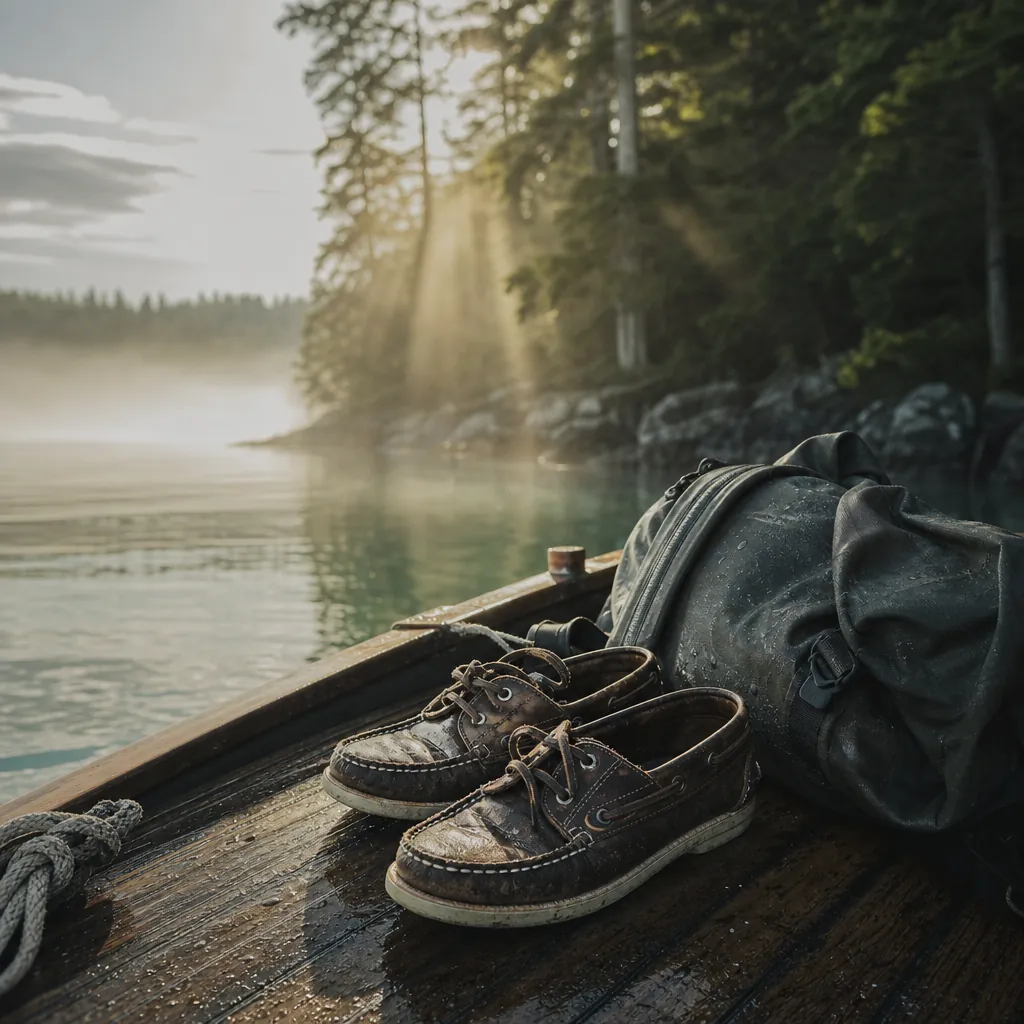
For boat fishing — bass boats, center consoles, kayaks — a low-profile deck shoe with a non-marking rubber sole is the right call. The siped rubber sole grips wet fiberglass and aluminum far better than a sneaker or a boot. Look for quick-drying materials since your feet will get wet. Closed-toe styles protect you from hooks and hardware on the deck. You don’t need anything fancy, but you do need that grippy sole — it’s literally a safety feature.
Wading Boots
If you’re wading rivers, streams, or flats, get proper wading boots. A lightweight wading boot with felt or rubber lugged soles gives you ankle support and traction on slippery rock or sand that no deck shoe can match. Felt is still the gold standard for slick river rock in states where it’s legal — check your local regulations, as some states have banned felt soles due to invasive species concerns. Rubber lug soles with aggressive tread are a solid alternative and work well across most conditions.
The biggest footwear mistake anglers make is trying to use one shoe for everything. A wading boot on a fiberglass bass boat is awkward and hard on your deck. A canvas deck shoe in a moving river with mossy rocks is a trip to the ER waiting to happen.
Dealing with Bug Spray the Right Way
Bug spray is non-negotiable in most fishing situations, but it creates two real problems: it damages fishing line and rod guides over time, and it makes your hands slippery and smelly in a way fish can detect. Managing both is straightforward once you know the drill.
Apply DEET-based repellent to your clothing and the back of your neck and hands — not your palms. Let it dry completely before you touch your rod, reel, or line. DEET is hard on monofilament and fluorocarbon and can cause crazing on rod blanks and guides with repeated exposure. Wipe your hands on a rag before rigging up.
Picaridin-based repellents are a good alternative — they’re effective against mosquitoes and ticks, gentler on gear, and don’t have the strong chemical smell of DEET. If you’re fishing for highly scent-sensitive species like trout or walleye, consider wearing thin gloves treated with repellent and keeping your bare hands clean when handling bait and lures.
The UPF clothing you’re already wearing covers most of your skin, which means you need less repellent overall — another reason that layer pays for itself.
Posture and Back Care: The Long Game
Most anglers don’t think about their back until they can’t ignore it anymore. Hours of casting, bending over a livewell, leaning forward in a seat, or standing on a tilted bank adds up to serious lower back fatigue. A few habits can make the difference between fishing through dinner and limping back to the truck at 3 p.m.
Stand with your feet shoulder-width apart when casting. Engage your core — not in a gym-class way, just don’t let yourself slump forward. When you’re seated for long stretches, roll your shoulders back and sit up straight rather than rounding forward over the rod. Take a five-minute stretch break every couple of hours: hip flexors, lower back, hamstrings. It takes almost no time and the payoff is significant.
If you fish from a kayak or a flat boat seat, a quality seat cushion is one of the best investments you’ll make. A hard plastic seat after four hours of paddling is genuinely miserable. A good gel or memory foam kayak fishing seat cushion provides lumbar support, distributes your weight evenly, and reduces tailbone pressure dramatically. Look for waterproof or quick-drying covers and non-slip bottoms so it stays put on a wet seat. Some models add low back support panels that strap to your seat back — those are worth the extra few dollars if you’re out all day.
For boat anglers fishing from a pedestal or folding seat, consider a padded boat seat cushion with tie-down straps. These aren’t glamorous, but they turn a plastic bucket seat into something you can actually sit in for eight hours without walking funny the next day.
Common Mistakes That Cut Your Day Short
- Skipping sun protection until you’re already burned. Apply before you leave the truck, not when you’re already on the water and squinting.
- Relying on a single water bottle. Bring twice as much water as you think you need. You’ll use it.
- Wearing cotton all day. Cotton holds moisture, gets heavy, and offers zero sun protection. Switch to synthetic or merino.
- Applying bug spray on your palms. It coats your lures, irritates your eyes when you rub your face, and gets into your fish-attracting scent picture in the worst way.
- Ignoring your feet until they hurt. The wrong shoes make every hour feel longer. Match the footwear to the situation before you leave home.
- Eating heavy meals on the water. A big lunch makes you sluggish and sleepy. Graze on smaller portions throughout the day instead.
- Fishing through back pain without addressing it. Two minutes of stretching now beats an hour of suffering later and potentially a week of recovery afterward.
Putting It All Together
None of this is complicated, and none of it is expensive relative to what anglers already spend on rods, reels, and tackle. The angler who shows up with a UPF shirt, a full cooler, the right shoes, and a decent seat cushion will outlast and outfish the one who tough-guys it in a cotton tee with an empty water bottle every single time. Take care of your body out there, and it’ll take care of you through a long, productive day on the water.