Disclosure: BestFishingReviews.com is reader-supported. If you buy something through our links, we may earn a small affiliate commission at no extra cost to you.
Most anglers drive right past some of the best fishing in the country without ever knowing it. That half-acre pond behind the barn you spotted from the highway? It probably hasn’t seen a lure in years — and the bass and bluegill in there have gotten fat and lazy because of it. Farm ponds are a legitimate secret weapon for freshwater fishing, but a lot of beginners don’t know how to approach them: how to get permission, where to cast, or how to keep from blowing up the whole spot in the first ten minutes. This guide covers all of it, start to finish.
See current price & availability on AmazonCheck on Amazon →Getting Permission and Handling Access the Right Way
Before you rig up a single rod, you need to have a conversation. Farm ponds are on private land, and walking up without asking is trespassing — plain and simple. But here’s the thing: most landowners will say yes if you approach them respectfully. Farmers aren’t hostile. They’re just busy and protective of their property, which is completely fair.
Here’s how to ask the right way:
- Go in person. A face-to-face ask at the farmhouse beats a note on the door every time. Introduce yourself, explain that you’re a local angler, and be direct about what you’re asking.
- Keep it simple. You’re asking to fish, not move in. “Would you mind if I fished your pond for a few hours this weekend?” covers it.
- Offer something in return. A small gift — a dozen eggs from a nearby farm stand, a gift card, or just offering to share your catch — goes a long way. Some landowners fish themselves and just appreciate the company.
- Respect the “no.” If they decline, thank them and leave without argument. Word travels in rural communities, and being a good sport keeps doors open in the future.
- Follow any rules they set. Stay out of crops, close gates behind you, pack out your trash, and don’t bring five friends without asking first.
Once you’ve got access, treat that property like it’s your own. Landowners who get burned once rarely give second chances — but the ones who trust you will invite you back for years.
Reading the Pond: Finding Structure and Fish-Holding Spots
Farm ponds look simple, but there’s more going on beneath the surface than most people realize. Bass and bluegill aren’t scattered randomly — they’re relating to structure and cover just like fish in any other body of water. The difference is that in a small pond, that structure is easier to identify.
Walk the bank slowly before you make your first cast. Look for these key features:
- Points and corners: Spots where the bank juts out or where two shoreline angles meet tend to funnel baitfish and concentrate predators.
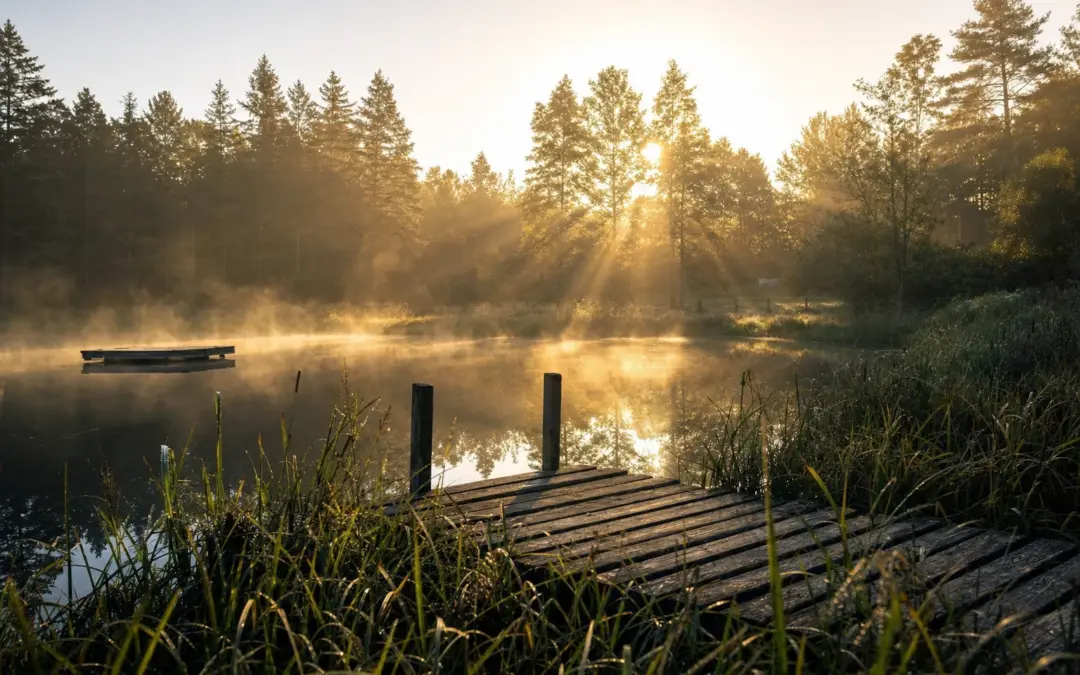
- Dock pilings and old posts: Any vertical structure gives bass a place to ambush. Even a single rotting post can hold a fish.
- Overhanging trees and bushes: Bass love shade. On a hot afternoon, that shaded corner under a willow is almost always holding fish.
- Weed edges: The outer edge of any lily pad mat or submerged vegetation is a classic ambush lane. Don’t fish in the weeds — fish the edge.
- The inlet and outlet: If there’s a pipe or small stream feeding the pond, oxygenated water draws fish, especially in summer.
- Deep holes: Even in a small pond, one area might drop a few feet deeper than the rest. In hot or cold weather, fish stack up there.
Take five minutes to scout before you fish. You’ll catch more in two hours than the guy who starts flinging casts the second he hits the bank.
Avoiding Spooking Fish in Clear, Shallow Water
This is where most beginners leave fish on the table. Farm ponds are often small, shallow, and crystal clear — which means fish can see you, hear you, and feel your footsteps from a surprising distance. Stealth isn’t optional here. It’s the whole game.
- Stay low and back from the bank. Don’t walk right up to the edge. Approach at an angle and crouch down, especially if you can see fish. A bass in two feet of clear water will see your silhouette against the sky before your lure ever hits the water.
- Move slowly. Heavy footsteps send vibrations through the ground right into the water. Soft, deliberate steps make a real difference on a calm day.
- Wear neutral colors. You don’t need a ghillie suit, but a blaze-orange rain jacket is going to work against you.
- Make longer casts. Keep your distance. If you can reach the target from 30 feet away instead of 15, do it. A light spinning rod combo with 6-8lb line gives you the accuracy and distance to do this comfortably.
- Don’t cast shadows over the water. Pay attention to where the sun is. A shadow sweeping across a shallow pond flat will scatter every fish in the area.
Once you spook a pod of fish in a small pond, they may not settle back down for 20-30 minutes. One careless approach can ruin a whole session.
Top Lures for Farm Pond Bass and Bluegill
You don’t need a full tackle box. Farm ponds fish well on a handful of proven lures, and simpler is usually better in tight, clear water. Here’s what actually works:
Senko-Style Worms (Bass)
If you only bring one lure to a farm pond, make it a Senko-style soft plastic worm. Rigged weightless on a 2/0 hook, it falls slowly and naturally, and bass absolutely cannot leave it alone. The 5-inch size in green pumpkin or watermelon red covers most situations. Work it slowly along weed edges, let it sink near dock posts, and twitch it gently near the surface under overhanging trees. Don’t rush it — the slow fall is what triggers the bite.
Beetle Spin (Bluegill and Small Bass)
The beetle spin is one of the most underrated lures in freshwater fishing. It’s a small jig head with a tiny spinner blade attached, usually tipped with a small grub body. It catches bluegill relentlessly, and small bass hammer it too. Cast it near structure, count it down a few feet, and retrieve it slowly and steadily. The spinner blade gives off flash and vibration, which is irresistible to panfish in a small pond. If you want to spend an afternoon catching a fish nearly every cast, tie on a beetle spin in chartreuse or white and work the weed edges.
Topwater Popper (Early Morning and Evening Bass)
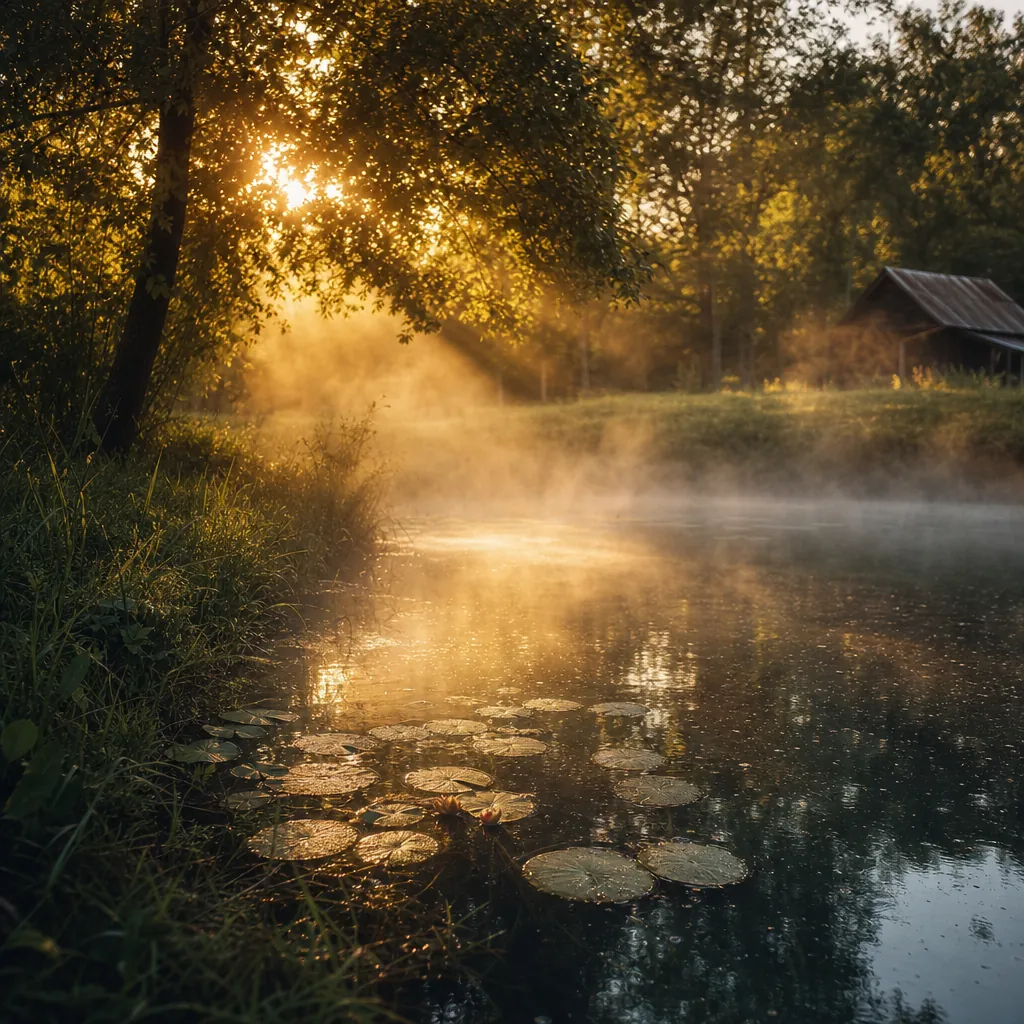
There are few things more exciting in fishing than a fat largemouth blowing up a popper on a glassy farm pond at sunrise. A small topwater popper in the 2-3 inch range is perfect for farm pond bass. Cast it near structure, let the ripples die completely, then give it a short pop or two and pause. Long pauses are the key — the fish often hit it while it’s sitting still. Work it during low-light windows (first hour of morning and last hour before dark) when bass are actively feeding near the surface.
Small Inline Spinners and Live Bait (Bonus Options)
A small Rooster Tail or Panther Martin spinner will catch anything that swims in a farm pond and is a great confidence lure when the bite gets tough. For beginners especially, don’t overlook plain old live bait: a worm under a small bobber set about two feet deep is embarrassingly effective for bluegill and small bass, and it requires zero technique to fish successfully. Sometimes simple is best.
Tactics for Different Times of Day and Season
Farm ponds are small ecosystems that respond quickly to temperature and light changes. Understanding those patterns helps you be in the right place at the right time.
- Early morning: The best window of the day. Bass are shallow and active, topwaters and shallow-running lures rule. Get there at first light.
- Midday in summer: Fish move deep or find shade. Target the deepest area of the pond, overhanging trees, or dock shadows. Slow down your presentation — a Senko on a slow fall outperforms fast-moving lures.
- Late afternoon and evening: Second-best feeding window. Topwaters and spinners shine again. Watch for surface activity — if you see fish busting baitfish, get a lure in that zone immediately.
- Spring: Prime time. Bass are shallow and aggressive leading into the spawn. Work shoreline structure. Bluegill are also stacked up in shallows around spawning beds.
- Fall: Another excellent season. Bass are feeding heavily before winter. Faster-moving lures like spinners can trigger reaction bites as fish chase baitfish along the bank.
- Winter: Slow down dramatically. Use tiny jigs or live bait near the bottom of the deepest spot. Fish are lethargic but can still be caught if you slow your presentation to a crawl.
Common Mistakes to Avoid
Even experienced anglers mess these up on farm ponds. A small water body is less forgiving than a big lake, so errors get punished faster.
- Casting from right on top of the fish. The number one mistake. Give yourself distance and make longer casts. If you can see the fish, they can probably see you.
- Using line that’s too heavy. 10-12lb monofilament on a spinning rod is too thick in clear, calm water. Drop to 6-8lb or use a light fluorocarbon leader — fluorocarbon line is nearly invisible underwater and makes a real difference in clear ponds.
- Moving too fast between spots. Farm ponds are small — you don’t need to cover water constantly. Slow down, work each area thoroughly, and be patient.
- Fishing the same spot after spooking fish. If you blow up a spot, leave it alone for 20-30 minutes and work elsewhere. Come back to it later.
- Overfishing a pond. Small ponds have limited fish populations. Practice catch-and-release for bass, and if you keep some bluegill for the table, don’t take more than you’ll actually eat. A landowner whose pond gets fished out won’t stay generous for long.
- Forgetting to say thank you. Seriously. A quick text or a knock on the door after your trip keeps the relationship warm. It costs nothing and means everything.
Wrapping It Up
Farm ponds are some of the most accessible, productive, and overlooked fishing in the United States. With a light rod, a handful of lures, and a little patience, you can have a legitimate great day of fishing within a few miles of just about anywhere in rural America. Ask politely, move quietly, fish the structure, and treat that land like it’s worth coming back to — because it is. Once you’ve stood at the bank of a small, still pond watching a big bass explode on a topwater in the first light of morning, you’ll understand why some anglers never need anything else.
Gear We Recommend