
Disclosure: BestFishingReviews.com earns a commission on qualifying purchases made through affiliate links in this article, at no extra cost to you.
Cold water is unforgiving. You step in wearing the wrong waders and within twenty minutes you’re either soaked through from the outside or clammy and sweating from the inside — neither of which makes for a good day on the river. Whether you’re chasing winter steelhead on a Pacific Northwest run, wading a tailwater for trout in January, or duck hunting in a flooded timber bottom, the waders you pick matter more than most gear decisions you’ll make. We put together this list to cover real anglers at every price point, from the guy who wades twice a year to the guide who’s in the water five days a week. Six options, honest takes, no sponsor spin.
See current price & availability on AmazonCheck on Amazon →How We Picked
We looked at breathability ratings, seam construction (taped vs. welded vs. raw), material weight, cold-water performance, brand reputation for warranty support, and real-world user feedback across angling forums and retail review pages. Price-to-durability ratio mattered a lot at the budget end. Fit systems, gravel guard quality, and pocket layouts were evaluated for practical use, not just spec-sheet impressions.
1. Frogg Toggs Hellbender Stockingfoot Waders
If your budget is tight and you need something functional right now, the Frogg Toggs Hellbender is where you start. These are 4mm neoprene stockingfoot waders that punch well above their price tag — somewhere in the $80–$100 range depending on where you find them. Neoprene means they don’t breathe, so they’re not ideal for warm days or long hikes to the water, but for cold-water wading in winter months they do exactly what they’re supposed to: keep you insulated. The seams are glued and blind-stitched, the neoprene is flexible enough for comfortable wading, and the stocking feet hold up reasonably well inside a wading boot. Don’t expect them to last a decade, but for weekend warriors who fish cold water a handful of times each season, the Hellbender makes a lot of sense. Size up if you plan to wear heavy base layers underneath.
Best for: Budget-conscious anglers who wade in cold water seasonally and don’t need breathability.
Check current price on the Frogg Toggs Hellbender
- Pros: Genuinely affordable, good cold-water insulation, flexible neoprene, stockingfoot fits most wading boots
- Pros: Easy to find in most sizes, no complicated layering system required
- Cons: No breathability — you will sweat on hikes in, not suitable for warmer conditions, shorter lifespan than premium options
2. Compass 360 Stillwater Breathable Stockingfoot Waders
The Compass 360 Stillwater sits in that $100–$150 sweet spot where you’re making the jump from neoprene to breathable without spending real money. These are a 3-layer breathable stockingfoot wader with fully taped seams — which is legitimately impressive at this price. The breathable membrane isn’t as efficient as Gore-Tex or proprietary high-end laminates, but it does let moisture escape during moderate exertion, which makes a real difference if you’re hiking a trail to reach a run or fishing in shoulder seasons when temps fluctuate. The fit is roomy enough to layer under, the gravel guards are functional, and there’s a single front chest pocket. For a first serious wader or a backup pair to keep in the truck, the Stillwater is hard to argue against. Cold-water performance is solid when paired with a good merino or fleece base layer underneath.
Best for: Entry-level anglers moving from neoprene to breathable, or anyone wanting a reliable backup pair.
Check current price on the Compass 360 Stillwater
- Pros: Fully taped seams at an entry price, breathable membrane, stockingfoot design works with any wading boot
- Pros: Good layering room, decent pocket layout for the price
- Cons: Breathability is entry-level, not built for hard daily use, sizing runs a bit large so check the chart carefully
3. Caddis Deluxe Neoprene Bootfoot Waders
Here’s where the bootfoot conversation gets interesting. Bootfoot waders — where the boot is integrated into the wader itself — trade versatility for convenience. You pull them on and go, no separate wading boots needed, no laces to fumble with in the dark at 5am. The Caddis Deluxe is a 5mm neoprene bootfoot in the $120–$180 range that is genuinely well-suited for cold, muddy water situations: think flooded fields, duck swamps, and still-water bank fishing in winter. The cleated rubber outsole works on soft bottoms but is a liability on slick rocks — if you’re wading a rocky trout stream, you want felt or studded soles on a separate wading boot. The neoprene is thick and warm, the suspenders are adjustable and comfortable, and the overall construction is more durable than the price implies. Great for duck hunters crossing shallow wetlands or bass anglers working cold backwater in late fall.
Best for: Duck hunters, still-water bank anglers, and anyone who values speed and simplicity over technical performance.
Check current price on Caddis bootfoot waders
- Pros: No separate boots needed, very warm 5mm neoprene, fast and easy to get on, good for muddy or still-water environments
- Pros: Solid construction for the price, comfortable suspender system
- Cons: Rubber cleats are poor on slick rock, no breathability, boot size locks you into fit — harder to layer underneath
4. Simms Tributary Stockingfoot Waders
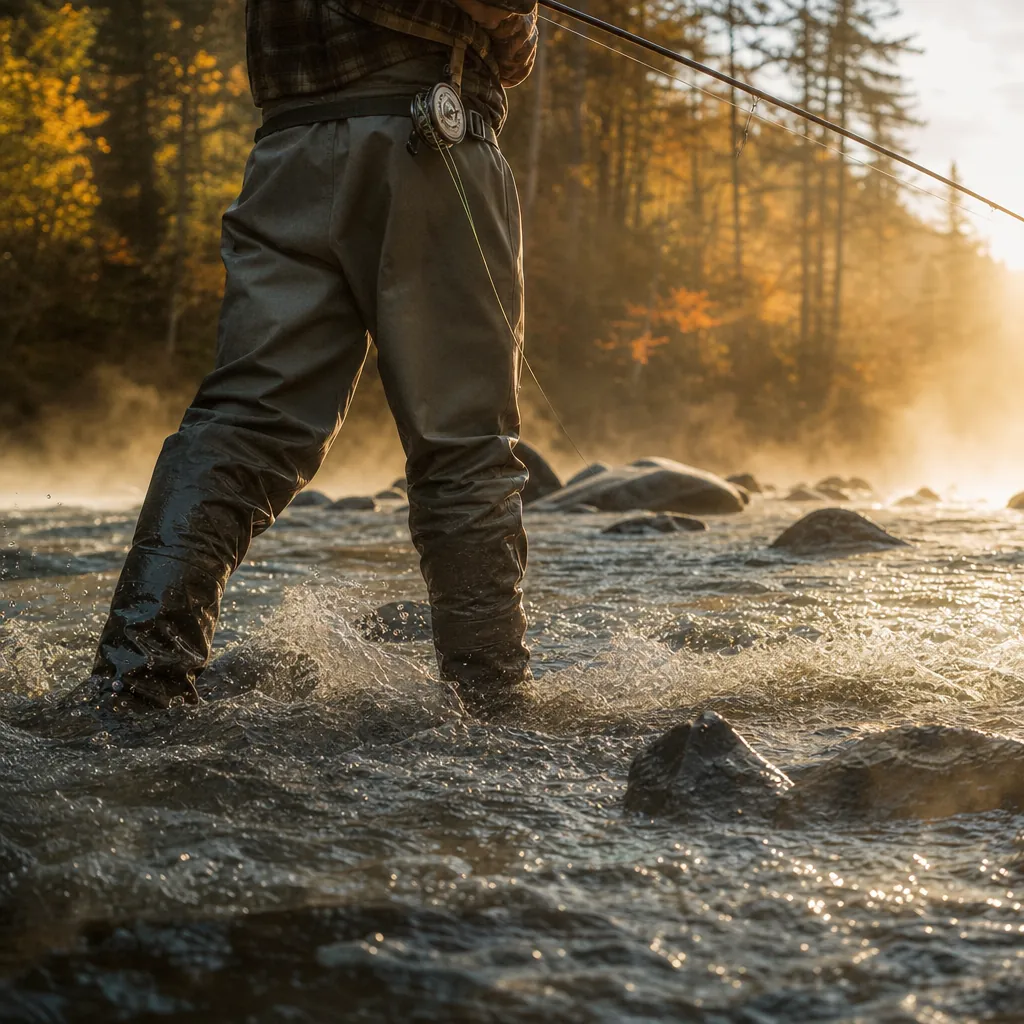
Simms built their reputation on serious waders for serious anglers, and the Tributary is their entry point into that world — landing somewhere in the $250–$350 range. What you’re paying for is a noticeable step up in material quality and construction. The Tributary uses a 3-layer breathable laminate that actually breathes efficiently during active wading, taped seams throughout, a durable face fabric that sheds abrasion, and Simms’ well-thought-out pocket and belt system. The fit is trimmer and more anatomical than budget options — better for moving through current without excess fabric catching water. Cold-water performance in the Tributary is excellent when layered properly with midweight fleece or wool underneath. This is the wader a guide might hand a client who lost theirs, and it’ll take real punishment over a full season without complaint. If you fish thirty or more days a year, the math on durability starts making this price look reasonable fast.
Best for: Intermediate to serious anglers who wade frequently and want a durable, truly breathable wader without going full premium.
Check current price on the Simms Tributary
- Pros: Genuine breathability, excellent seam construction, durable face fabric, anatomical fit that moves well in current
- Pros: Simms warranty and customer service are among the best in the business
- Cons: Trimmer fit may not accommodate larger thigh sizes without sizing up, price jump from budget options is real
5. Patagonia Swiftcurrent Waders
Patagonia doesn’t mess around with materials, and the Swiftcurrent waders reflect that. In the $450–$550 range, these are 4-layer GORE-TEX waders with recycled content fabrics and Patagonia’s Ironclad Guarantee behind them — meaning if they fail under normal use, Patagonia will repair or replace them, period. The breathability on GORE-TEX is genuinely top-tier; you will not overheat hiking a mile of trail in these if conditions are cool enough. Cold-water performance is excellent — pair them with a heavyweight merino base layer and a midlayer fleece and you’re comfortable in near-freezing water. The fit system uses a roomy seat and articulated knees that reduce fatigue on long wading days. The Swiftcurrent also holds up to repeated compression in a pack, which matters if you backpack to remote water. The environmental angle is real too, not just marketing — Patagonia’s repair program keeps waders out of landfills.
Best for: Dedicated fly anglers who wade regularly in cold conditions and want Gore-Tex performance with a strong warranty backstop.
Check current price on the Patagonia Swiftcurrent
- Pros: GORE-TEX 4-layer breathability, Ironclad lifetime guarantee, articulated fit reduces fatigue, compresses well for travel
- Pros: Recycled materials, excellent long-term value given warranty
- Cons: Expensive upfront, sizing can run narrow in the hips for some body types, stock availability can be limited
6. Orvis PRO Waders
The Orvis PRO waders are the top of this list for a reason: they’re as well-engineered as any wader made in this price class ($550–$700), and Orvis backs them with a 25-year guarantee that is not a gimmick. They use a proprietary 4-layer breathable laminate that Orvis developed specifically for cold, wet, high-exertion conditions — guides and hardcore steelheaders who’ve used both these and the Patagonia will split on which breathes better, but nobody disputes that both are excellent. Where the PRO stands out is in the anatomical fit system: articulated knees, a dropped seat, ergonomic shaping in the thigh and calf — these waders move like you’re not wearing them, which over a ten-hour day on the water is not a small thing. The integrated handwarmer pockets and chest pocket are well-placed and functional. Build quality on the seams and reinforcement panels is exceptional. If you’re a guide, a serious competition angler, or just someone who demands the best gear and keeps it for a long time, these are the ones.
Best for: Guides, hardcore cold-water anglers, and anyone who wants the best-fitting, longest-lasting wader available and will actually use them enough to justify the cost.
Check current price on the Orvis PRO Waders
- Pros: Exceptional anatomical fit, 25-year guarantee, elite breathability, excellent seam and panel construction, functional pocket layout
- Pros: Moves naturally in fast current, holds up to guide-level daily use
- Cons: High upfront cost, premium fit system means you really need to try them or measure carefully — sizing is precise
Quick Comparison
- Frogg Toggs Hellbender (~$80–$100): Budget neoprene stockingfoot, cold-water insulation, no breathability — best for occasional cold-weather use
- Compass 360 Stillwater (~$100–$150): Entry breathable stockingfoot with taped seams, good first serious wader or backup pair
- Caddis Deluxe Bootfoot (~$120–$180): 5mm neoprene bootfoot, fast-on convenience, ideal for duck hunters and still-water situations
- Simms Tributary (~$250–$350): Mid-tier breathable stockingfoot, trim fit, durable — best step-up option for frequent waders
- Patagonia Swiftcurrent (~$450–$550): GORE-TEX 4-layer, lifetime guarantee, great for dedicated fly anglers who want top-shelf breathability
- Orvis PRO (~$550–$700): Best anatomical fit in class, 25-year guarantee, guide-grade durability — the long-term investment pick
A Few Things Worth Knowing Before You Buy
Bootfoot vs. stockingfoot comes down to use case. Bootfoot is faster and simpler; stockingfoot is more versatile because you pick your own sole type and get a better fit. For rocky streams, always go stockingfoot with a quality wading boot with felt or studded soles. Breathable vs. neoprene comes down to season and activity level. If you’re active and fishing temperatures above freezing, breathable is more comfortable long-term. If you’re standing still in near-freezing water for hours (ice-out trout, winter steelhead), the insulation from neoprene is hard to beat — or you layer aggressively under a breathable wader. On sizing: always size for your heaviest intended layering, not your street clothes. Most brands have detailed size charts — use them. And check the warranty before you buy. A 25-year guarantee on a $600 wader beats a one-year guarantee on a $300 wader every time if you fish hard.
Pick the wader that matches how often you actually fish, where you fish, and what you can honestly afford to spend. The best wader isn’t the most expensive one — it’s the one that keeps you in the water comfortably on the days that matter. Stay dry out there.