
Disclosure: BestFishingReviews.com is reader-supported. We may earn a small commission if you buy through links on this page, at no extra cost to you.
There is no bite in freshwater fishing that will make your knees buckle like a topwater strike. One second the surface is flat and quiet; the next, a bass or pike erupts out of nowhere and tries to inhale your lure whole. But here’s the thing — most anglers blow it. They yank the rod the moment they see the explosion, pull the lure clean out of the fish’s mouth, and spend the next ten minutes replaying the miss in their heads. Fishing topwater well means understanding the gear, the timing, the cadence, and — maybe most importantly — how to keep your cool when the water blows up right in front of you. This guide walks you through all of it.
See current price & availability on AmazonCheck on Amazon →When to Fish Topwater: Timing Is Everything
Topwater lures are not an all-day, all-season play. They work best when conditions line up in your favor, and knowing those windows will save you hours of frustration.
Low-light periods are your best friends. The first hour after sunrise and the last hour before dark are consistently the most productive times for surface fishing. Fish are more aggressive, baitfish are pushed shallow, and predators are actively hunting with less concern about overhead visibility. Overcast days stretch that productive window considerably — on a cloudy day in summer, you can work topwater lures effectively from mid-morning through early afternoon.
Water temperature is the other big factor. Topwater action really turns on once surface temps climb above 60°F, and it peaks in the 68–82°F range. That typically means late spring through early fall across most of the US. Once water temps dip back into the low 50s, fish slow down and are far less likely to chase something on the surface. Don’t put the topwater box away entirely in fall though — a warm October morning over a shallow flat can still produce explosive strikes.
Calm or lightly rippled water is ideal. A heavy chop makes it hard for fish to track and target a surface lure, and it makes it harder for you to feel subtle blow-ups. If the wind is howling, fish a protected cove or switch to something subsurface.
The Four Main Topwater Styles (And How to Work Each One)
Not all topwater lures are fished the same way. Each style has its own action, cadence, and best-use scenario. Here’s a plain-English breakdown of the four you need to know.
Walking the Dog (Stick Baits)
The Heddon Zara Spook is the classic here, and the technique is called “walking the dog.” You hold your rod tip low — pointed down toward the water — and use a rhythmic twitch-twitch-pause cadence with slack line between twitches. Done right, the lure walks side to side in a wide, lazy zigzag that drives predatory fish absolutely crazy. The slack line is critical; if you keep the line tight, the lure just pulls forward instead of walking. Practice the wrist action in a pool or pond until it becomes automatic. Vary your cadence — sometimes a slow, wide walk works, other times a faster, tighter walk triggers reaction strikes. If you want a great starting point, check out Heddon Zara Spook walk-the-dog lures — they’ve been producing bass for decades and for good reason.
Buzzbaits
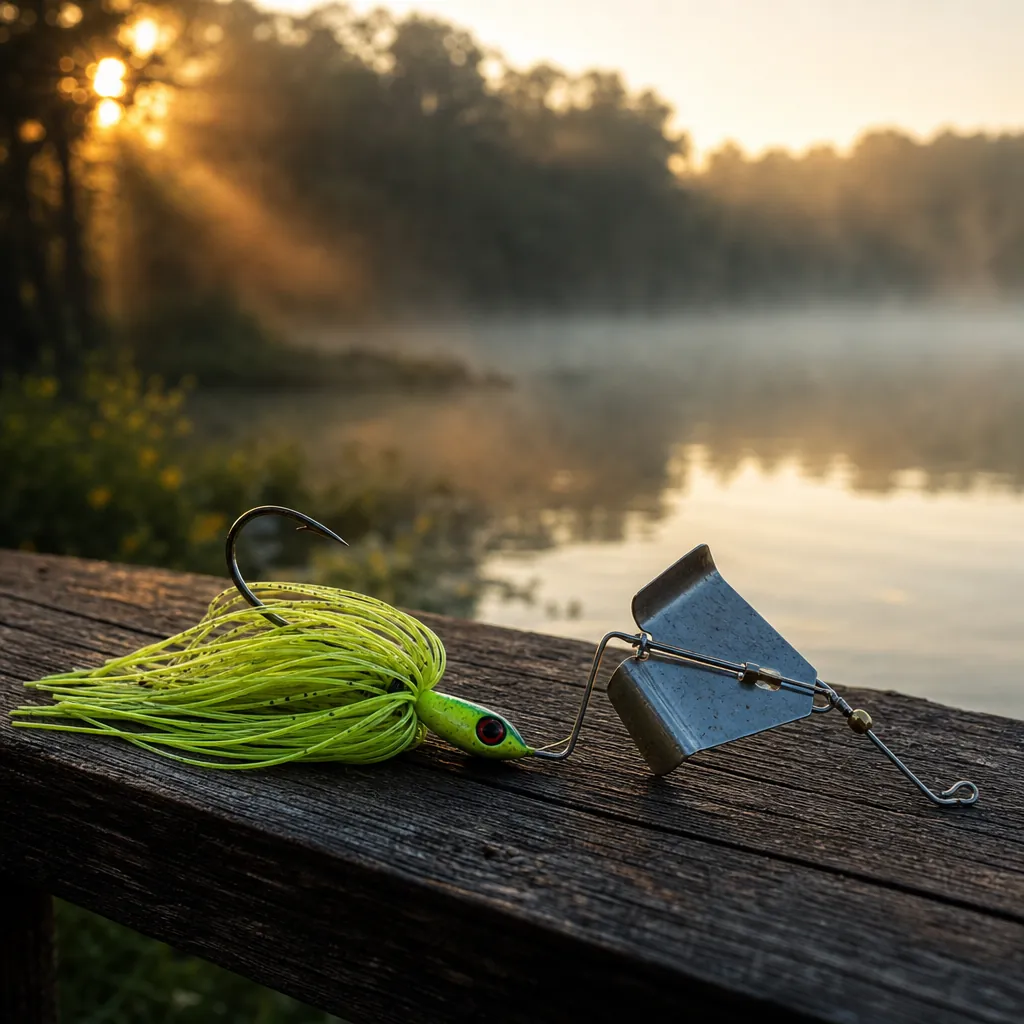
A buzzbait is as simple as topwater fishing gets. Cast it out, let it land, and start reeling immediately — just fast enough to keep the blade churning on the surface. That clackety, sizzling commotion triggers a reaction bite, especially from largemouth bass in vegetation-heavy water. The key is finding the slowest retrieve speed that still keeps the bait on top. Slow it down to the edge of sinking, and you’ll get more blow-ups. Work buzzbaits along weed edges, over submerged grass, and through open pockets in lily pad fields. Don’t stop reeling when you see a swirl behind it — keep the bait moving and the fish will often come back for it. Buzzbaits for bass are inexpensive and nearly indestructible — worth keeping a handful in your box at all times.
Poppers
Poppers have a concave, cupped face that scoops water and spits a splash when you snap the rod tip. The magic is in the pause. Cast it out, let the ripples die, then pop-pop — pause. Let it sit there. Wait longer than feels comfortable. A lot of bass follow a popper, stop under it, and decide whether to eat it during that pause. The retrieve cadence can be aggressive (loud, hard pops with short pauses) or subtle (soft ticks with long pauses of five to ten seconds). Match it to the mood of the fish — on tough days, go slower and quieter. Poppers shine around docks, points, and over submerged structure where bass are hanging just below the surface.
Hollow-Body Frogs
The hollow-body frog is purpose-built for fishing the nastiest, thickest cover on the water — matted vegetation, lily pads, slop, and hydrilla mats. Cast it on top of the pads, and hop it across the surface with short rod twitches, letting it sit in open pockets. The soft body collapses on the hookset to expose the twin hooks buried inside. Frog fishing requires a heavier setup: a beefy baitcasting rod, 50–65 lb braided line, and a reel with enough torque to horse fish out of thick cover. If you’re fishing frog country, hollow-body frog lures like the BOOYAH Pad Crasher or Livetarget Frog are worth adding to your lineup.
Gear Setup for Topwater Fishing
Your tackle choices matter more than most people think when it comes to topwater. Here’s how to set yourself up right.
Rod: A medium or medium-heavy rod in the 6’6″–7’2″ range works for most topwater applications. You want enough flex to load up on long casts but enough backbone to drive hooks home. For frog fishing specifically, go heavier — a 7′ heavy or extra-heavy baitcaster is the standard.
Line: For walking baits and poppers, monofilament or fluorocarbon in 12–17 lb test is a solid choice — mono floats and has natural stretch that can actually help on hooksets. For buzzbaits and frogs over heavy cover, braid in the 40–65 lb range gives you the strength to pull fish out of slop and cuts through vegetation cleanly. If you’re new to topwater, pick up some quality monofilament fishing line — it’s forgiving, floats naturally, and helps keep those lures dancing on the surface where they belong.
Reel: A 6.4:1 to 7.1:1 gear ratio baitcaster is a workhorse for most topwater. Spinning tackle works fine for lighter walking baits and poppers, especially if you’re covering water with long casts. Either way, smooth drag and good line control make a difference.
Hooks: On poppers and walking baits, check your treble hooks before every trip. Dull hooks are a silent killer of topwater conversions. Replace them with quality aftermarket trebles if the stock hardware feels soft.
How to Delay the Hookset (This Is the Hard Part)
This is where most anglers lose fish — and it’s almost entirely a mental game.
When a bass explodes on a topwater lure, every instinct you have screams “SET THE HOOK RIGHT NOW.” Fight that instinct. If you swing the moment you see the splash, you’re usually pulling the lure away from the fish before it has closed its mouth around it. The result is a spectacular miss and a lure flying back at your face.
The rule of thumb: wait until you feel the fish on the line before you set. Some coaches teach anglers to say “God save the queen” or count “one Mississippi” before swinging — whatever trick helps you pause. For buzzbaits and frogs, the delay needs to be even longer because the fish often needs a split second to get turned with the bait. On frog strikes especially, wait until the fish has pulled down and you feel weight before driving the rod home with a hard sweep set.
With poppers and walking baits that use treble hooks, the delay can be a hair shorter — trebles grab fish more easily than single hooks. But still, resist the snap-set. Let the fish eat it.
It takes practice. Go fishing with the specific goal of delaying the hookset — even if you miss a few fish while you’re training yourself. Once you wire it in, your conversion rate on topwater strikes will jump noticeably.
Reading the Water: Where to Throw Topwater
Topwater lures are most effective when fish have a reason to be shallow and active. Here’s where to focus your casts.
- Lily pad fields and matted vegetation: Classic frog and buzzbait territory. Fish set up beneath the shade of pads and ambush from below.
- Points and transitions: Where a flat meets a drop, or where one bottom type transitions to another — bass stage here, especially in the morning.
- Boat docks: Cast poppers and walking baits parallel to the dock edge or skip them back into the shade under the dock itself.
- Grass edges: The outside edge of submerged grass beds is a highway for bass. Walk a Spook along the grass line or buzz a buzzbait over the top.
- Shallow flats near spawning areas in spring: Pre-spawn and post-spawn bass are notoriously aggressive on topwater, especially when water temps are climbing.
- Calm pockets sheltered from wind: Even on breezy days, find a protected cove or the downwind side of a point and work the calm water.
Common Mistakes to Avoid
Even experienced anglers fall into these traps with topwater. Keep them on your mental checklist.
- Setting the hook too early: Already covered this, but it’s worth repeating — it’s the number one reason anglers miss topwater fish. Wait for the weight.
- Using too fast a retrieve on poppers: The pause is doing the work. Rushing through it robs the lure of its most effective moment.
- Fishing topwater in cold water: Below 58–60°F, fish are sluggish and topwater rarely produces. Switch to slower subsurface presentations.
- Not varying cadence when fish are following but not eating: If you’re getting swirls or short strikes, slow down dramatically, or speed up aggressively — change something rather than repeating the same retrieve.
- Fishing on a slack cast: Get the lure moving the moment it hits the water, especially with buzzbaits — letting it sink even slightly kills the action.
- Wrong line for the situation: Heavy braid on a walking bait over open water kills the lure’s side-to-side action. Match your line choice to the lure and cover type.
- Ignoring wind direction: Cast with the wind when possible on long presentations, and target calm pockets when conditions get choppy.
Recommended Topwater Lures to Start With
You don’t need a tackle shop’s worth of topwater lures. Start with one lure from each major category and learn it thoroughly before expanding. Here’s a sensible starting lineup:
- Walking bait: Heddon Zara Spook (original size for largemouth, baby size for smaller bass and spotted bass) — the standard by which all others are measured.
- Buzzbait: Strike King Premier Plus or War Eagle Buzzbait — reliable, affordable, and easy to find in most tackle shops.
- Popper: Rebel Pop-R or Rapala Skitter Pop — classic designs that have been proven for decades across the country.
- Hollow-body frog: BOOYAH Pad Crasher or Livetarget Frog — both are weedless, durable, and hook fish consistently through thick cover.
If you want to grab a variety at once and experiment, browsing topwater bass lure assortments online is a reasonable way to cover your bases without breaking the bank.
Putting It All Together
Topwater fishing rewards patience, observation, and discipline — mostly the discipline to not swing the moment the water explodes. Get out there in that first hour of daylight, work the right water with the right lure, vary your cadence until the fish tell you what they want, and practice that delayed hookset until it’s automatic. Once you start connecting on surface strikes consistently, you’ll understand why a lot of serious bass anglers say topwater fishing is the only kind worth doing. Everything else is just waiting for the right morning.