
Disclosure: BestFishingReviews.com earns a small commission on purchases made through affiliate links in this article, at no extra cost to you.
Pier fishing is one of the most accessible ways to get a line in the water. No boat, no trailer, no launch fee — just walk out, find a spot on the rail, and start fishing. Simple in theory, but plenty of anglers show up underprepared and go home empty-handed. The wrong rod length, the wrong bait, or a total misread of the structure beneath you can turn a productive pier into a frustrating afternoon. Whether you’re targeting Spanish mackerel off a Carolina saltwater pier or chunking jigs for crappie on a freshwater fishing dock, the principles are the same: match your gear to the environment, understand what the fish are doing, and respect the people fishing beside you. This guide walks you through all of it.
See current price & availability on AmazonCheck on Amazon →Saltwater vs. Freshwater Piers: Know Your Environment First
The biggest mistake beginners make is treating all piers the same. A saltwater ocean pier and a freshwater reservoir dock are completely different fishing environments, and your entire setup — rod, line, bait, and target species — should reflect that.
Saltwater piers are typically longer structures extending over open surf, bays, or tidal flats. They concentrate bait fish and attract a wide range of predators — everything from pompano working the pilings near the surf zone to king mackerel cruising the deeper water at the pier’s end. Tides matter enormously here. An incoming tide pushes baitfish and shrimp toward the pilings, and the predators follow. Learn to fish the tide changes, not the clock.
Freshwater piers — whether on a lake, reservoir, or river — are usually shorter and target different fish. Crappie hang tight to the shaded side of pilings. Largemouth and spotted bass use the structure as ambush cover. Catfish patrol the bottom beneath the dock after dark. Current matters here too, especially on rivers. Fish tend to hold in the slack water just downstream of the pier supports, waiting for food to wash to them.
Rod and Reel Setup: Get the Length Right
Rod length is the single most important gear decision on a pier, and the right answer depends on where you’re fishing.
Saltwater: Go Long (8–10 Feet)
On a saltwater pier, you need length for a few reasons. First, you’re often casting over other anglers’ lines or fighting a fish through a crowd. Second, you want to keep your line angled away from the barnacle-covered pilings that will shred monofilament in seconds. A longer rod also gives you more leverage when you’re trying to swing a pompano or whiting up and over the railing. Look for a medium-heavy surf or pier rod in the 9–10 foot range for general use. Pair it with a solid saltwater spinning reel spooled with 20–30 lb braided line and a fluorocarbon leader. The braid gives you sensitivity and casting distance; the leader handles the abrasion near the structure.
Freshwater: 7 Feet Is the Sweet Spot
Freshwater pier fishing is tighter work. You’re often drop-shotting or vertical jigging right alongside the pilings, not making long casts. A medium-light to medium 7-foot spinning rod gives you enough sensitivity to feel crappie biting on a small jig and enough backbone to pull a bass out from under the dock. Spool up with 8–12 lb fluorocarbon or a light braid-to-fluorocarbon setup. A quality 7-foot medium-light spinning rod is versatile enough to handle crappie, bass, and even decent-sized catfish with the right technique.
Pier-Specific Gear You Actually Need
Beyond the rod and reel, there are a few pieces of gear that separate a prepared pier angler from someone who just grabbed a rod and walked out.
Pier Net or Gaff
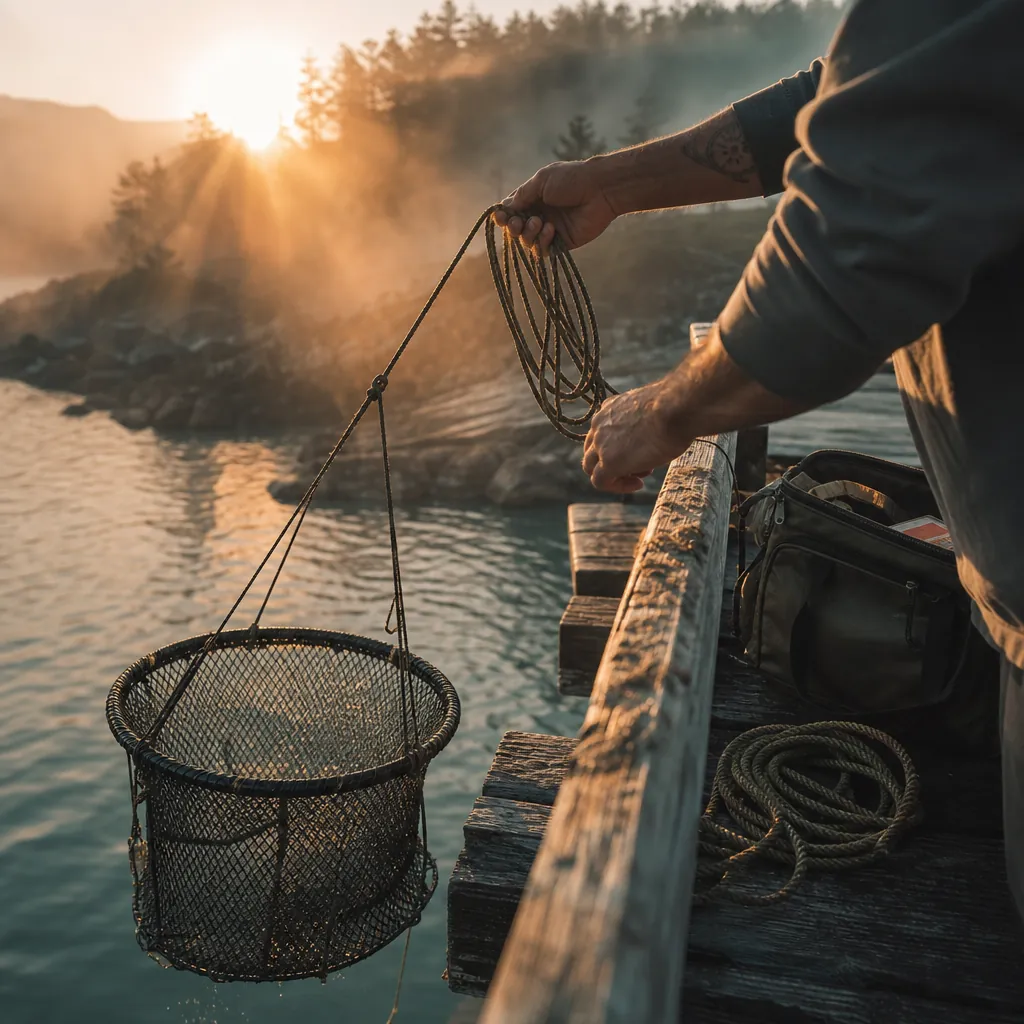
This is the one piece of gear most beginners completely forget — until they hook a big fish and realize they have no way to get it up to the deck. Lifting a 5 lb flounder straight up 20 feet on a fishing line is a recipe for a broken rod tip and a lost fish. A pier drop net — a circular net on a hoop with a long rope — is the standard solution on saltwater piers. Lower it down, guide the fish over it, and haul it up. For larger fish like cobia or king mackerel, a pier gaff is the better call. On freshwater docks, a standard long-handled landing net usually does the job.
Pier Cart
If you’ve ever tried to carry a rod holder, tackle bag, cooler, bait bucket, and two rods down a half-mile saltwater pier, you already know the answer to this one. A folding pier cart or fishing cart with rod holders is not a luxury — it’s a practical necessity on longer piers. Look for something with wide wheels that won’t get stuck in the gaps between pier planks and enough rail space to hold multiple setups.
Rod Holders and Terminal Tackle
Clamp-on rail rod holders let you fish multiple rods without standing over them all day. For terminal tackle on saltwater piers, keep a good supply of fish-finder rigs, high-low rigs, and a selection of jig heads in the 1/4 to 1 oz range. Freshwater pier anglers should stock up on small tube jigs, Ned rig-style setups, and slip bobbers for crappie.
Target Species and What They’re Eating
Knowing what species use piers in your region — and what they’re feeding on — is half the battle.
Saltwater Targets
Spanish and King Mackerel: These are the glamour fish on Atlantic and Gulf Coast piers. Spanish mackerel hit fast-moving silver spoons and small jigs worked at a quick retrieve near the surface, especially when baitfish are getting pushed toward the pier. King mackerel require heavier gear — a large live bait like a bluefish or menhaden on a wire leader is the standard approach.
Snook: Florida pier anglers know that snook stack up around the lights at night. Live pilchards, pinfish, or shrimp freelined into the shadow line where light meets dark is the classic method. Snook are line-shy, so drop down to 20–25 lb fluorocarbon leader material when they’re being picky.
Pompano and Whiting: These are the bread-and-butter fish on Southeast and Gulf piers. Both respond well to fresh sand fleas (mole crabs) and fresh shrimp fished on the bottom with a high-low or pompano rig. Fish the troughs and cuts in the sand just off the pier end during an incoming tide.
Freshwater Targets
Crappie: The most consistent pier fish in freshwater lakes. They suspend at predictable depths around the shaded side of the pilings, often 4–8 feet down. A small tube jig or curly-tail grub in chartreuse or white, fished just off the structure on a light spinning setup, will produce consistently from late winter through spring.
Spotted and Largemouth Bass: Both species treat pier pilings like any other hard structure — they ambush baitfish from the shadows. Soft plastic stick baits worked vertically alongside the pilings, or a compact swim jig fanned out at different angles, will find these fish. Early morning and late evening are the most productive windows.
Catfish: Night fishing from a freshwater pier with cut bait, chicken liver, or stink bait on a simple bottom rig is some of the most relaxed, productive fishing you can do. Set your rods, sit back, and wait.
Pier Fishing Tactics That Actually Work
Even with the right gear and the right bait, a little tactical awareness goes a long way on a pier.
- Fish the pilings, not open water. The structure concentrates fish. Work your bait within a few feet of the pilings whenever possible, not in the middle of nowhere 40 feet from the pier.
- Read the water movement. On saltwater piers, cast upcurrent and let your bait drift naturally through the strike zone. On freshwater piers, work the downstream side of the pilings where fish hold in the slack water.
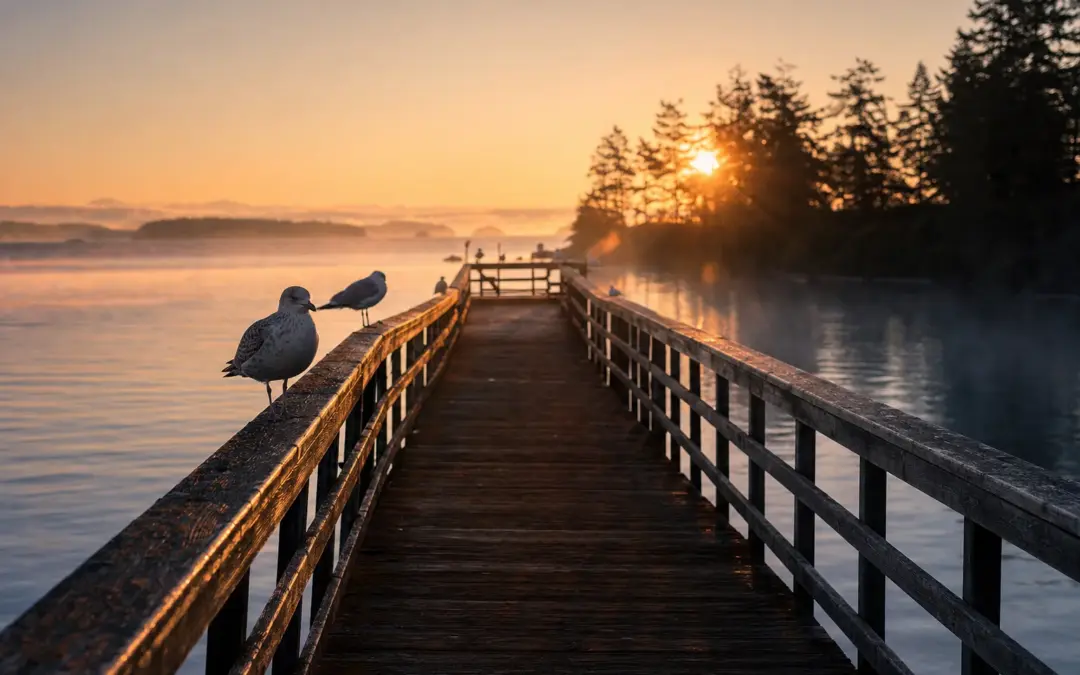
- Watch the birds. When seagulls or pelicans start diving near the pier, baitfish are being pushed to the surface. Get a spoon or jig in the water immediately — a predator blitz can be over in minutes.
- Fish the lights at night. Both saltwater and freshwater piers with overhead lighting attract insects and baitfish, which in turn attract predators. The shadow line between the lit and dark water is always the most productive zone.
- Change depths methodically. If you’re not getting bites, count your jig down to different depths — 5 feet, 10 feet, 15 feet — until you find where the fish are suspended. Don’t just cast and retrieve at the same depth for an hour.
Pier Etiquette: Don’t Be That Angler
Piers are shared spaces, and crowded ones can get tense fast. A little awareness makes the day better for everyone.
- Don’t crowd an angler who’s already set up. Leave at least one rod-length of space between yourself and the next person. If the pier is packed, ask before squeezing in.
- Call “fish on” when you hook up. This alerts nearby anglers to reel in their lines so everyone can avoid a tangled mess while you fight the fish.
- Keep your area clean. Pack out your trash, don’t leave cut bait scraps on the deck, and dispose of old line properly. Monofilament left on a pier deck is a hazard to birds.
- Don’t cast over other people’s lines. On a crowded pier, fan your cast out to an open angle. If there’s no open angle, wait for space.
- Respect local regulations. Many piers have posted rules about species limits, size minimums, and bait restrictions. Know them before you walk out.
Common Mistakes to Avoid
Using too light a leader near pilings. Barnacles and mussels on saltwater pier pilings are essentially razor blades. Even 20 lb monofilament will get cut quickly if a fish wraps around a piling. Use a 30–40 lb fluorocarbon leader at minimum when fishing tight to the structure in salt water.
Ignoring the tide or current. Showing up at dead low tide on a saltwater pier and expecting consistent action is wishful thinking. Check a tide chart before you go and plan to fish the two hours before and after the tide change — that’s when the water moves, and when the fish feed.
Using oversized baits for panfish. On freshwater piers targeting crappie or smaller bass, anglers often rig up baits that are simply too big. A 1/16 oz jig head with a small grub will outfish a large swimbait every single time when crappie are the target.
Forgetting a drop net or landing net. We already mentioned it, but it bears repeating — especially because it’s the most common mistake on saltwater piers. You will hook a fish you cannot lift over the railing on a fishing line alone. Bring a proper landing net and save yourself the heartbreak.
Standing in one spot all day. Piers have different zones — surf zone, mid-pier, and the end. Each holds different fish at different times. If you haven’t had a bite in 45 minutes, pick up and move. Active anglers catch more fish than patient ones on a pier.
Wrapping Up
Pier fishing is as simple or as technical as you want to make it. The basics — right rod length, proper gear for landing fish, understanding your target species, and reading the water — will put you well ahead of most people who walk out there. Show up with the right setup, be a decent neighbor on the rail, and stay mobile if the bite is slow. Freshwater or salt, sunrise or midnight under the lights, a well-fished pier produces. Get out there and find out for yourself.


